 Rocksday
Red Beryl vs Tourmaline
To tell Red Beryl from Tourmaline: Red tourmaline has a triangular cross-section and lengthwise grooves.
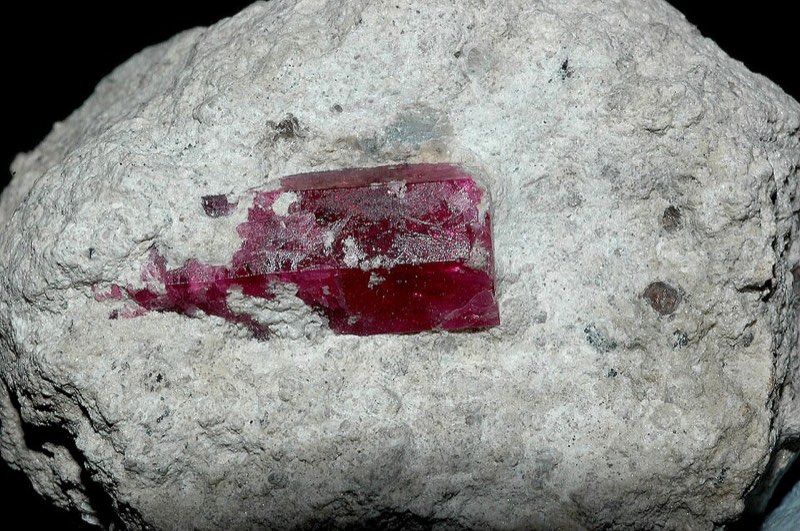
Beryl colored red by manganese. Gem crystals are known essentially from the Wah Wah Mountains of Utah.
Photo: Parent Géry, Public domain
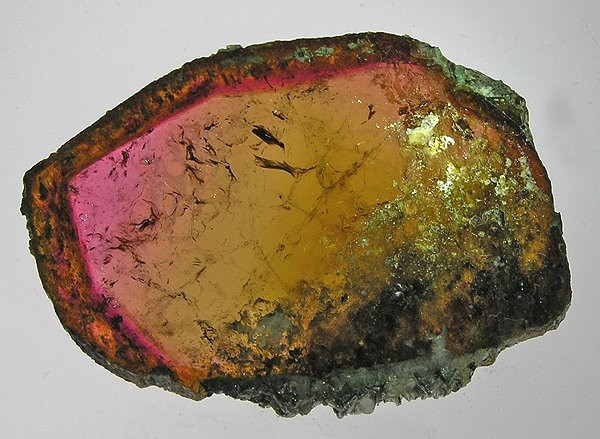
A boron-bearing silicate found in more colors than almost any other gem. Black schorl is the most common form.
Photo: Robert M. Lavinsky, CC BY-SA 3.0
Key differences
- Red tourmaline has a triangular cross-section and lengthwise grooves.
Side by side
| Property | Red Beryl | Tourmaline |
|---|---|---|
| Type | Mineral | Mineral |
| Mohs hardness | 7.5–8 | 7–7.5 |
| Luster | Vitreous | Vitreous |
| Streak | White | White |
| Colors | Red, Pink | Black, Green, Pink |
| Crystal system | Hexagonal | Trigonal |
| Specific gravity | 2.66–2.7 | 3–3.3 |
| Formula | Be₃Al₂Si₆O₁₈ | Complex borosilicate |
| Found in | Wah Wah Mountains, Utah | Mount Mica, Maine; San Diego County, California |
Properties that are the same for both are grayed out.
How to identify red beryl
- Raspberry-red hexagonal crystals, usually small.
- Hardness 7.5–8.
- In light-colored volcanic rhyolite, not in a marble or a pegmatite like most emerald.
Crystal system: Hexagonal
Full Red Beryl guide →How to identify tourmaline
- Long prisms with lengthwise grooves (striations).
- Rounded-triangle cross-section when broken across.
- Hard — scratches glass.
- Gem crystals can change color from end to end ('watermelon').
Crystal system: Trigonal
Full Tourmaline guide →More comparisons
Frequently asked questions
What is the difference between red beryl and tourmaline?
Red Beryl is a mineral (Be₃Al₂Si₆O₁₈) with a Mohs hardness of 7.5–8 and a vitreous luster, usually red or pink. Tourmaline is a mineral (Complex borosilicate) with a Mohs hardness of 7–7.5 and a vitreous luster, usually black, green or pink.
How can you tell red beryl from tourmaline?
Red tourmaline has a triangular cross-section and lengthwise grooves.
Could you tell them apart from a blurry close-up?
Play today's Rocksday