 Rocksday
Biotite vs Tourmaline
How to tell them apart
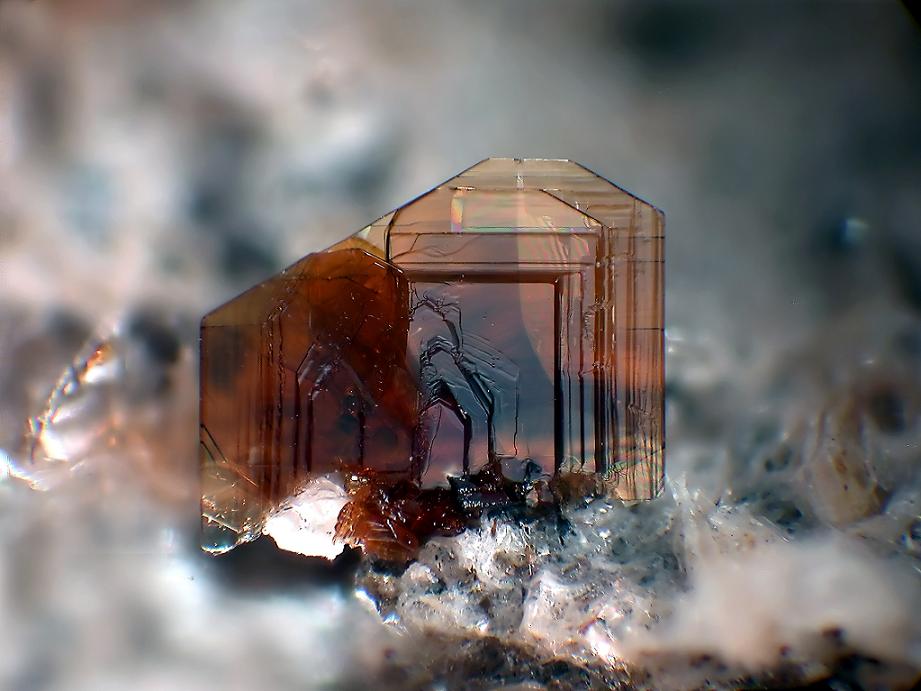
Dark, iron-rich mica. The black flecks in granite are often biotite, and weathered flakes in streams can look convincingly golden.
Photo: Fred Kruijen, CC BY-SA 3.0 nl
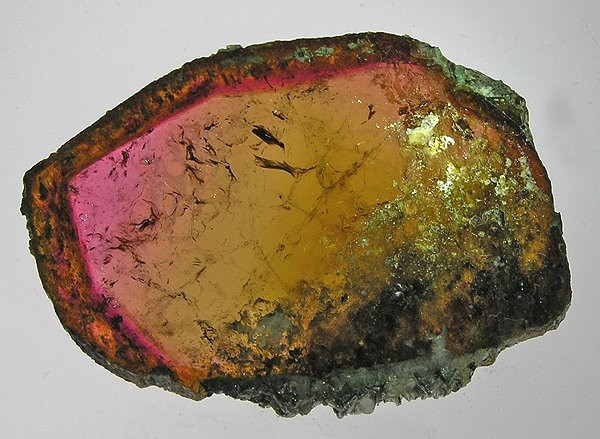
A boron-bearing silicate found in more colors than almost any other gem. Black schorl is the most common form.
Photo: Robert M. Lavinsky, CC BY-SA 3.0
Quick tests
- Scratch glass: Tourmaline scratches glass (Mohs 7–7.5); Biotite can't (Mohs 2.5–3).
- Streak (rub on unglazed porcelain): Biotite leaves a white to gray streak; Tourmaline leaves white.
Key differences
- Biotite peels into soft sheets; tourmaline is hard and prismatic.
Side by side
| Property | Biotite | Tourmaline |
|---|---|---|
| Type | Mineral | Mineral |
| Mohs hardness | 2.5–3 | 7–7.5 |
| Luster | Vitreous to submetallic | Vitreous |
| Streak | White to gray | White |
| Colors | Black, Brown | Black, Green, Pink |
| Crystal system | Monoclinic | Trigonal |
| Specific gravity | 2.7–3.3 | 3–3.3 |
| Formula | K(Mg,Fe)₃(AlSi₃O₁₀)(OH)₂ | Complex borosilicate |
| Found in | Granites and schists worldwide; Bancroft, Ontario | Mount Mica, Maine; San Diego County, California |
Properties that are the same for both are grayed out.
How to identify biotite
- Black to dark brown flakes that peel into sheets.
- Thin sheets are flexible and elastic.
- Bright, almost metallic shine on flat faces.
- Soft enough to scratch with a fingernail.
Crystal system: Monoclinic
Full Biotite guide →How to identify tourmaline
- Long prisms with lengthwise grooves (striations).
- Rounded-triangle cross-section when broken across.
- Hard — scratches glass.
- Gem crystals can change color from end to end ('watermelon').
Crystal system: Trigonal
Full Tourmaline guide →More comparisons
Could you tell them apart from a blurry close-up?
Play today's Rocksday