 Rocksday
Biotite vs Chlorite
How to tell them apart
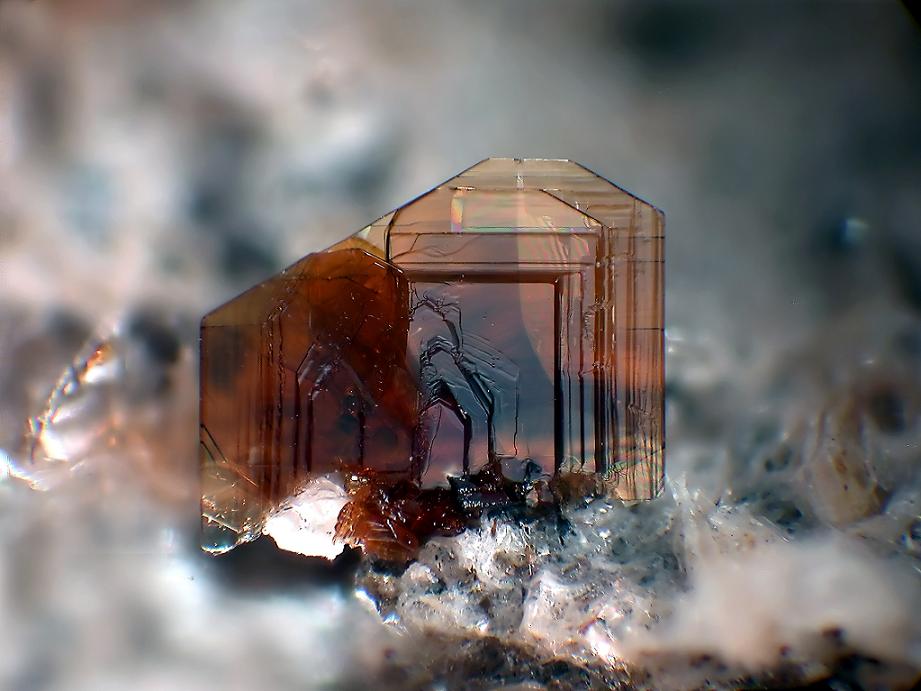
Dark, iron-rich mica. The black flecks in granite are often biotite, and weathered flakes in streams can look convincingly golden.
Photo: Fred Kruijen, CC BY-SA 3.0 nl
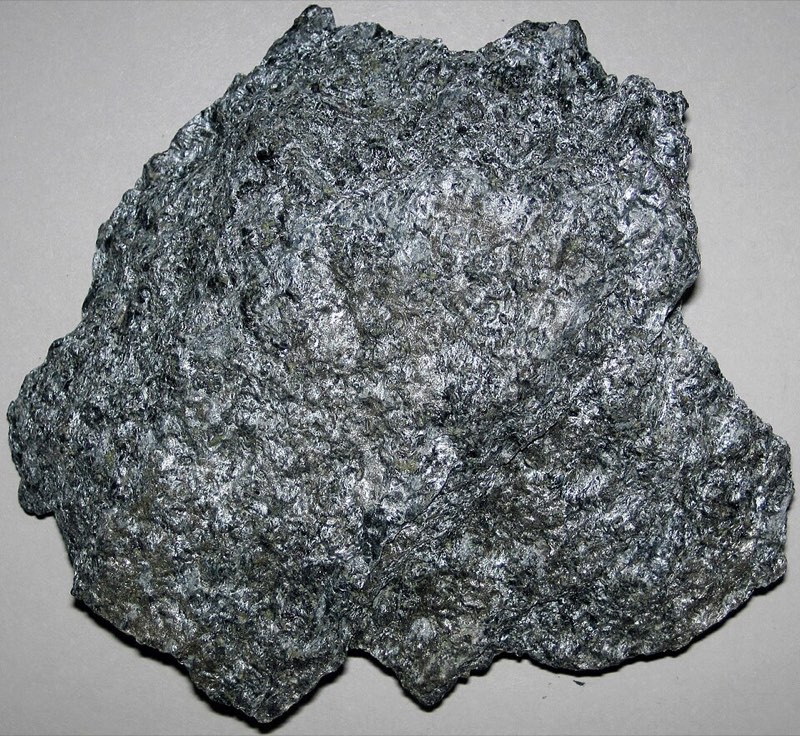
A green, mica-like group of minerals that colors many low-grade metamorphic rocks.
Photo: James St. John, CC BY 2.0
Quick tests
- Streak (rub on unglazed porcelain): Biotite leaves a white to gray streak; Chlorite leaves pale green.
Key differences
- Biotite is darker and its sheets spring back.
Side by side
| Property | Biotite | Chlorite |
|---|---|---|
| Type | Mineral | Mineral |
| Mohs hardness | 2.5–3 | 2–2.5 |
| Luster | Vitreous to submetallic | Pearly to dull |
| Streak | White to gray | Pale green |
| Colors | Black, Brown | Green |
| Crystal system | Monoclinic | Monoclinic |
| Specific gravity | 2.7–3.3 | 2.6–3.3 |
| Formula | K(Mg,Fe)₃(AlSi₃O₁₀)(OH)₂ | (Mg,Fe)₅Al(Si₃Al)O₁₀(OH)₈ |
| Found in | Granites and schists worldwide; Bancroft, Ontario | Greenschists worldwide; Swiss Alps |
Properties that are the same for both are grayed out.
How to identify biotite
- Black to dark brown flakes that peel into sheets.
- Thin sheets are flexible and elastic.
- Bright, almost metallic shine on flat faces.
- Soft enough to scratch with a fingernail.
Crystal system: Monoclinic
Full Biotite guide →How to identify chlorite
- Green flaky masses that feel slightly soapy.
- Flakes bend but don't spring back.
- Often inside quartz as green phantoms.
Crystal system: Monoclinic
Full Chlorite guide →More comparisons
Could you tell them apart from a blurry close-up?
Play today's Rocksday