 Rocksday
Red Beryl vs Ruby
The quickest way to tell Red Beryl from Ruby: Ruby feels noticeably heavier for its size (specific gravity 3.97–4.05 vs 2.66–2.7).
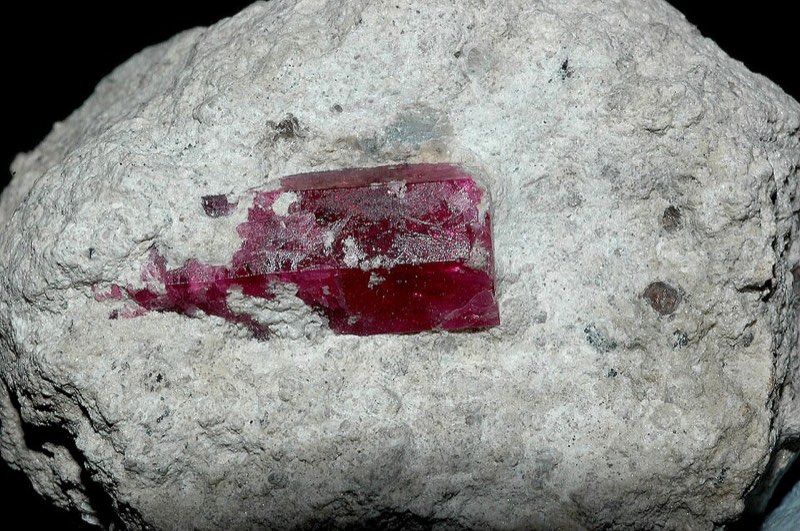
Beryl colored red by manganese. Gem crystals are known essentially from the Wah Wah Mountains of Utah.
Photo: Parent Géry, Public domain
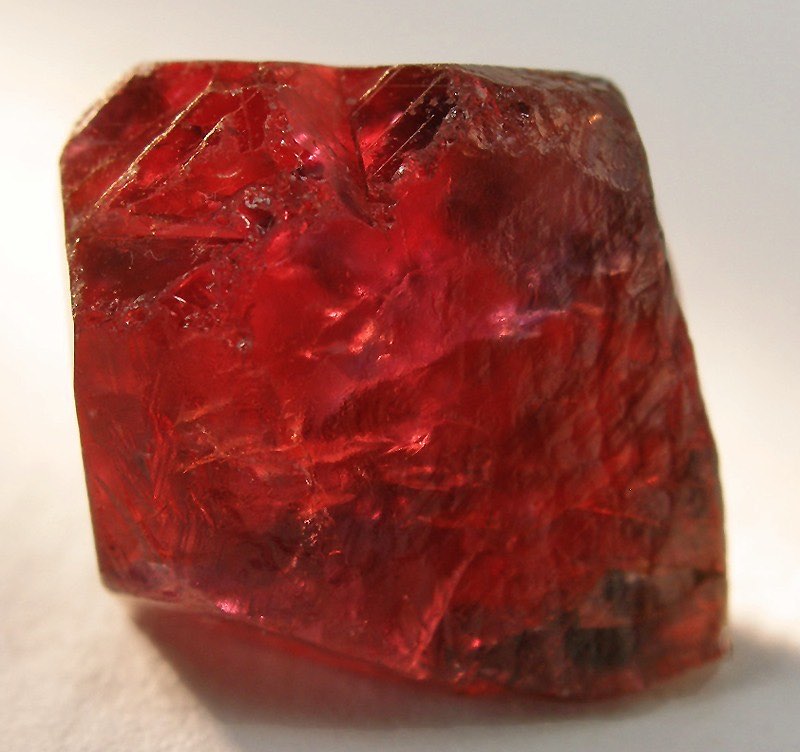
Red corundum, colored by chromium. After diamond it's the hardest natural gemstone.
Photo: Robert M. Lavinsky, CC BY-SA 3.0
Quick tests
- Heft: Ruby feels noticeably heavier for its size (specific gravity 3.97–4.05 vs 2.66–2.7).
Key differences
- Ruby is harder (9) and heavier.
Side by side
| Property | Red Beryl | Ruby |
|---|---|---|
| Type | Mineral | Mineral |
| Mohs hardness | 7.5–8 | 9 |
| Luster | Vitreous | Adamantine to vitreous |
| Streak | White | White |
| Colors | Red, Pink | Red, Pink |
| Crystal system | Hexagonal | Trigonal |
| Specific gravity | 2.66–2.7 | 3.97–4.05 |
| Formula | Be₃Al₂Si₆O₁₈ | Al₂O₃ (with chromium) |
| Found in | Wah Wah Mountains, Utah | Mogok, Myanmar; Montepuez, Mozambique |
Properties that are the same for both are grayed out.
How to identify red beryl
- Raspberry-red hexagonal crystals, usually small.
- Hardness 7.5–8.
- In light-colored volcanic rhyolite, not in a marble or a pegmatite like most emerald.
Crystal system: Hexagonal
Full Red Beryl guide →How to identify ruby
- Red to pinkish red, often in six-sided barrel crystals.
- Hardness 9 — scratches topaz and quartz.
- Glows red under a UV light.
Crystal system: Trigonal
Full Ruby guide →More comparisons
Frequently asked questions
What is the difference between red beryl and ruby?
Red Beryl is a mineral (Be₃Al₂Si₆O₁₈) with a Mohs hardness of 7.5–8 and a vitreous luster, usually red or pink. Ruby is a mineral with a Mohs hardness of 9 and an adamantine to vitreous luster, usually red or pink.
How can you tell red beryl from ruby?
Ruby feels noticeably heavier for its size (specific gravity 3.97–4.05 vs 2.66–2.7). Ruby is harder (9) and heavier.
Could you tell them apart from a blurry close-up?
Play today's Rocksday