 Rocksday
Rhodolite vs Ruby
The quickest way to tell Rhodolite from Ruby: Ruby is clearly harder: Mohs 9 versus 7–7.5.
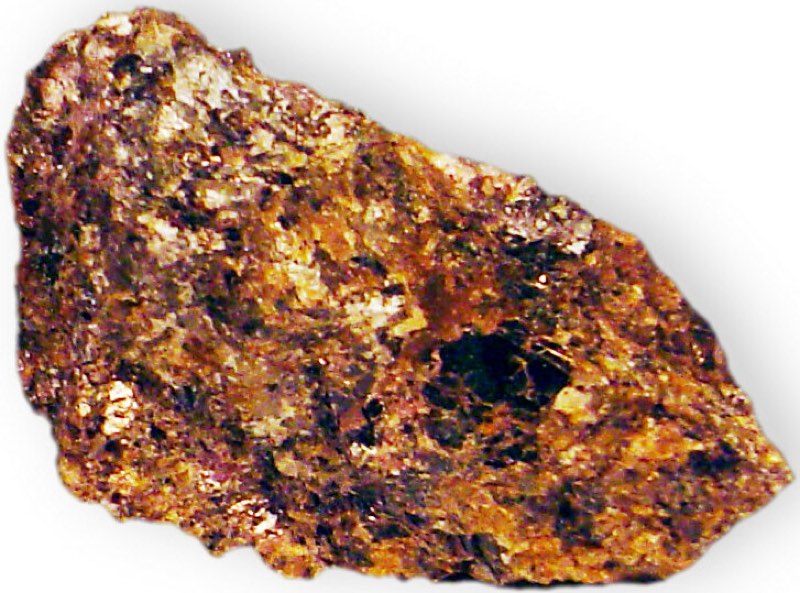
A rose-red to raspberry garnet halfway between pyrope and almandine. It is a mix, not a separate species.
Photo: Dave Dyet http://www.shutterstone.com http://www.dyet.com, Public domain
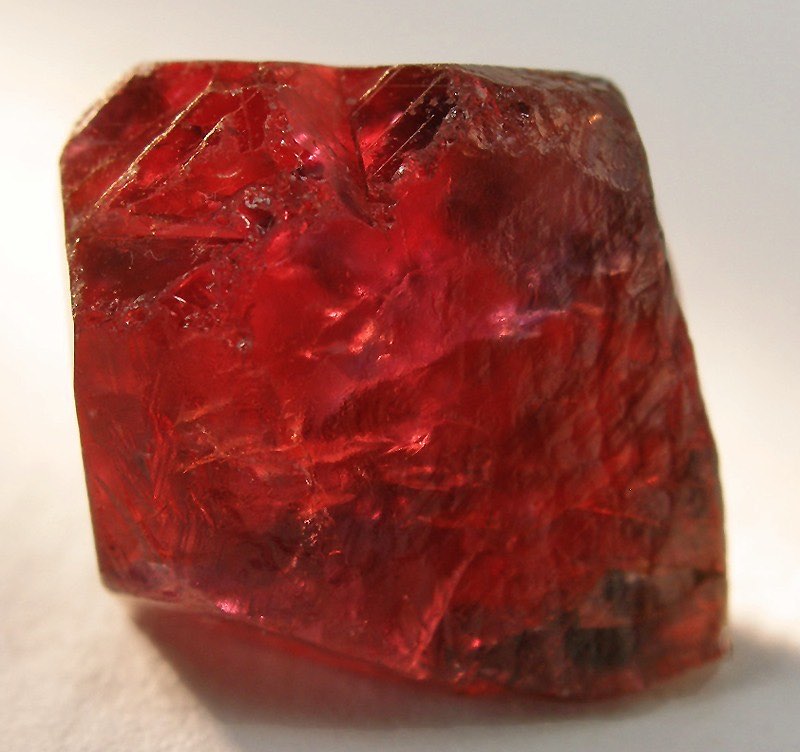
Red corundum, colored by chromium. After diamond it's the hardest natural gemstone.
Photo: Robert M. Lavinsky, CC BY-SA 3.0
Quick tests
- Hardness: Ruby is clearly harder: Mohs 9 versus 7–7.5.
Key differences
- Ruby is harder and hexagonal.
Side by side
| Property | Rhodolite | Ruby |
|---|---|---|
| Type | Mineral | Mineral |
| Mohs hardness | 7–7.5 | 9 |
| Luster | Vitreous | Adamantine to vitreous |
| Streak | White | White |
| Colors | Red, Purple, Pink | Red, Pink |
| Crystal system | Cubic | Trigonal |
| Specific gravity | 3.7–3.9 | 3.97–4.05 |
| Formula | (Mg,Fe)₃Al₂(SiO₄)₃ | Al₂O₃ (with chromium) |
| Found in | Cowee Valley, North Carolina; Tanzania | Mogok, Myanmar; Montepuez, Mozambique |
Properties that are the same for both are grayed out.
How to identify rhodolite
- Purplish rose red, lighter in tone than typical almandine.
- Hardness 7–7.5.
- Usually pebbles or rounded crystals.
Crystal system: Cubic
Full Rhodolite guide →How to identify ruby
- Red to pinkish red, often in six-sided barrel crystals.
- Hardness 9 — scratches topaz and quartz.
- Glows red under a UV light.
Crystal system: Trigonal
Full Ruby guide →More comparisons
Frequently asked questions
What is the difference between rhodolite and ruby?
Rhodolite is a mineral with a Mohs hardness of 7–7.5 and a vitreous luster, usually red, purple or pink. Ruby is a mineral with a Mohs hardness of 9 and an adamantine to vitreous luster, usually red or pink.
How can you tell rhodolite from ruby?
Ruby is clearly harder: Mohs 9 versus 7–7.5. Ruby is harder and hexagonal.
Could you tell them apart from a blurry close-up?
Play today's Rocksday