 Rocksday
Alexandrite vs Ruby
To tell Alexandrite from Ruby: Ruby stays red and is harder still.
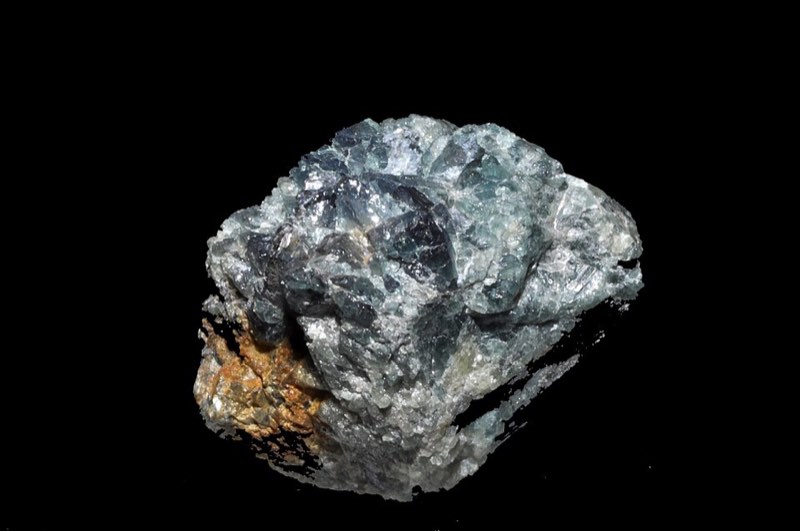
The color-change variety of chrysoberyl: green in daylight and red or purple under an incandescent bulb.
Photo: Parent Géry, Public domain
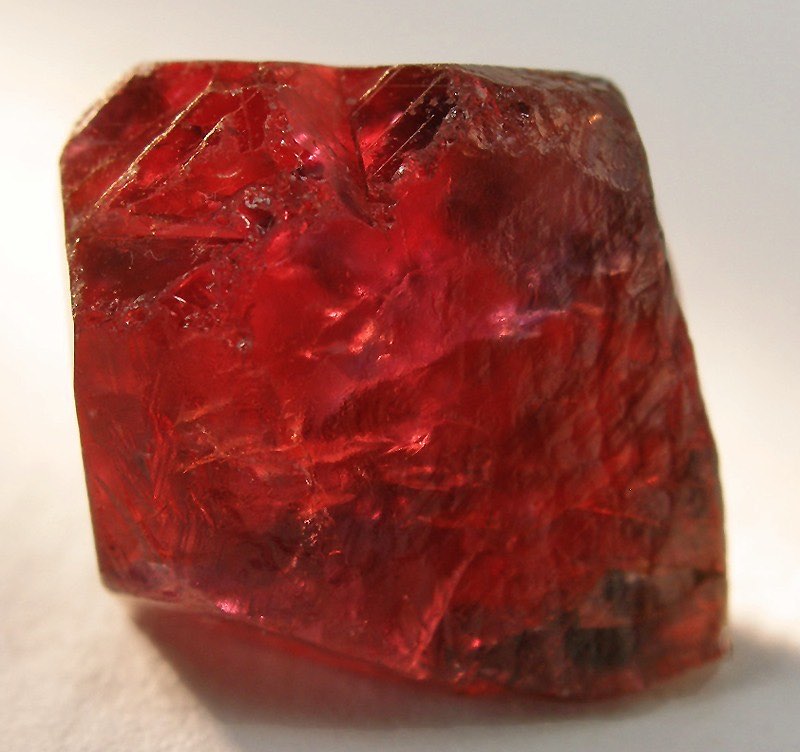
Red corundum, colored by chromium. After diamond it's the hardest natural gemstone.
Photo: Robert M. Lavinsky, CC BY-SA 3.0
Key differences
- Ruby stays red and is harder still.
Side by side
| Property | Alexandrite | Ruby |
|---|---|---|
| Type | Mineral | Mineral |
| Mohs hardness | 8.5 | 9 |
| Luster | Vitreous | Adamantine to vitreous |
| Streak | White | White |
| Colors | Green, Red, Purple | Red, Pink |
| Crystal system | Orthorhombic | Trigonal |
| Specific gravity | 3.7–3.8 | 3.97–4.05 |
| Formula | BeAl₂O₄ | Al₂O₃ (with chromium) |
| Found in | Ural Mountains, Russia; Hematita, Minas Gerais, Brazil | Mogok, Myanmar; Montepuez, Mozambique |
Properties that are the same for both are grayed out.
How to identify alexandrite
- The same stone looks green by a window and reddish under a warm lamp.
- Hardness 8.5 — harder than topaz.
- Ural stones change the most; many newer ones only shift from teal to purple-brown.
Crystal system: Orthorhombic
Full Alexandrite guide →How to identify ruby
- Red to pinkish red, often in six-sided barrel crystals.
- Hardness 9 — scratches topaz and quartz.
- Glows red under a UV light.
Crystal system: Trigonal
Full Ruby guide →More comparisons
Frequently asked questions
What is the difference between alexandrite and ruby?
Alexandrite is a mineral (BeAl₂O₄) with a Mohs hardness of 8.5 and a vitreous luster, usually green, red or purple. Ruby is a mineral with a Mohs hardness of 9 and an adamantine to vitreous luster, usually red or pink.
How can you tell alexandrite from ruby?
Ruby stays red and is harder still.
Could you tell them apart from a blurry close-up?
Play today's Rocksday