 Rocksday
Horn Coral vs Petoskey Stone
To tell Horn Coral from Petoskey Stone: Petoskey stone is a colony of many six-sided cups, not one horn.
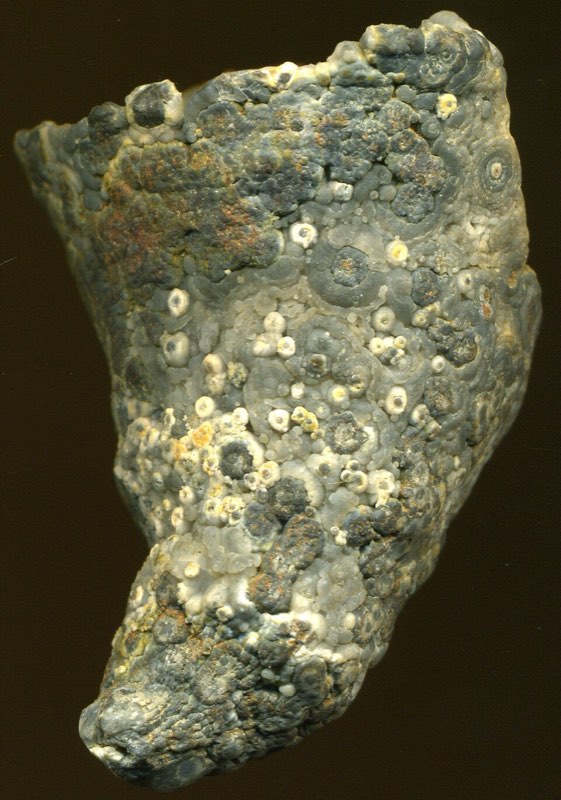
A solitary rugose coral, shaped like a horn, with radial walls inside. The group died out at the end of the Permian.
Photo: James St. John, CC BY 2.0
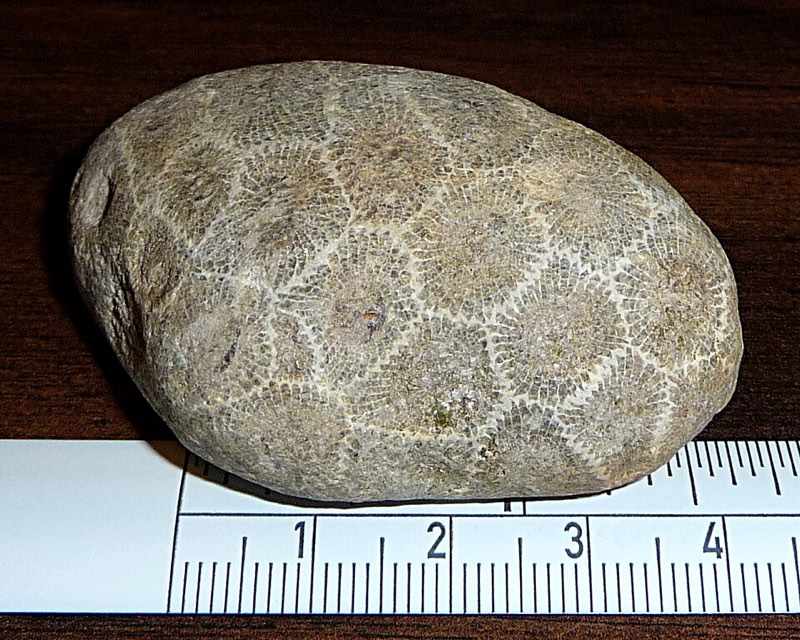
A fossilized colonial coral, about 350 million years old, with a honeycomb of six-sided cells.
Photo: David J. Fred (Dfred), CC BY 3.0
Key differences
- Petoskey stone is a colony of many six-sided cups, not one horn.
Side by side
| Property | Horn Coral | Petoskey Stone |
|---|---|---|
| Type | Fossil | Fossil |
| Mohs hardness | 3–4 | 3–4 |
| Luster | Dull | Dull (polishes to a shine) |
| Colors | Gray, Brown, White | Gray, Brown |
| Crystal system / structure | Calcite horn with septa | Fossil colonial coral (calcite) |
| Specific gravity | 2.6–2.8 | 2.6–2.7 |
| Found in | Falls of the Ohio; Midwest limestones | Lake Michigan beaches near Petoskey, Michigan |
Properties that are the same for both are grayed out.
How to identify horn coral
- Horn or cup shape, often in limestone.
- A cut end shows radial septa, like wheel spokes.
- Fizzes in acid.
Structure: Calcite horn with septa
Full Horn Coral guide →How to identify petoskey stone
- Gray stones with a hexagonal honeycomb pattern.
- Pattern shows best when wet.
- Each cell has a dark center 'eye'.
Structure: Fossil colonial coral (calcite)
Full Petoskey Stone guide →More comparisons
Frequently asked questions
What is the difference between horn coral and petoskey stone?
Horn Coral is a fossil with a Mohs hardness of about 3–4 and a dull luster, usually gray, brown or white. Petoskey Stone is a fossil with a Mohs hardness of about 3–4 and a dull luster, usually gray or brown.
How can you tell horn coral from petoskey stone?
Petoskey stone is a colony of many six-sided cups, not one horn.
Could you tell them apart from a blurry close-up?
Play today's Rocksday