 Rocksday
Blastoid vs Horn Coral
To tell Blastoid from Horn Coral: Horn corals are cones with radial septa, not five ambulacral grooves.
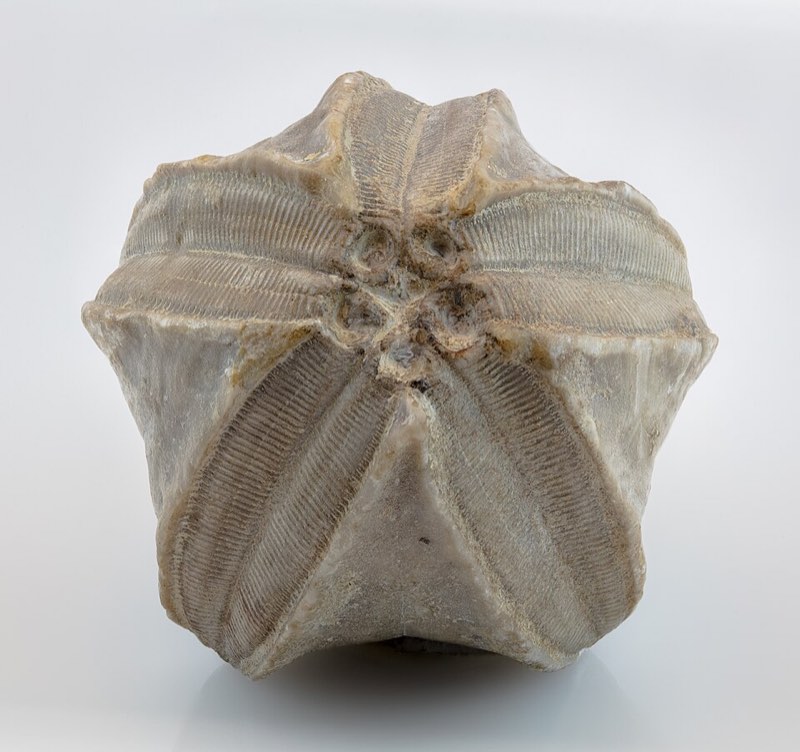
An extinct relative of crinoids and starfish whose body fossil looks like a small flower bud with five grooves.
Photo: Diego Delso, CC BY-SA 4.0
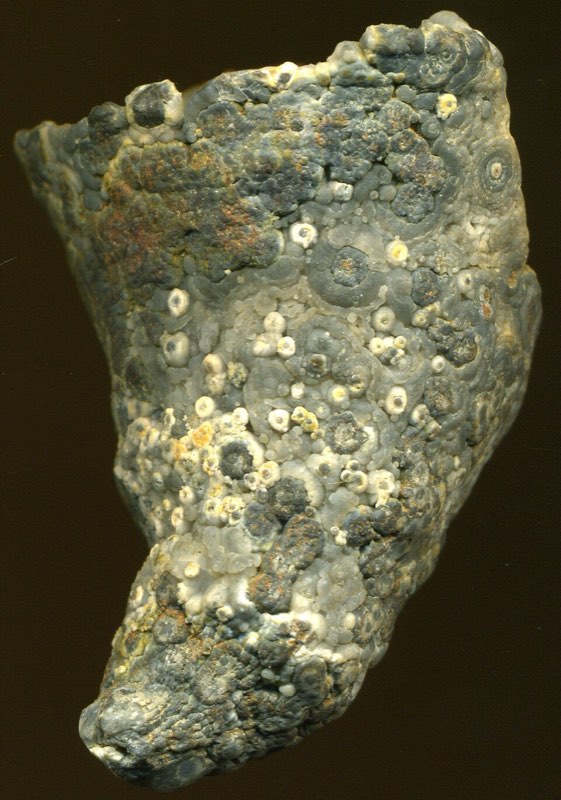
A solitary rugose coral, shaped like a horn, with radial walls inside. The group died out at the end of the Permian.
Photo: James St. John, CC BY 2.0
Key differences
- Horn corals are cones with radial septa, not five ambulacral grooves.
Side by side
| Property | Blastoid | Horn Coral |
|---|---|---|
| Type | Fossil | Fossil |
| Mohs hardness | 3 | 3–4 |
| Luster | Dull | Dull |
| Colors | Gray, White, Brown | Gray, Brown, White |
| Crystal system / structure | Calcite bud with five ambulacra | Calcite horn with septa |
| Specific gravity | 2.6–2.8 | 2.6–2.8 |
| Found in | Burlington Limestone, Iowa; Illinois | Falls of the Ohio; Midwest limestones |
Properties that are the same for both are grayed out.
How to identify blastoid
- A nut- or bud-shaped calcite fossil.
- Five food grooves running from the top toward the base.
- Fizzes in acid. No stem discs unless a crinoid is in the same rock.
Structure: Calcite bud with five ambulacra
Full Blastoid guide →How to identify horn coral
- Horn or cup shape, often in limestone.
- A cut end shows radial septa, like wheel spokes.
- Fizzes in acid.
Structure: Calcite horn with septa
Full Horn Coral guide →More comparisons
Frequently asked questions
What is the difference between blastoid and horn coral?
Blastoid is a fossil with a Mohs hardness of about 3 and a dull luster, usually gray, white or brown. Horn Coral is a fossil with a Mohs hardness of about 3–4 and a dull luster, usually gray, brown or white.
How can you tell blastoid from horn coral?
Horn corals are cones with radial septa, not five ambulacral grooves.
Could you tell them apart from a blurry close-up?
Play today's Rocksday