 Rocksday
Blastoid
Blastoid is a fossil with a Mohs hardness of about 3 and a dull luster, usually gray, white or brown.
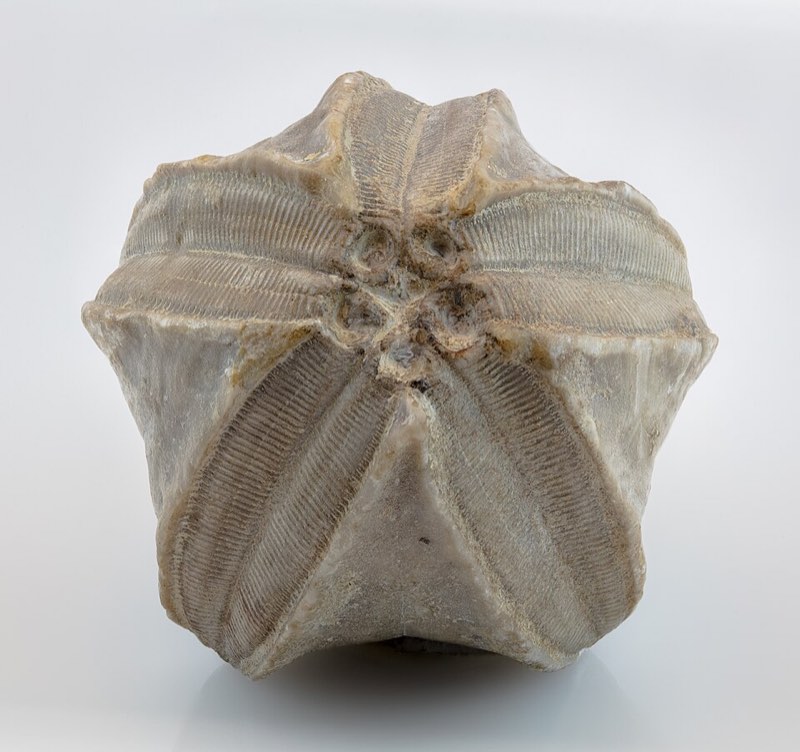
An extinct relative of crinoids and starfish whose body fossil looks like a small flower bud with five grooves.
How to identify blastoid
- A nut- or bud-shaped calcite fossil.
- Five food grooves running from the top toward the base.
- Fizzes in acid. No stem discs unless a crinoid is in the same rock.
Often confused with
Where it's found
- Burlington Limestone, Iowa
- Illinois
- Indiana
- England
Uses
Fossil collecting. Whole limestones can be full of them.
Rock tumbling
Not suitable for tumbling.
Did you know?
They look like buds, but they were animals, and they died out in the end-Permian extinction.
Blastoid FAQ
What is blastoid?
Blastoid is a fossil with a Mohs hardness of about 3 and a dull luster, usually gray, white or brown. An extinct relative of crinoids and starfish whose body fossil looks like a small flower bud with five grooves.
How do you identify blastoid?
A nut- or bud-shaped calcite fossil. Five food grooves running from the top toward the base. Fizzes in acid. No stem discs unless a crinoid is in the same rock.
How hard is blastoid?
Blastoid has a Mohs hardness of about 3. A steel knife scratches Blastoid, but a fingernail doesn't.
Where is blastoid found?
Notable localities include Burlington Limestone, Iowa; Illinois; Indiana; and England.
What is blastoid used for?
Fossil collecting. Whole limestones can be full of them.
Can you tumble blastoid?
It isn't a good choice for a rock tumbler.
What is blastoid often confused with?
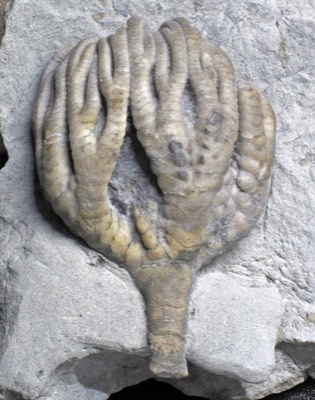
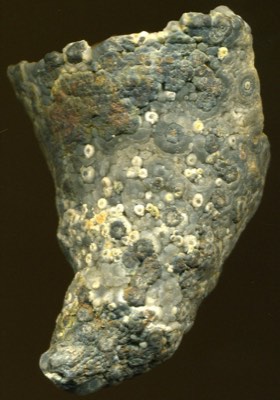
Blastoid is most often confused with Crinoid and Horn Coral. Crinoids are usually found as stacked stem discs, not a five-sided bud. Horn corals are cones with radial septa, not five ambulacral grooves.
Think you could spot it from a blurry close-up?
Play today's Rocksday