 Rocksday
Horn Coral
Horn Coral is a fossil with a Mohs hardness of about 3–4 and a dull luster, usually gray, brown or white.
A solitary rugose coral, shaped like a horn, with radial walls inside. The group died out at the end of the Permian.
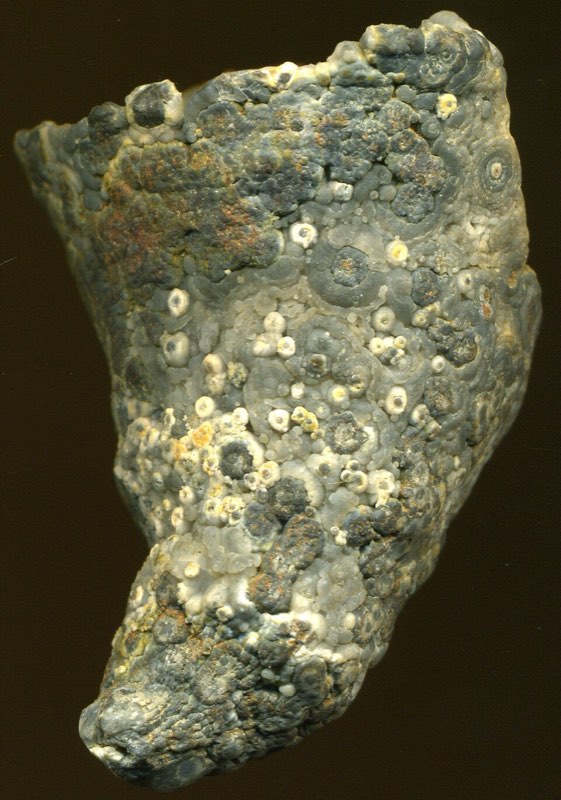
How to identify horn coral
- Horn or cup shape, often in limestone.
- A cut end shows radial septa, like wheel spokes.
- Fizzes in acid.
Often confused with
Where it's found
- Falls of the Ohio
- Midwest limestones
- Morocco
- England
Uses
Fossil collecting.
Rock tumbling
Not suitable for tumbling.
Did you know?
Rugose corals are not the ancestors of modern reef corals. Those are a later group, and the rugose corals were already gone.
Horn Coral FAQ
What is horn coral?
Horn Coral is a fossil with a Mohs hardness of about 3–4 and a dull luster, usually gray, brown or white. A solitary rugose coral, shaped like a horn, with radial walls inside. The group died out at the end of the Permian.
How do you identify horn coral?
Horn or cup shape, often in limestone. A cut end shows radial septa, like wheel spokes. Fizzes in acid.
How hard is horn coral?
Horn Coral has a Mohs hardness of about 3–4. A steel knife scratches Horn Coral, but a fingernail doesn't.
Where is horn coral found?
Notable localities include Falls of the Ohio, Midwest limestones, Morocco and England.
What is horn coral used for?
Fossil collecting.
Can you tumble horn coral?
It isn't a good choice for a rock tumbler.
What is horn coral often confused with?
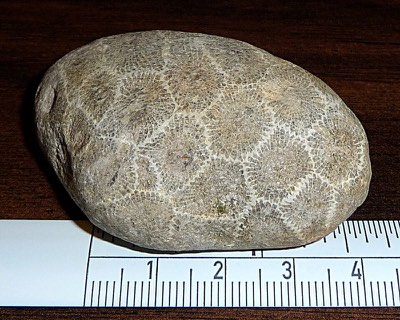
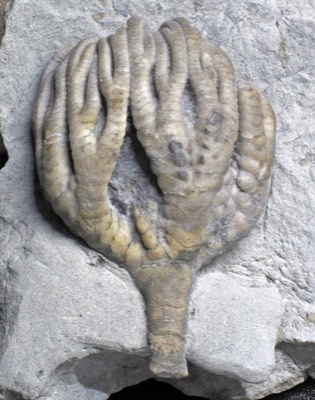
Horn Coral is most often confused with Petoskey Stone and Crinoid. Petoskey stone is a colony of many six-sided cups, not one horn. Crinoid pieces are round stem discs, often with a hole.
Think you could spot it from a blurry close-up?
Play today's Rocksday