 Rocksday
Halite vs Sylvite
How to tell them apart
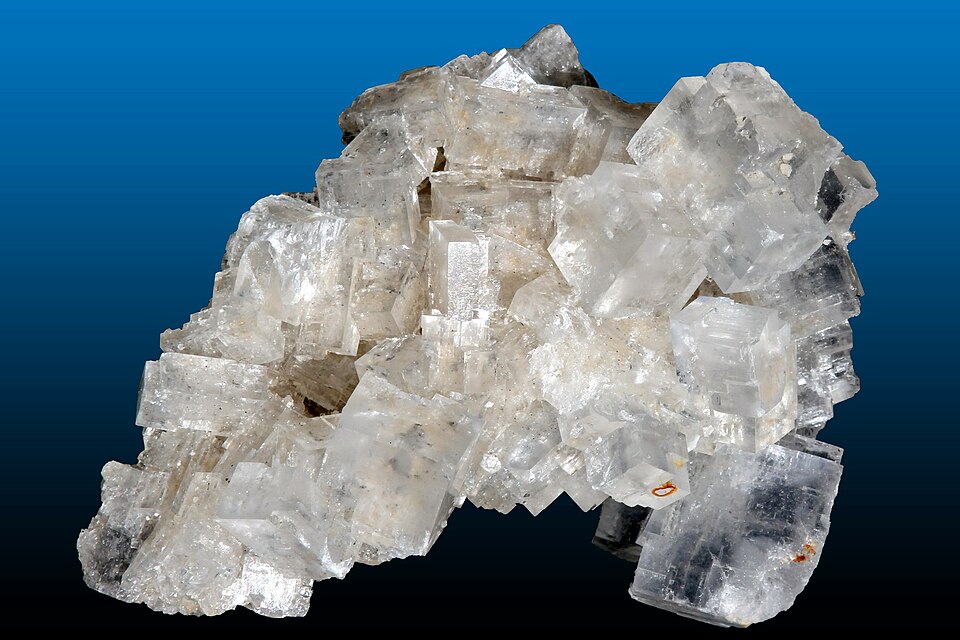
Natural table salt. It forms thick beds where ancient seas dried up and grows as cubes, sometimes with stair-stepped 'hopper' faces.
Photo: Lech Darski, CC BY-SA 4.0
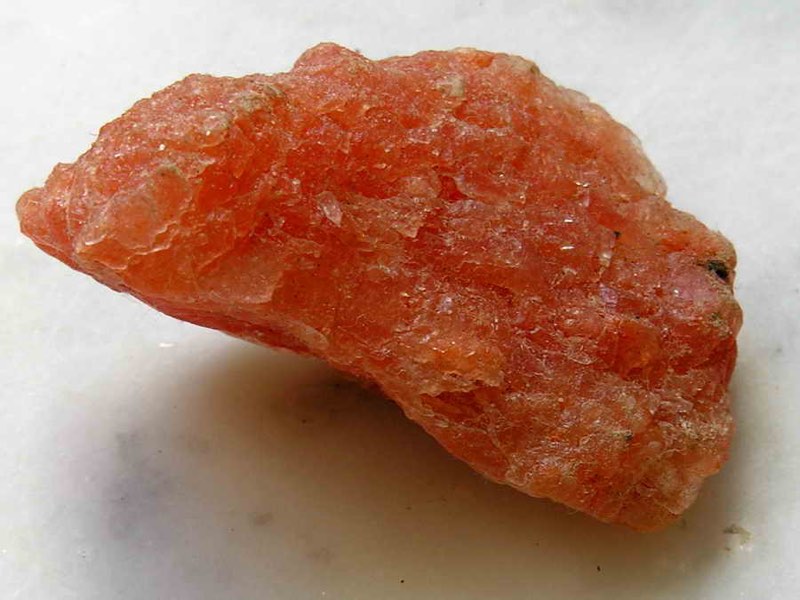
Potassium chloride — looks like rock salt but tastes bitter. The main source of potash fertilizer.
Photo: Luis Miguel Bugallo Sánchez (Lmbuga Commons)(Lmbuga Galipedia) Publicada por/Publish by: Luis Miguel Bugallo Sánchez, CC BY-SA 3.0
Key differences
- Halite tastes purely salty.
Side by side
| Property | Halite | Sylvite |
|---|---|---|
| Type | Mineral | Mineral |
| Mohs hardness | 2–2.5 | 2 |
| Luster | Vitreous | Vitreous |
| Streak | White | White |
| Colors | Clear, White, Pink, Orange | White, Red, Clear |
| Crystal system | Cubic | Cubic |
| Specific gravity | 2.17 | 1.99 |
| Formula | NaCl | KCl |
| Found in | Wieliczka, Poland; Khewra, Pakistan | Saskatchewan, Canada; Berezniki, Russia |
Properties that are the same for both are grayed out.
How to identify halite
- Tastes salty.
- Breaks into cubes.
- Dissolves in water.
- Soft — a fingernail almost scratches it.
Crystal system: Cubic
Full Halite guide →How to identify sylvite
- Cubes like halite, often reddish.
- Bitter, not just salty, taste.
- Dissolves in water.
Crystal system: Cubic
Full Sylvite guide →More comparisons
Could you tell them apart from a blurry close-up?
Play today's Rocksday