 Rocksday
Diamond vs Topaz
How to tell them apart
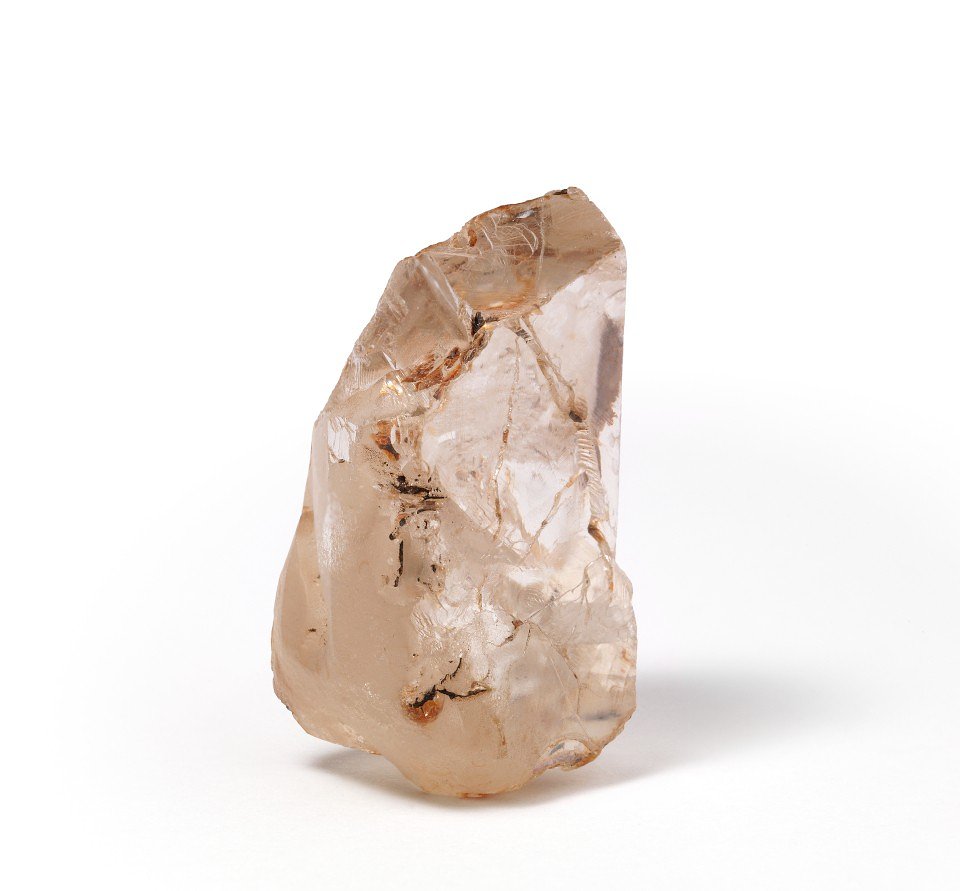
Pure carbon crystallized deep in the mantle and carried up in kimberlite eruptions. The hardest natural material.
Photo: DGPC/ADF Luísa Oliveira, CC0
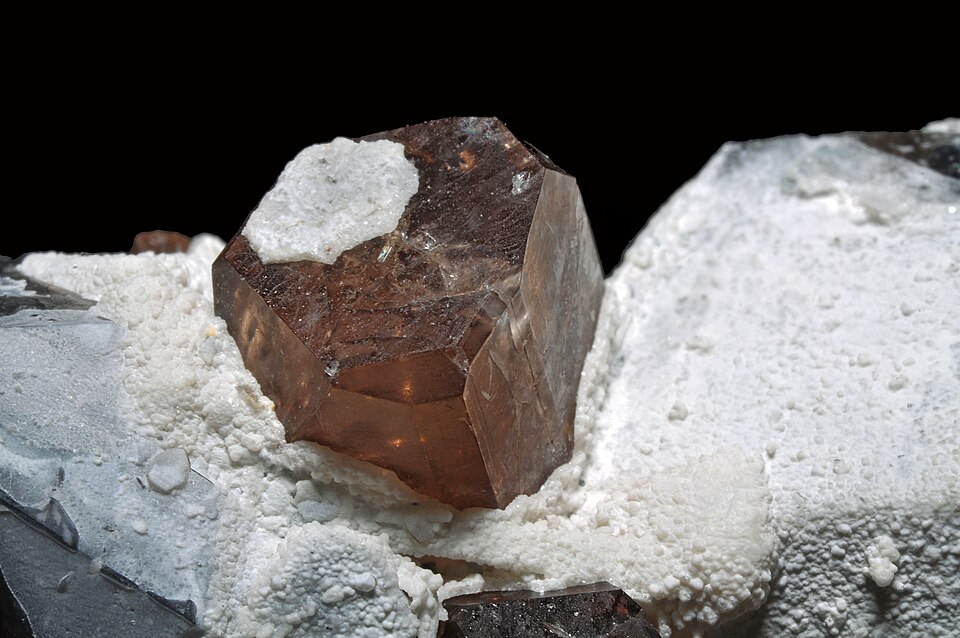
A fluorine-bearing silicate and the Mohs reference for hardness 8. Crystals are often clear with sharp, diamond-shaped cross-sections.
Photo: Parent Géry, CC BY-SA 3.0
Quick tests
- Hardness: Diamond is clearly harder: Mohs 10 versus 8.
- Streak (rub on unglazed porcelain): Diamond leaves a none (harder than a streak plate) streak; Topaz leaves white.
Key differences
- Topaz is softer and cleaves along one direction.
- Diamond is harder still and has a much stronger, oily-bright luster.
Side by side
| Property | Diamond | Topaz |
|---|---|---|
| Type | Mineral | Mineral |
| Mohs hardness | 10 | 8 |
| Luster | Adamantine | Vitreous |
| Streak | None (harder than a streak plate) | White |
| Colors | Clear, Yellow, Brown, Gray | Clear, Yellow, Orange, Blue, Pink |
| Crystal system | Cubic | Orthorhombic |
| Specific gravity | 3.51–3.53 | 3.49–3.57 |
| Formula | C | Al₂SiO₄(F,OH)₂ |
| Found in | Jwaneng, Botswana; Yakutia, Russia | Ouro Preto, Brazil; Topaz Mountain, Utah |
Properties that are the same for both are grayed out.
How to identify diamond
- Scratches everything — including corundum.
- Greasy-looking, extremely bright luster even in rough crystals.
- Often octahedral with slightly curved faces.
- Water beads up on its surface.
Crystal system: Cubic
Full Diamond guide →How to identify topaz
- Harder than quartz (8).
- One perfect cleavage across the crystal — flat, mirror-like breaks.
- Feels heavier than quartz of the same size.
- Prisms with lengthwise striations.
Crystal system: Orthorhombic
Full Topaz guide →More comparisons
Could you tell them apart from a blurry close-up?
Play today's Rocksday