 Rocksday
Diamond vs Moissanite
How to tell them apart
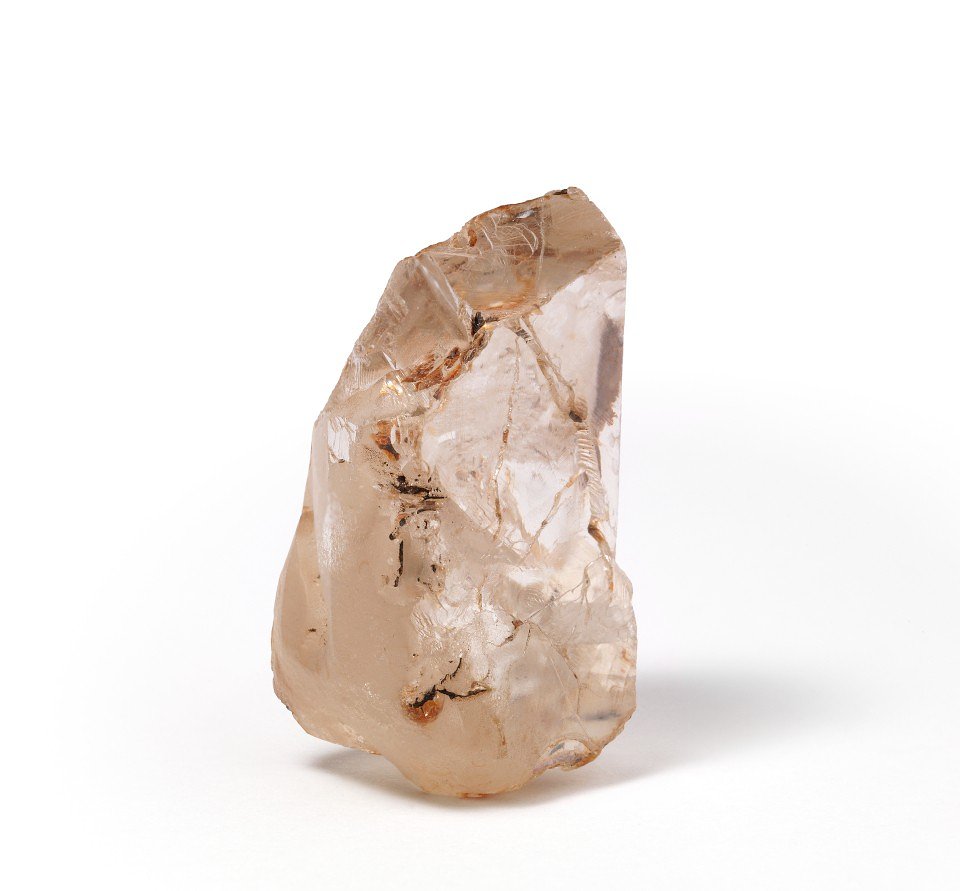
Pure carbon crystallized deep in the mantle and carried up in kimberlite eruptions. The hardest natural material.
Photo: DGPC/ADF Luísa Oliveira, CC0
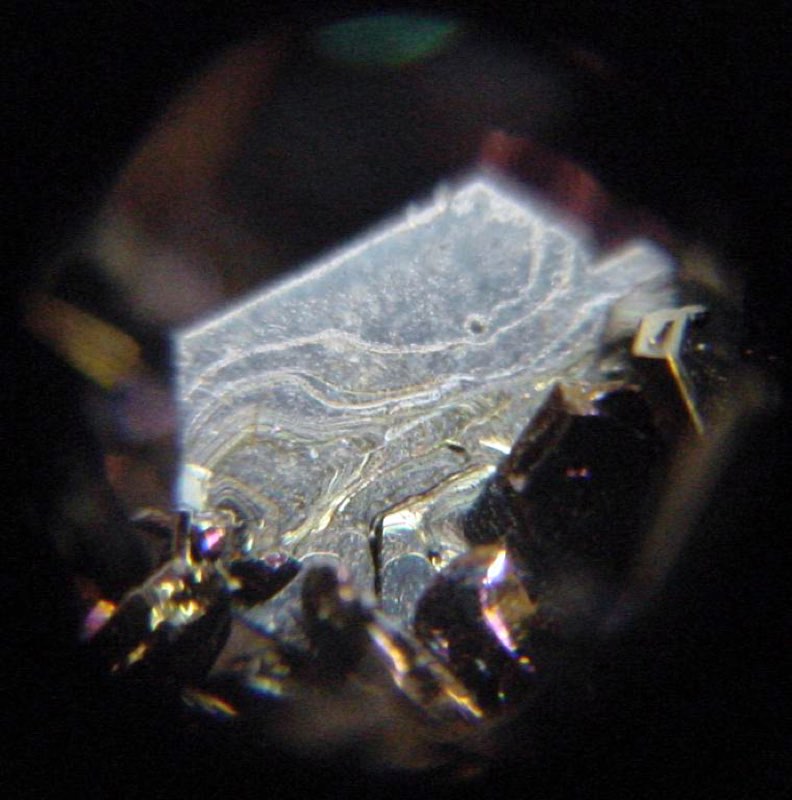
Natural silicon carbide — extremely rare in nature. Moissanite sold in jewelry is lab-made.
Photo: Andrew Silver, Public domain
Quick tests
- Streak (rub on unglazed porcelain): Diamond leaves a none (harder than a streak plate) streak; Moissanite leaves greenish gray.
- Luster: Moissanite looks metallic; Diamond doesn't.
Key differences
- Diamond doesn't show doubled facet edges and has less fire.
Side by side
| Property | Diamond | Moissanite |
|---|---|---|
| Type | Mineral | Mineral |
| Mohs hardness | 10 | 9–9.5 |
| Luster | Adamantine | Adamantine to metallic |
| Streak | None (harder than a streak plate) | Greenish gray |
| Colors | Clear, Yellow, Brown, Gray | Clear, Green, Yellow |
| Crystal system | Cubic | Hexagonal |
| Specific gravity | 3.51–3.53 | 3.21–3.22 |
| Formula | C | SiC |
| Found in | Jwaneng, Botswana; Yakutia, Russia | Canyon Diablo meteorite, Arizona; Traces in kimberlite and meteorites |
Properties that are the same for both are grayed out.
How to identify diamond
- Scratches everything — including corundum.
- Greasy-looking, extremely bright luster even in rough crystals.
- Often octahedral with slightly curved faces.
- Water beads up on its surface.
Crystal system: Cubic
Full Diamond guide →How to identify moissanite
- Harder than everything except diamond.
- Very strong rainbow fire in cut stones.
- Facet edges look doubled.
Crystal system: Hexagonal
Full Moissanite guide →More comparisons
Could you tell them apart from a blurry close-up?
Play today's Rocksday