 Rocksday
Citrine vs Heliodor
To tell Citrine from Heliodor: Citrine is quartz: softer, and its crystals end in points.
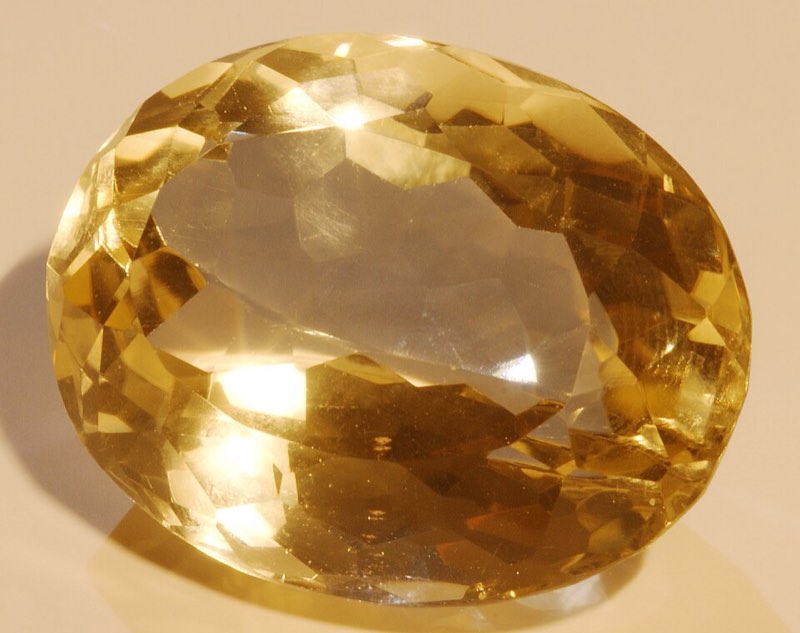
Yellow to orange quartz. Natural citrine is pale and fairly rare; most citrine sold today is heat-treated amethyst.
Photo: Didier Descouens, CC BY-SA 4.0
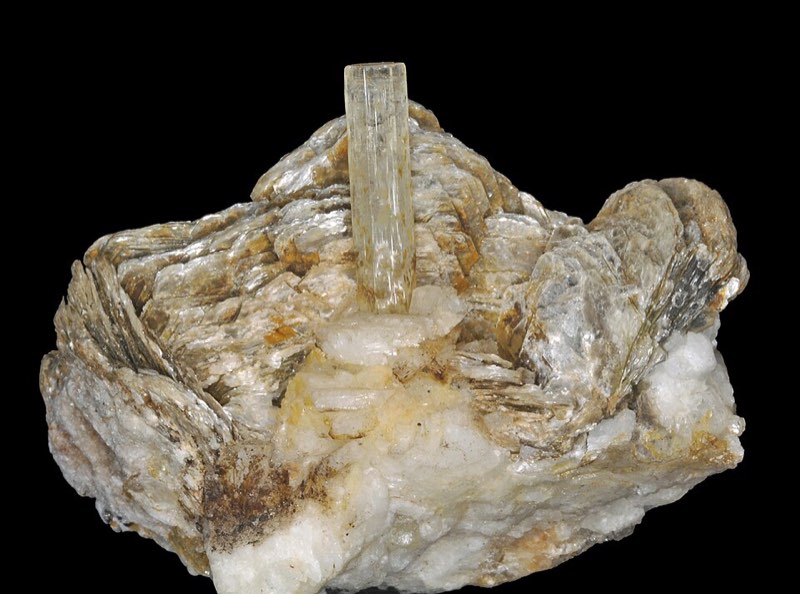
Yellow to golden beryl, colored by iron. It grows as the same six-sided columns as emerald and aquamarine.
Photo: Parent Géry, CC BY-SA 3.0
Key differences
- Citrine is quartz: softer, and its crystals end in points.
Side by side
| Property | Citrine | Heliodor |
|---|---|---|
| Type | Mineral | Mineral |
| Mohs hardness | 7 | 7.5–8 |
| Luster | Vitreous | Vitreous |
| Streak | White | White |
| Colors | Yellow, Orange | Yellow, Gold |
| Crystal system | Trigonal | Hexagonal |
| Specific gravity | 2.65 | 2.7–2.9 |
| Formula | SiO₂ | Be₃Al₂Si₆O₁₈ |
| Found in | Rio Grande do Sul, Brazil; Madagascar | Volodarsk, Ukraine; Minas Gerais, Brazil |
Properties that are the same for both are grayed out.
How to identify citrine
- Pale lemon to honey-orange quartz, hardness 7.
- Heat-treated amethyst geodes turn burnt orange at the tips with white bases — a giveaway.
- Natural pieces have an even, soft yellow color.
Crystal system: Trigonal
Full Citrine guide →How to identify heliodor
- Yellow hexagonal prisms with flat ends.
- Hardness 7.5–8 — scratches quartz.
- Lighter in the hand than a yellow sapphire or a garnet.
Crystal system: Hexagonal
Full Heliodor guide →More comparisons
Frequently asked questions
What is the difference between citrine and heliodor?
Citrine is a mineral (SiO₂) with a Mohs hardness of 7 and a vitreous luster, usually yellow or orange. Heliodor is a mineral (Be₃Al₂Si₆O₁₈) with a Mohs hardness of 7.5–8 and a vitreous luster, usually yellow or golden.
How can you tell citrine from heliodor?
Citrine is quartz: softer, and its crystals end in points.
Could you tell them apart from a blurry close-up?
Play today's Rocksday