 Rocksday
Ametrine vs Citrine
How to tell them apart
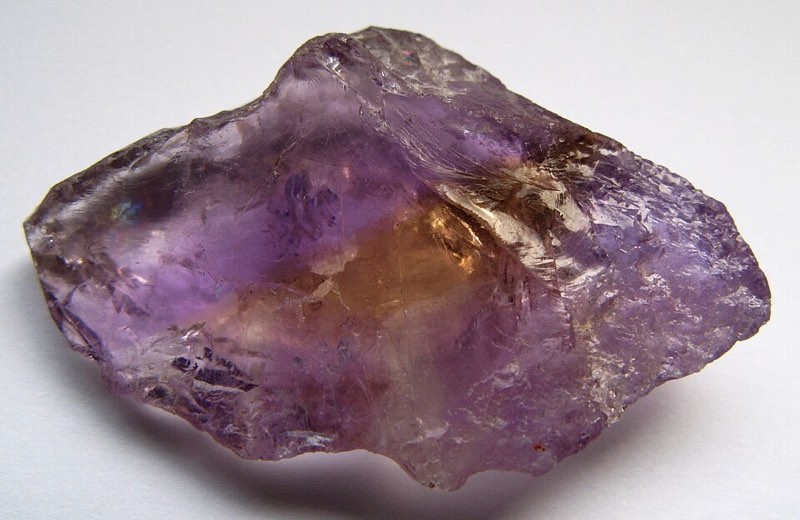
Quartz with sharply divided zones of purple amethyst and yellow citrine in the same crystal.
Photo: Ra'ike (see also: de:Benutzer:Ra'ike), CC BY-SA 3.0
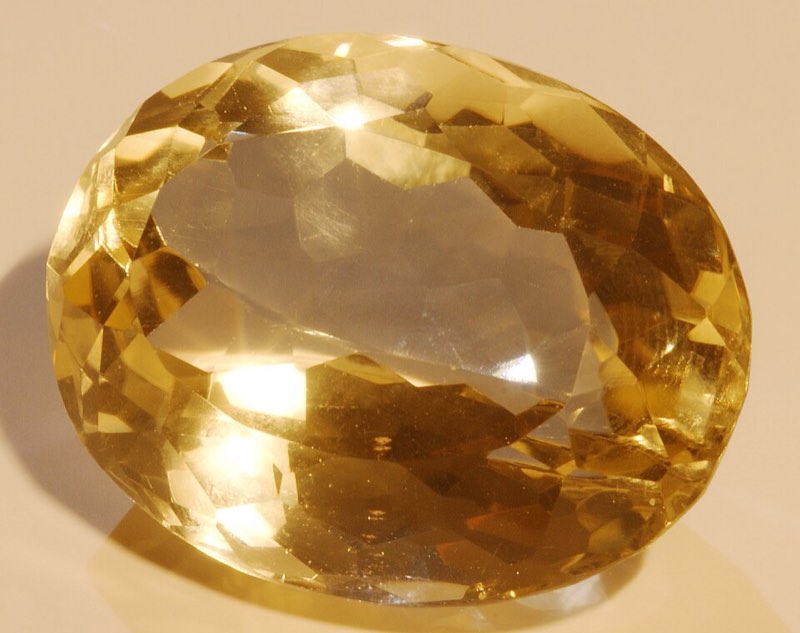
Yellow to orange quartz. Natural citrine is pale and fairly rare; most citrine sold today is heat-treated amethyst.
Photo: Didier Descouens, CC BY-SA 4.0
Key differences
- Citrine is yellow only.
Side by side
| Property | Ametrine | Citrine |
|---|---|---|
| Type | Mineral | Mineral |
| Mohs hardness | 7 | 7 |
| Luster | Vitreous | Vitreous |
| Streak | White | White |
| Colors | Purple, Yellow | Yellow, Orange |
| Crystal system | Trigonal | Trigonal |
| Specific gravity | 2.65 | 2.65 |
| Formula | SiO₂ | SiO₂ |
| Found in | Anahí mine, Bolivia | Rio Grande do Sul, Brazil; Madagascar |
Properties that are the same for both are grayed out.
How to identify ametrine
- Distinct purple and yellow sections in one stone.
- Hardness 7, glassy.
- Usually seen as cut gems.
Crystal system: Trigonal
Full Ametrine guide →How to identify citrine
- Pale lemon to honey-orange quartz, hardness 7.
- Heat-treated amethyst geodes turn burnt orange at the tips with white bases — a giveaway.
- Natural pieces have an even, soft yellow color.
Crystal system: Trigonal
Full Citrine guide →More comparisons
Could you tell them apart from a blurry close-up?
Play today's Rocksday