 Rocksday
Amethyst vs Ametrine
How to tell them apart
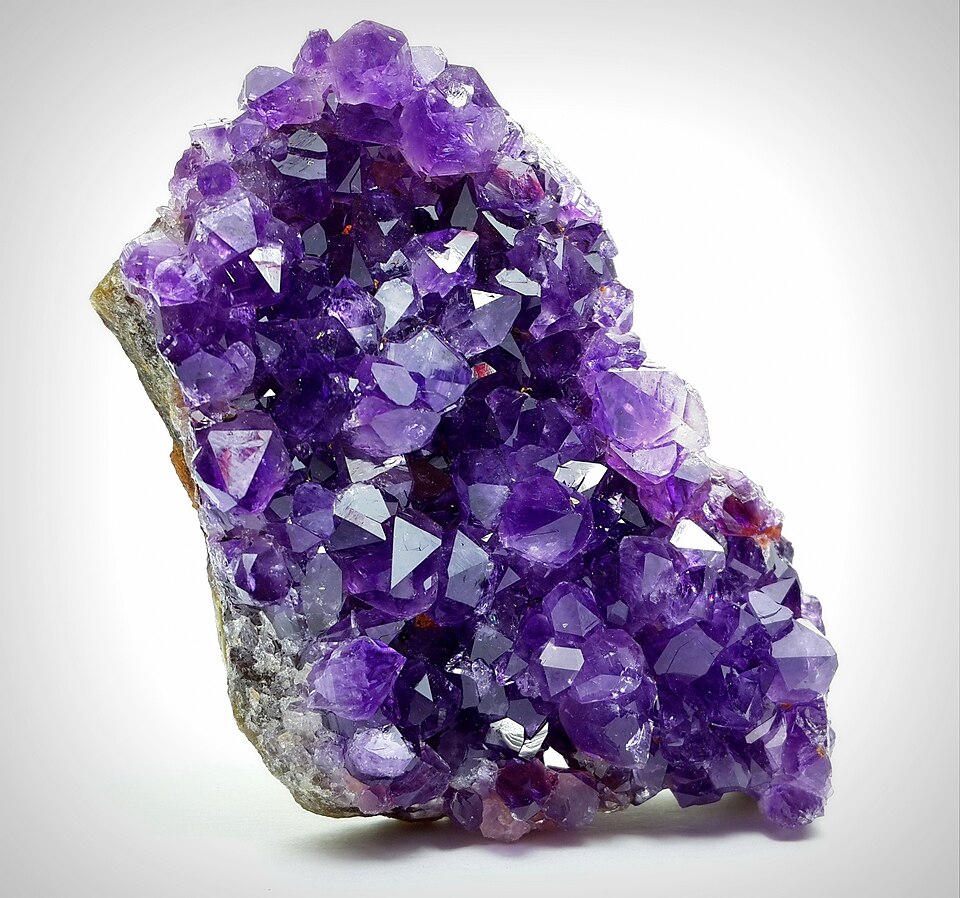
The purple variety of quartz. Its color comes from traces of iron combined with natural radiation, and it often lines the inside of large volcanic geodes.
Photo: Gonzalo Devia, CC BY-SA 4.0
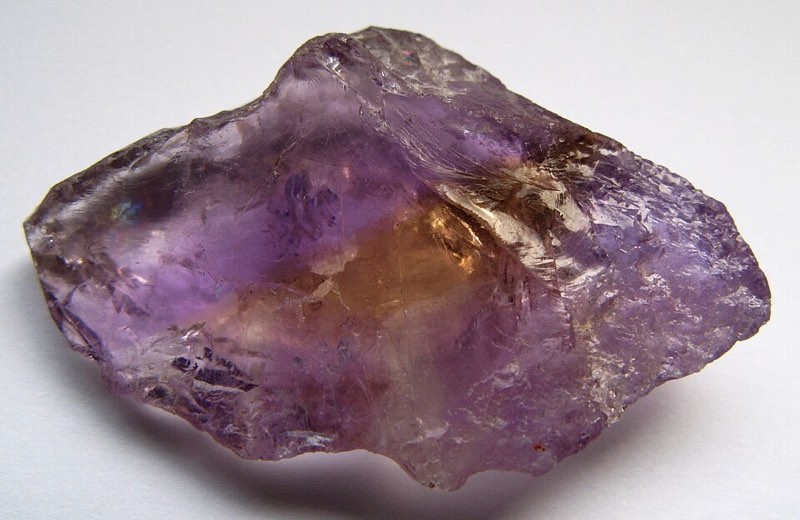
Quartz with sharply divided zones of purple amethyst and yellow citrine in the same crystal.
Photo: Ra'ike (see also: de:Benutzer:Ra'ike), CC BY-SA 3.0
Key differences
- Amethyst is purple only.
Side by side
| Property | Amethyst | Ametrine |
|---|---|---|
| Type | Mineral | Mineral |
| Mohs hardness | 7 | 7 |
| Luster | Vitreous | Vitreous |
| Streak | White | White |
| Colors | Purple | Purple, Yellow |
| Crystal system | Trigonal | Trigonal |
| Specific gravity | 2.65 | 2.65 |
| Formula | SiO₂ | SiO₂ |
| Found in | Rio Grande do Sul, Brazil; Artigas, Uruguay | Anahí mine, Bolivia |
Properties that are the same for both are grayed out.
How to identify amethyst
- Purple, often deepest at the crystal tips.
- Hardness 7 — scratches glass.
- Grows as clusters of pointed crystals inside geodes.
- No cleavage; breaks with a glassy, curved fracture.
Crystal system: Trigonal
Full Amethyst guide →How to identify ametrine
- Distinct purple and yellow sections in one stone.
- Hardness 7, glassy.
- Usually seen as cut gems.
Crystal system: Trigonal
Full Ametrine guide →More comparisons
Could you tell them apart from a blurry close-up?
Play today's Rocksday