 Rocksday
Amethyst
The purple variety of quartz. Its color comes from traces of iron combined with natural radiation, and it often lines the inside of large volcanic geodes.
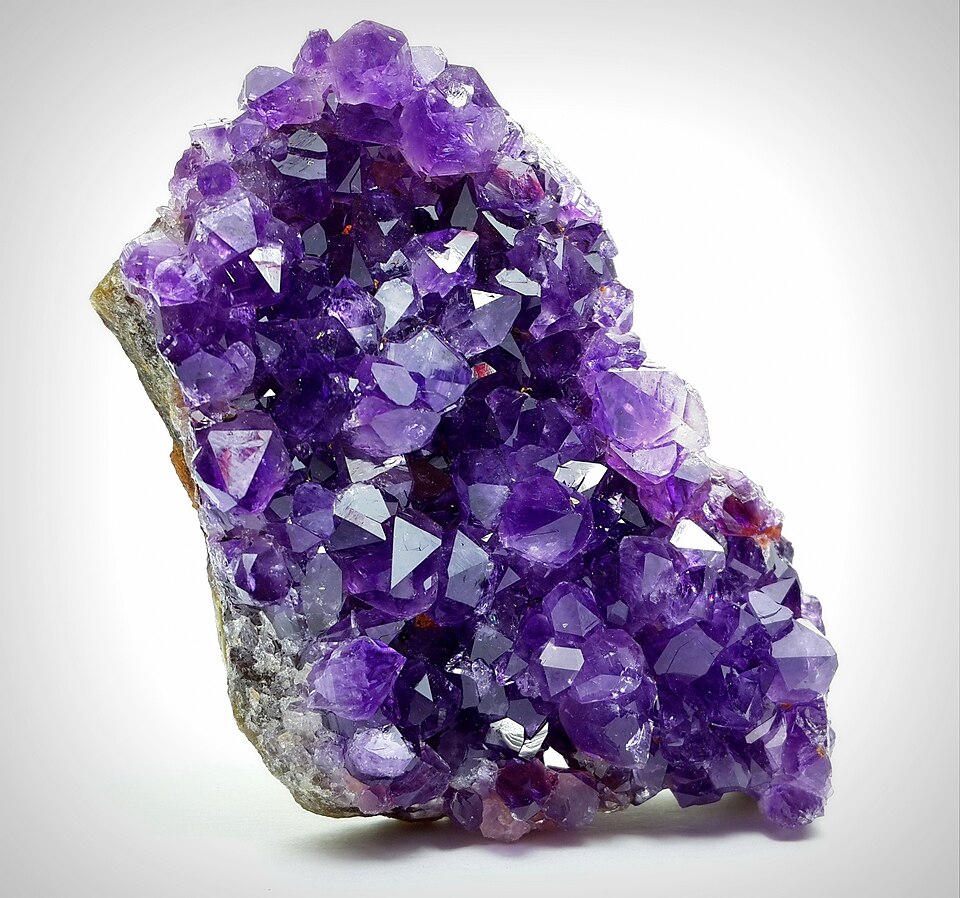
How to identify amethyst
- Purple, often deepest at the crystal tips.
- Hardness 7 — scratches glass.
- Grows as clusters of pointed crystals inside geodes.
- No cleavage; breaks with a glassy, curved fracture.
Often confused with
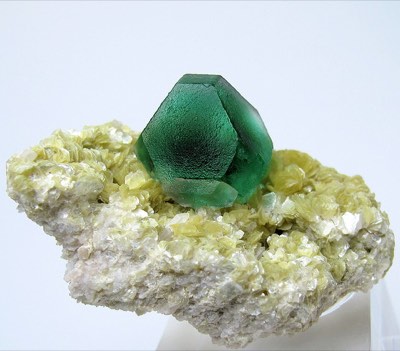 Fluorite
Purple fluorite is much softer (4), forms cubes and splits cleanly along flat planes.
Compare side by side
Where it's found
- Rio Grande do Sul, Brazil
- Artigas, Uruguay
- Thunder Bay, Ontario
- Four Peaks, Arizona
Uses
Gemstones and decorative geodes.
Rock tumbling
Great for tumbling. Keep polished stones out of strong sunlight; the color can fade.
Did you know?
The name comes from Greek amethystos, 'not drunk' — and heating amethyst turns it yellow, which is how most citrine on the market is made.
Think you could spot it from a blurry close-up?
Play today's Rocksday