 Rocksday
Azurite vs Malachite
How to tell them apart
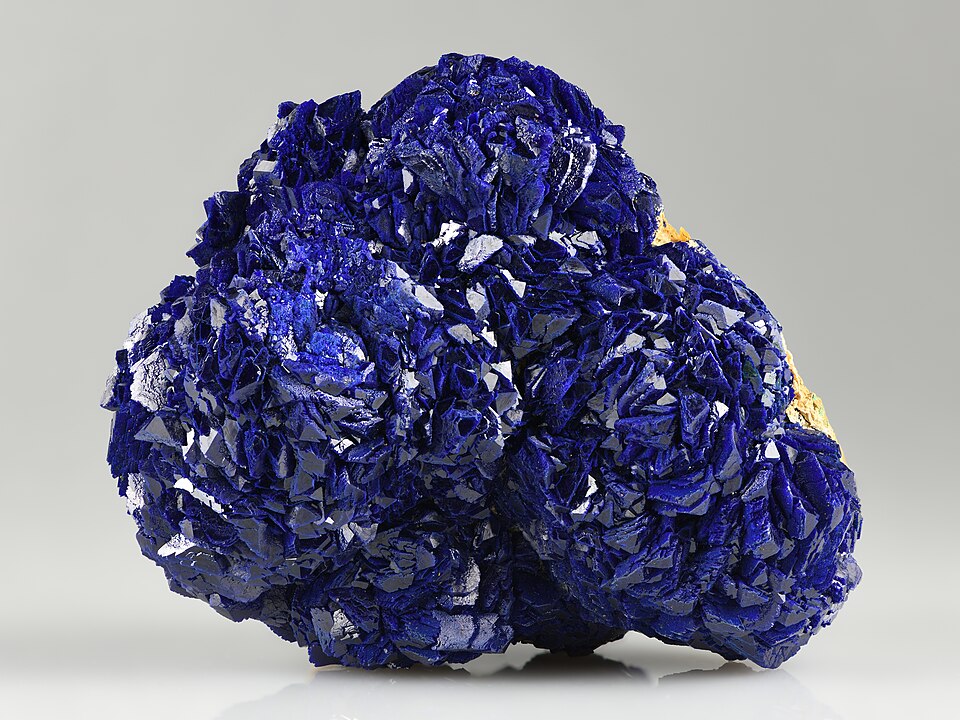
An intensely deep blue copper carbonate. Over time it slowly converts to green malachite, and the two are often found together.
Photo: Ivar Leidus, CC BY-SA 4.0
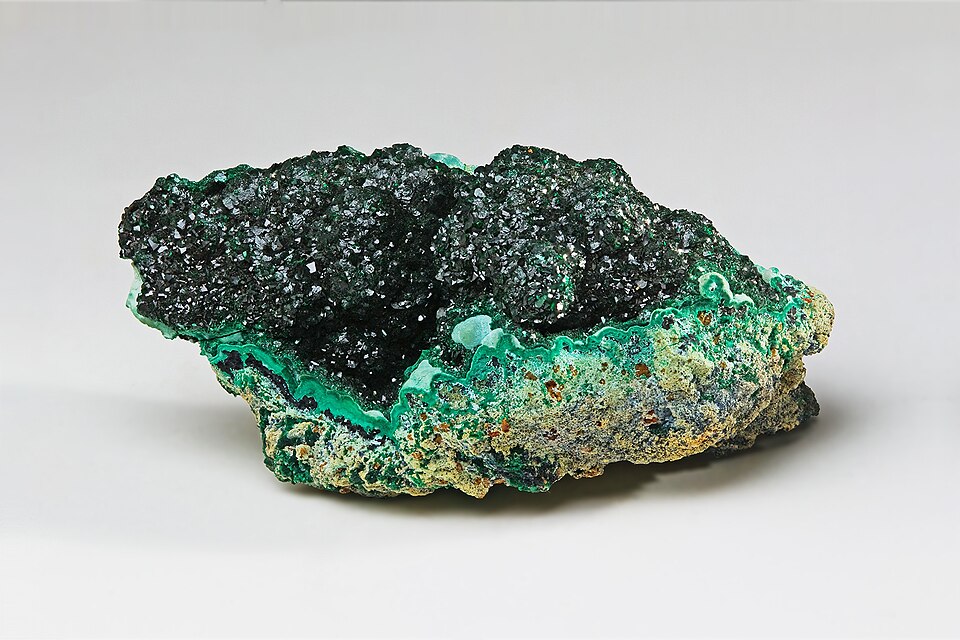
A vivid green copper carbonate with bold light-and-dark banding. It forms where copper deposits weather near the surface.
Photo: JJ Harrison (https://www.jjharrison.com.au/), CC BY-SA 3.0
Quick tests
- Streak (rub on unglazed porcelain): Azurite leaves a light blue streak; Malachite leaves light green.
Key differences
- Azurite is deep blue; the two often grow together.
Side by side
| Property | Azurite | Malachite |
|---|---|---|
| Type | Mineral | Mineral |
| Mohs hardness | 3.5–4 | 3.5–4 |
| Luster | Vitreous | Silky to dull |
| Streak | Light blue | Light green |
| Colors | Blue | Green |
| Crystal system | Monoclinic | Monoclinic |
| Specific gravity | 3.77–3.78 | 3.6–4.05 |
| Formula | Cu₃(CO₃)₂(OH)₂ | Cu₂CO₃(OH)₂ |
| Found in | Bisbee, Arizona; Tsumeb, Namibia | Katanga, DR Congo; Ural Mountains, Russia |
Properties that are the same for both are grayed out.
How to identify azurite
- Deep 'azure' blue, often with green malachite.
- Fizzes in acid.
- Soft — a knife scratches it.
- Light blue streak.
Crystal system: Monoclinic
Full Azurite guide →How to identify malachite
- Bright green with concentric light/dark bands.
- Fizzes in acid.
- Feels heavy for a stone.
- Light green streak.
Crystal system: Monoclinic
Full Malachite guide →More comparisons
Could you tell them apart from a blurry close-up?
Play today's Rocksday