 Rocksday
Azurite vs Chalcanthite
How to tell them apart
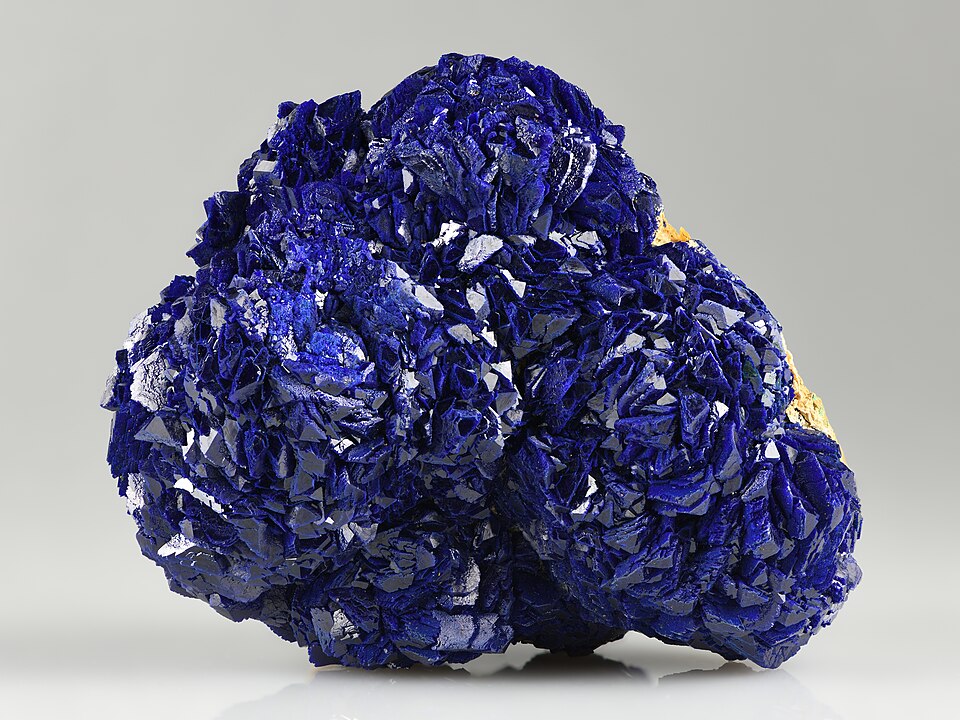
An intensely deep blue copper carbonate. Over time it slowly converts to green malachite, and the two are often found together.
Photo: Ivar Leidus, CC BY-SA 4.0
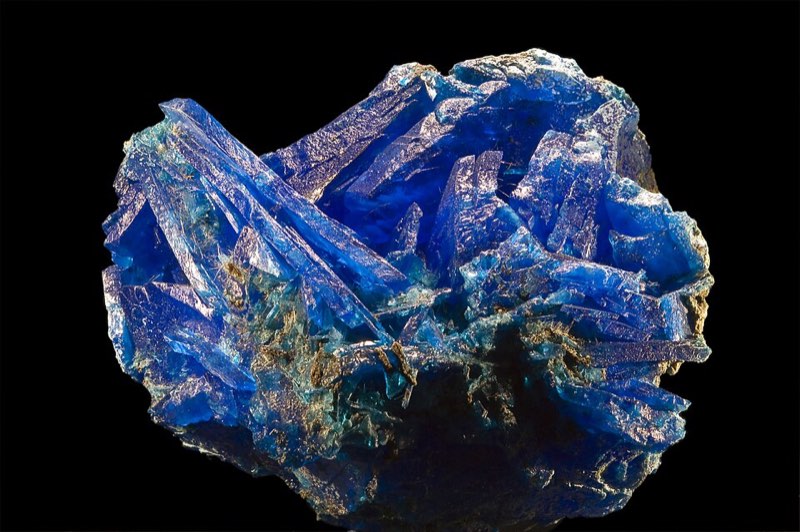
Water-soluble copper sulfate. Natural crusts form on mine walls; big blue crystals in shops are lab-grown.
Photo: Didier Descouens, CC BY-SA 3.0
Quick tests
- Fingernail: A fingernail scratches Chalcanthite (Mohs 2.5) but not Azurite (Mohs 3.5–4).
- Acid (vinegar or dilute HCl): Azurite fizzes; Chalcanthite doesn't.
- Streak (rub on unglazed porcelain): Azurite leaves a light blue streak; Chalcanthite leaves white.
- Heft: Azurite feels noticeably heavier for its size (specific gravity 3.77–3.78 vs 2.12–2.3).
Key differences
- Azurite is darker blue, doesn't dissolve and fizzes in acid.
Side by side
| Property | Azurite | Chalcanthite |
|---|---|---|
| Type | Mineral | Mineral |
| Mohs hardness | 3.5–4 | 2.5 |
| Luster | Vitreous | Vitreous |
| Streak | Light blue | White |
| Colors | Blue | Blue |
| Crystal system | Monoclinic | Triclinic |
| Specific gravity | 3.77–3.78 | 2.12–2.3 |
| Formula | Cu₃(CO₃)₂(OH)₂ | CuSO₄·5H₂O |
| Found in | Bisbee, Arizona; Tsumeb, Namibia | Chuquicamata, Chile; Arizona |
Properties that are the same for both are grayed out.
How to identify azurite
- Deep 'azure' blue, often with green malachite.
- Fizzes in acid.
- Soft — a knife scratches it.
- Light blue streak.
Crystal system: Monoclinic
Full Azurite guide →How to identify chalcanthite
- Vivid sky to royal blue.
- Dissolves in water.
- Turns white and powdery when it dries out.
Crystal system: Triclinic
Full Chalcanthite guide →More comparisons
Could you tell them apart from a blurry close-up?
Play today's Rocksday