 Rocksday
Amethyst vs Kunzite
To tell Amethyst from Kunzite: Amethyst is harder and does not split on flat planes.
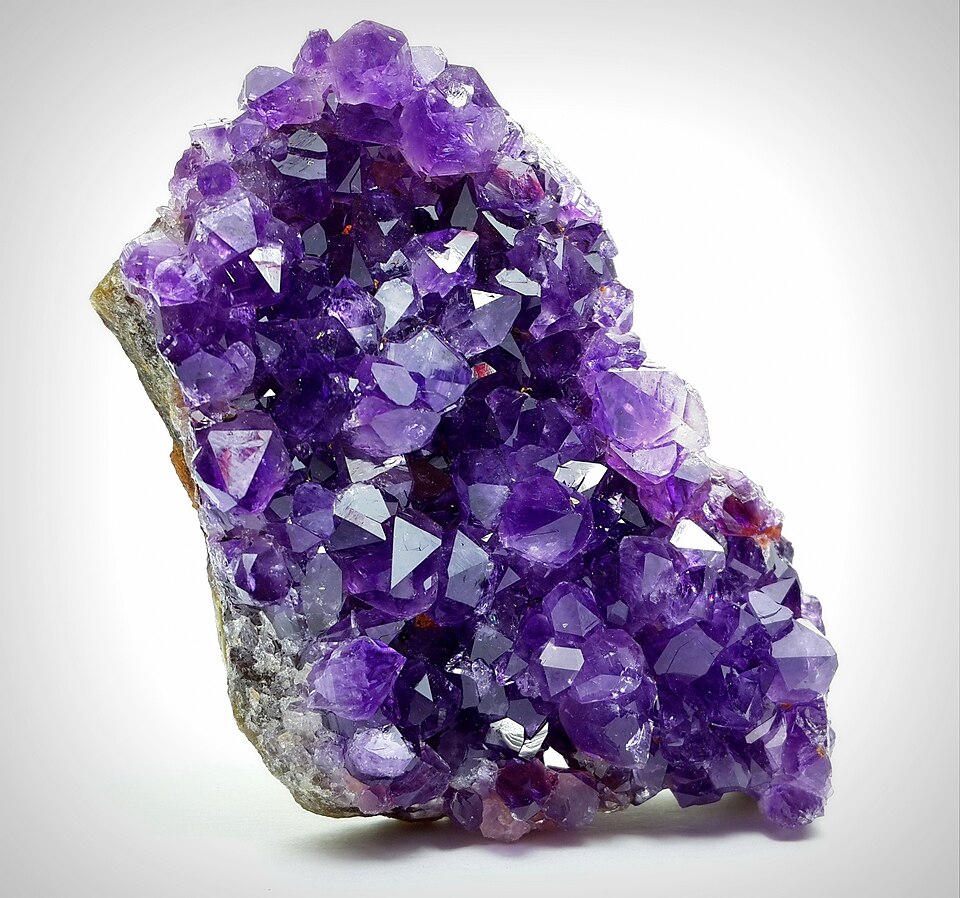
The purple variety of quartz. Its color comes from traces of iron combined with natural radiation, and it often lines the inside of large volcanic geodes.
Photo: Gonzalo Devia, CC BY-SA 4.0
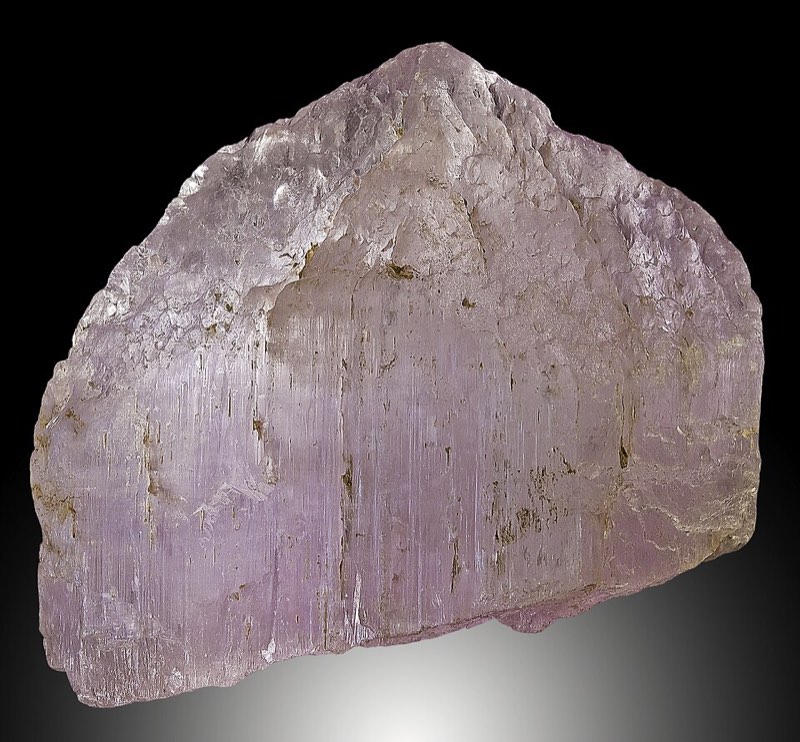
Lilac-pink spodumene, colored by manganese. It cleaves easily and can fade in strong sun.
Photo: Didier Descouens, CC BY-SA 4.0
Key differences
- Amethyst is harder and does not split on flat planes.
Side by side
| Property | Amethyst | Kunzite |
|---|---|---|
| Type | Mineral | Mineral |
| Mohs hardness | 7 | 6.5–7 |
| Luster | Vitreous | Vitreous |
| Streak | White | White |
| Colors | Purple | Pink, Purple |
| Crystal system | Trigonal | Monoclinic |
| Specific gravity | 2.65 | 3.1–3.2 |
| Formula | SiO₂ | LiAlSi₂O₆ |
| Found in | Rio Grande do Sul, Brazil; Artigas, Uruguay | Pala, California; Nuristan, Afghanistan |
Properties that are the same for both are grayed out.
How to identify amethyst
- Purple, often deepest at the crystal tips.
- Hardness 7 — scratches glass.
- Grows as clusters of pointed crystals inside geodes.
- No cleavage; breaks with a glassy, curved fracture.
Crystal system: Trigonal
Full Amethyst guide →How to identify kunzite
- Pink to lilac, often deepest when you look down the length of the crystal.
- Flattened, striated prisms that split along flat planes.
- A knife does not scratch it, but it splits if knocked.
Crystal system: Monoclinic
Full Kunzite guide →More comparisons
Frequently asked questions
What is the difference between amethyst and kunzite?
Amethyst is a mineral (SiO₂) with a Mohs hardness of 7 and a vitreous luster, usually purple. Kunzite is a mineral (LiAlSi₂O₆) with a Mohs hardness of 6.5–7 and a vitreous luster, usually pink or purple.
How can you tell amethyst from kunzite?
Amethyst is harder and does not split on flat planes.
Could you tell them apart from a blurry close-up?
Play today's Rocksday