 Rocksday
Almandine vs Garnet
To tell Almandine from Garnet: Almandine is the iron species of the garnet group.
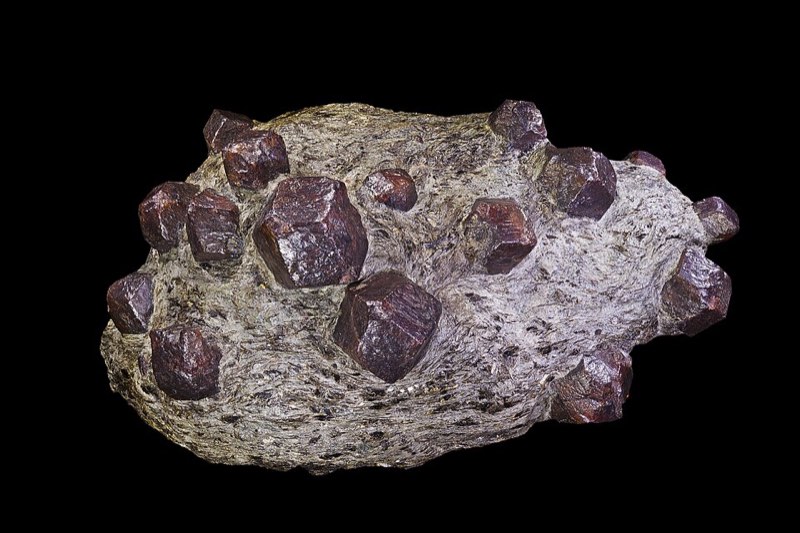
The common iron garnet: dark red to purplish, and heavy. It is the garnet in most mica schists.
Photo: Didier Descouens, CC BY-SA 4.0
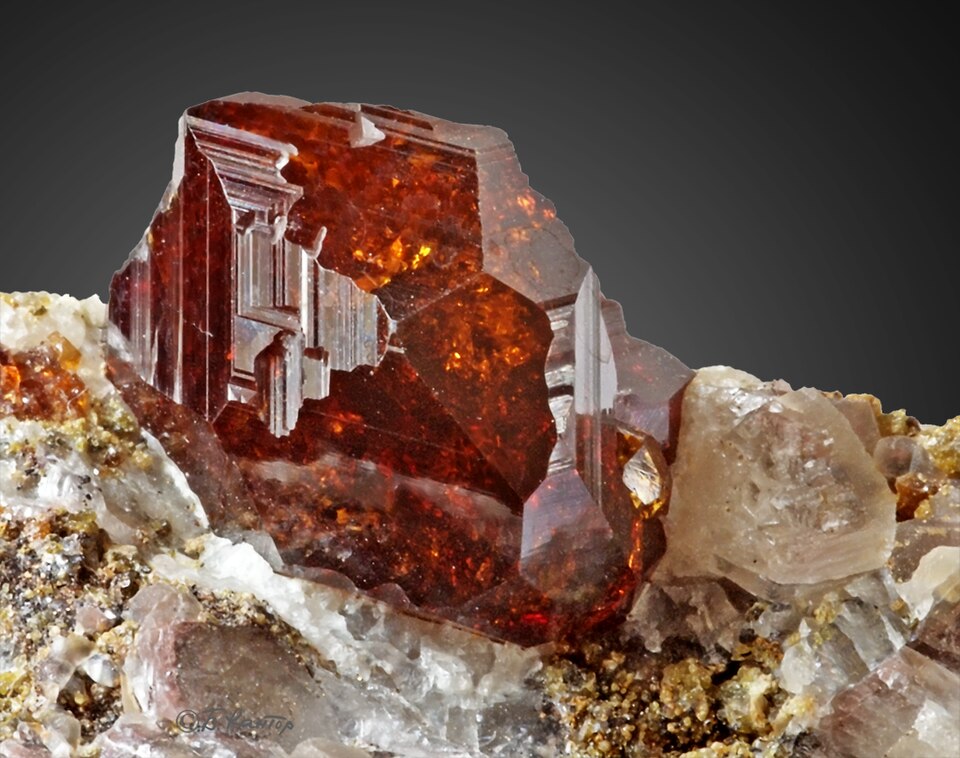
A family of silicate minerals that grow as round, many-faced crystals. Deep red almandine studding schist is the classic find.
Photo: Moha112100, CC BY-SA 3.0
Key differences
- Almandine is the iron species of the garnet group.
Side by side
| Property | Almandine | Garnet |
|---|---|---|
| Type | Mineral | Mineral |
| Mohs hardness | 7–7.5 | 7–7.5 |
| Luster | Vitreous | Vitreous |
| Streak | White | White |
| Colors | Red, Purple, Brown | Red, Brown |
| Crystal system | Cubic | Cubic |
| Specific gravity | 4–4.3 | 3.9–4.3 |
| Formula | Fe₃Al₂(SiO₄)₃ | Fe₃Al₂(SiO₄)₃ (almandine) |
| Found in | Gore Mountain, New York; Tyrol, Austria | Gore Mountain, New York; Emerald Creek, Idaho |
Properties that are the same for both are grayed out.
How to identify almandine
- Dark red or purplish rounded crystals, often in schist.
- Hardness 7–7.5.
- Noticeably heavy for its size.
Crystal system: Cubic
Full Almandine guide →How to identify garnet
- Ball-shaped crystals with 12 or 24 faces.
- Deep wine-red to brown.
- Scratches glass.
- Often embedded in mica schist.
Crystal system: Cubic
Full Garnet guide →More comparisons
Frequently asked questions
What is the difference between almandine and garnet?
Almandine is a mineral with a Mohs hardness of 7–7.5 and a vitreous luster, usually red, purple or brown. Garnet is a mineral with a Mohs hardness of 7–7.5 and a vitreous luster, usually red or brown.
How can you tell almandine from garnet?
Almandine is the iron species of the garnet group.
Could you tell them apart from a blurry close-up?
Play today's Rocksday