 Rocksday
Almandine
Almandine is a mineral with a Mohs hardness of 7–7.5 and a vitreous luster, usually red, purple or brown.
The common iron garnet: dark red to purplish, and heavy. It is the garnet in most mica schists.
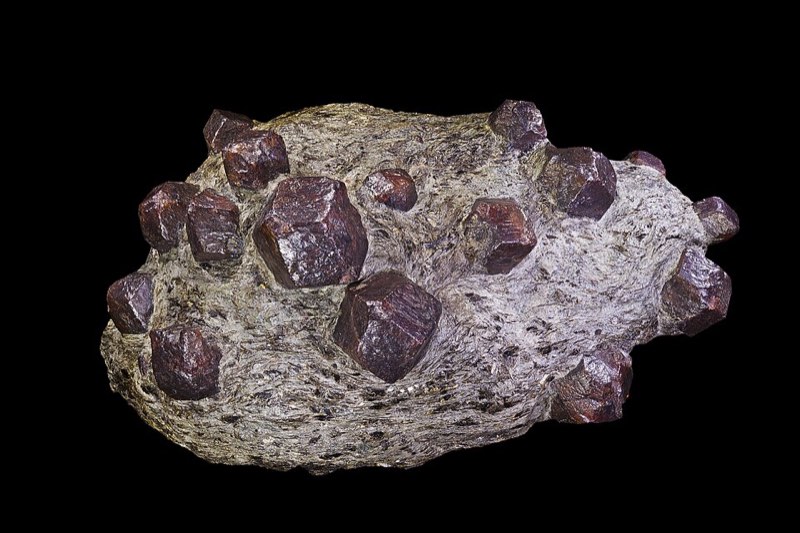
How to identify almandine
- Dark red or purplish rounded crystals, often in schist.
- Hardness 7–7.5.
- Noticeably heavy for its size.
Often confused with
Where it's found
- Gore Mountain, New York
- Tyrol, Austria
- India
- Madagascar
- Alaska
Uses
Abrasives and gemstones.
Rock tumbling
Great for tumbling.
Did you know?
At Gore Mountain, New York, almandine crystals several centimeters across sit in a dark amphibolite.
Almandine FAQ
What is almandine?
Almandine is a mineral with a Mohs hardness of 7–7.5 and a vitreous luster, usually red, purple or brown. The common iron garnet: dark red to purplish, and heavy. It is the garnet in most mica schists.
How do you identify almandine?
Dark red or purplish rounded crystals, often in schist. Hardness 7–7.5. Noticeably heavy for its size.
How hard is almandine?
Almandine has a Mohs hardness of 7–7.5. Almandine scratches glass, and a steel knife can't scratch it.
Where is almandine found?
Notable localities include Gore Mountain, New York; Tyrol, Austria; India; Madagascar; and Alaska.
What is almandine used for?
Abrasives and gemstones.
Can you tumble almandine?
Yes — it tumbles well.
What is almandine often confused with?
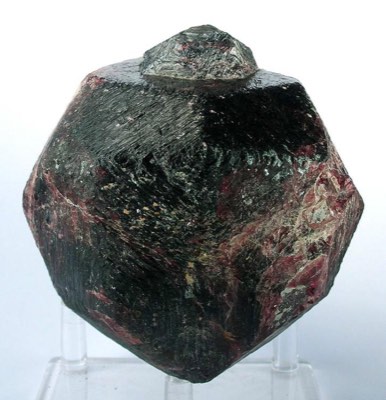
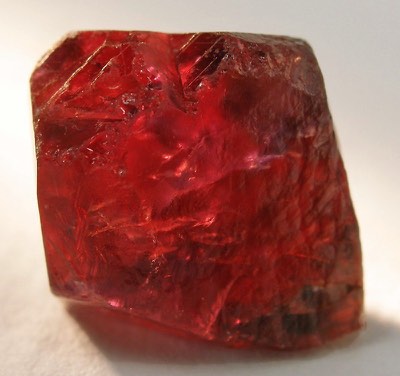
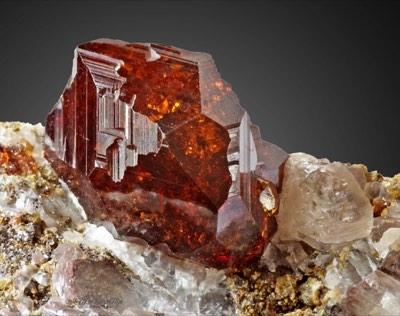
Almandine is most often confused with Pyrope, Ruby and Garnet. Pyrope is a brighter blood red and lighter (it's the magnesium garnet). Ruby is harder and grows in hexagonal barrels. Almandine is the iron species of the garnet group.
Think you could spot it from a blurry close-up?
Play today's Rocksday