 Rocksday
Orbicular Granite
Orbicular Granite is an igneous rock with a Mohs hardness of about 6–7 and a granular luster, usually gray, white, black or pink.
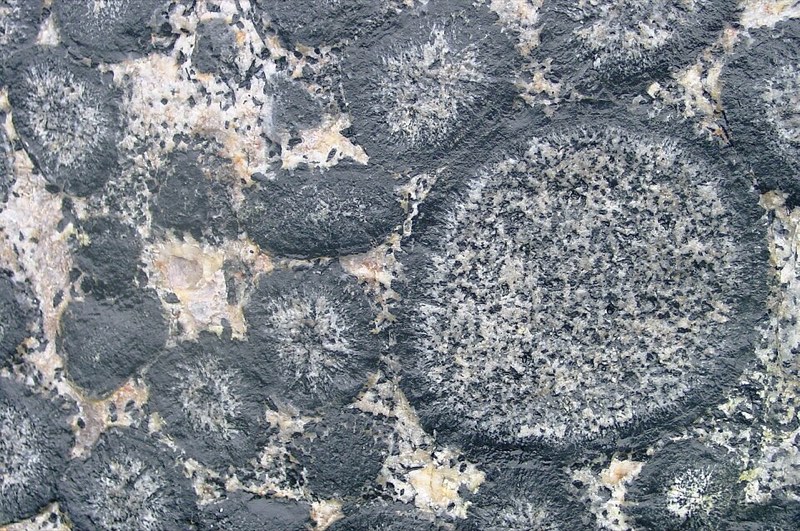
Granite full of round, layered orbs of feldspar and darker minerals that grew outward from a core.
How to identify orbicular granite
- Spherical orbicules with concentric light and dark rings.
- The matrix between orbs is ordinary granite.
- Hard, like granite.
Often confused with
Where it's found
- Finland
- Boogardie, Western Australia
- Caldera, Chile
Uses
Decorative stone. Most bodies are too small to quarry.
Rock tumbling
Great for tumbling.
Did you know?
Each orb grew layer by layer while the magma was still partly liquid.
Orbicular Granite FAQ
What is orbicular granite?
Orbicular Granite is an igneous rock with a Mohs hardness of about 6–7 and a granular luster, usually gray, white, black or pink. Granite full of round, layered orbs of feldspar and darker minerals that grew outward from a core.
How do you identify orbicular granite?
Spherical orbicules with concentric light and dark rings. The matrix between orbs is ordinary granite. Hard, like granite.
How hard is orbicular granite?
Orbicular Granite has a Mohs hardness of about 6–7. Orbicular Granite scratches glass, and a steel knife can't scratch it.
Where is orbicular granite found?
Notable localities include Finland; Boogardie, Western Australia; and Caldera, Chile.
What is orbicular granite used for?
Decorative stone. Most bodies are too small to quarry.
Can you tumble orbicular granite?
Yes — it tumbles well.
What is orbicular granite often confused with?
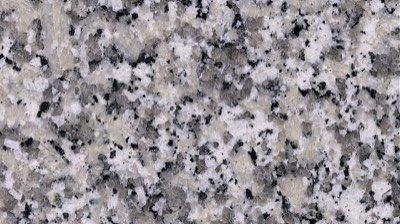
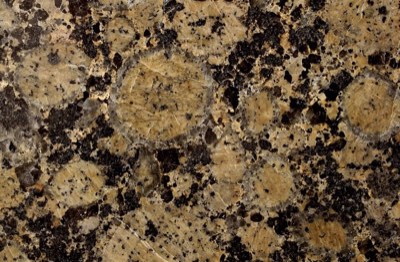
Orbicular Granite is most often confused with Granite and Rapakivi. Granite has no concentric orbs. Rapakivi ovoids have one plagioclase rim, not many shells.
Think you could spot it from a blurry close-up?
Play today's Rocksday