 Rocksday
Neptunite
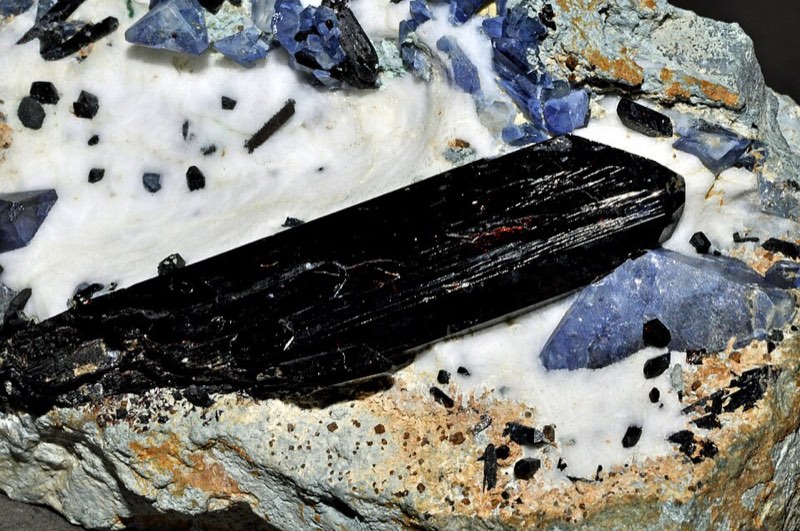
Neptunite is a mineral with a Mohs hardness of 5–6 and a vitreous luster, usually black or red.
Black prisms that are deep red on thin edges, famous on white natrolite beside blue benitoite.
How to identify neptunite
- Square-ish black prisms; thin edges glow red.
- Reddish-brown streak.
- Hardness about 5–6.
Often confused with
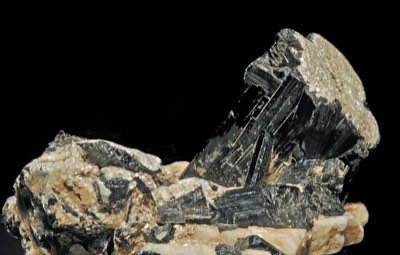 Black Tourmaline
Schorl is harder, has a white streak and a triangular cross-section.
Compare side by side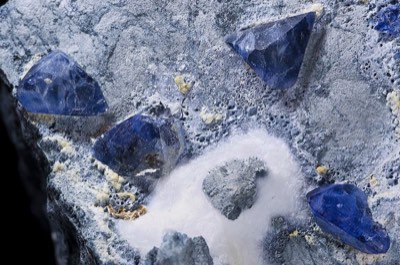 Benitoite
 on the same rock is blue and fluoresces; neptunite is the black one.
Compare side by side
Where it's found
- San Benito County, California
- Kola Peninsula, Russia
Uses
Collector specimens.
Rock tumbling
Not suitable for tumbling.
Did you know?
The classic specimens are from the Dallas Gem Mine in San Benito County, the same place as benitoite.
Neptunite FAQ
What is neptunite?
Neptunite is a mineral with a Mohs hardness of 5–6 and a vitreous luster, usually black or red. Black prisms that are deep red on thin edges, famous on white natrolite beside blue benitoite.
How do you identify neptunite?
Square-ish black prisms; thin edges glow red. Reddish-brown streak. Hardness about 5–6.
How hard is neptunite?
Neptunite has a Mohs hardness of 5–6. Its hardness varies from 5 to 6, so scratch tests depend on the piece.
Where is neptunite found?
Notable localities include San Benito County, California; and Kola Peninsula, Russia.
What is neptunite used for?
Collector specimens.
Can you tumble neptunite?
It isn't a good choice for a rock tumbler.
What is neptunite often confused with?
Neptunite is most often confused with Black Tourmaline and Benitoite. Schorl is harder, has a white streak and a triangular cross-section. Benitoite on the same rock is blue and fluoresces; neptunite is the black one.
Think you could spot it from a blurry close-up?
Play today's Rocksday