 Rocksday
Glossopteris
Glossopteris is a fossil with a Mohs hardness of about 2–4 and a dull luster, usually black, brown or gray.
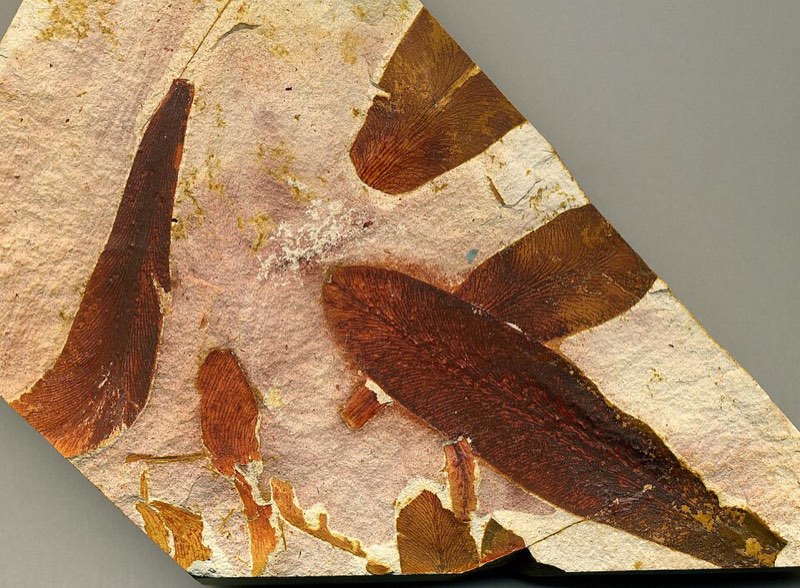
Tongue-shaped leaves of a Permian seed plant that grew across the southern continents when they were still joined.
How to identify glossopteris
- A simple tongue-shaped leaf with a strong midrib and a net of side veins.
- Usually a flat impression in shale or sandstone.
- No saw-tooth strip like a graptolite.
Often confused with
Where it's found
- India
- Australia
- Antarctica
- South Africa
- South America
Uses
Evidence in the history of continental drift.
Rock tumbling
Not suitable for tumbling.
Did you know?
The same leaves in India, Africa, South America, Australia and Antarctica were some of the clearest evidence those continents were once joined.
Glossopteris FAQ
What is glossopteris?
Glossopteris is a fossil with a Mohs hardness of about 2–4 and a dull luster, usually black, brown or gray. Tongue-shaped leaves of a Permian seed plant that grew across the southern continents when they were still joined.
How do you identify glossopteris?
A simple tongue-shaped leaf with a strong midrib and a net of side veins. Usually a flat impression in shale or sandstone. No saw-tooth strip like a graptolite.
How hard is glossopteris?
Glossopteris has a Mohs hardness of about 2–4. Its hardness varies from 2 to 4, so scratch tests depend on the piece.
Where is glossopteris found?
Notable localities include India, Australia, Antarctica, South Africa and South America.
What is glossopteris used for?
Evidence in the history of continental drift.
Can you tumble glossopteris?
It isn't a good choice for a rock tumbler.
What is glossopteris often confused with?
Glossopteris is most often confused with Graptolite. Graptolites are narrow toothed films, not leaves.
Think you could spot it from a blurry close-up?
Play today's Rocksday