 Rocksday
Eurypterid
Eurypterid is a fossil with a Mohs hardness of about 3 and a dull luster, usually black, brown or gray.
Extinct chelicerates — relatives of horseshoe crabs and arachnids — often called sea scorpions. Most finds are pieces of the shell in dark rock.
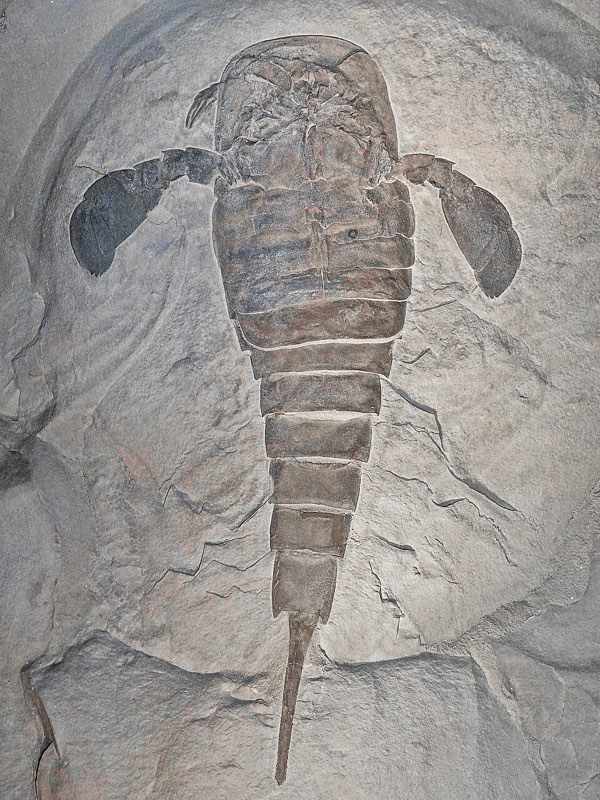
How to identify eurypterid
- A segmented body, paddle-like swimming leg or crescent head shield.
- Usually flattened in black shale or a dolostone slab.
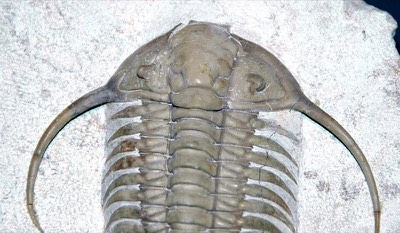
- No three-lobed body like a trilobite.
Often confused with
Where it's found
- Bertie Group, New York
- Kokomo, Indiana
- Scotland
- Estonia
Uses
Fossil collecting.
Rock tumbling
Not suitable for tumbling.
Did you know?
The largest species were more than 2 meters long, though most fossils are far smaller.
Eurypterid FAQ
What is eurypterid?
Eurypterid is a fossil with a Mohs hardness of about 3 and a dull luster, usually black, brown or gray. Extinct chelicerates — relatives of horseshoe crabs and arachnids — often called sea scorpions. Most finds are pieces of the shell in dark rock.
How do you identify eurypterid?
A segmented body, paddle-like swimming leg or crescent head shield. Usually flattened in black shale or a dolostone slab. No three-lobed body like a trilobite.
How hard is eurypterid?
Eurypterid has a Mohs hardness of about 3. A steel knife scratches Eurypterid, but a fingernail doesn't.
Where is eurypterid found?
Notable localities include Bertie Group, New York; Kokomo, Indiana; Scotland; and Estonia.
What is eurypterid used for?
Fossil collecting.
Can you tumble eurypterid?
It isn't a good choice for a rock tumbler.
What is eurypterid often confused with?
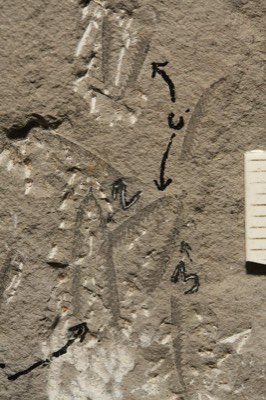
Eurypterid is most often confused with Trilobite and Graptolite. Trilobites have three lengthwise lobes and a different tail shield. Graptolites are thin saw-blade films, not a broad segmented animal.
Think you could spot it from a blurry close-up?
Play today's Rocksday