 Rocksday
Eurypterid vs Trilobite
To tell Eurypterid from Trilobite: Trilobites have three lengthwise lobes and a different tail shield.
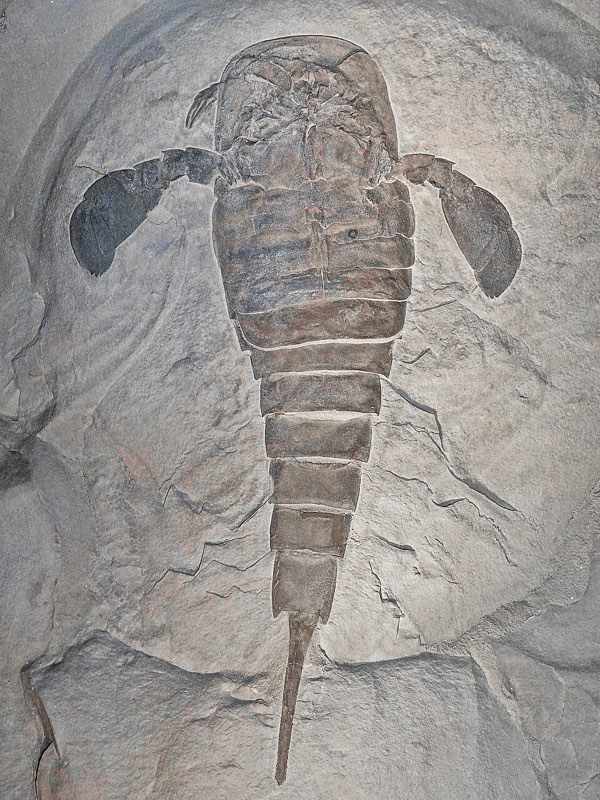
Extinct chelicerates — relatives of horseshoe crabs and arachnids — often called sea scorpions. Most finds are pieces of the shell in dark rock.
Photo: H. Zell, CC BY-SA 3.0
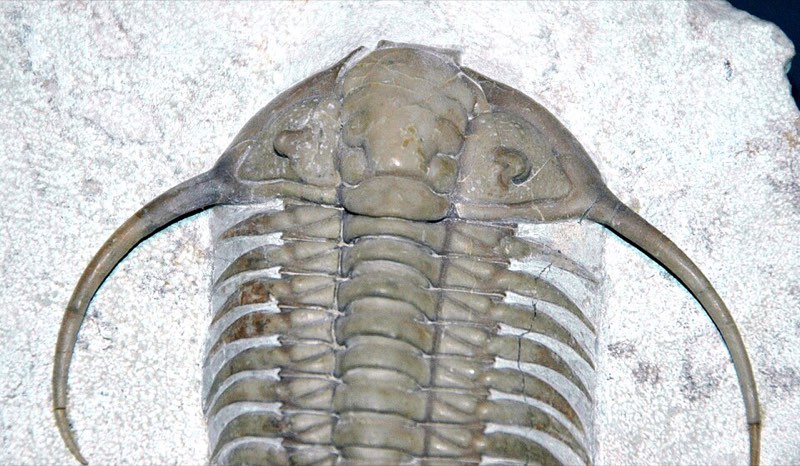
Fossil sea arthropods with three-lobed bodies that lived for nearly 300 million years.
Photo: James St. John, CC BY 2.0
Key differences
- Trilobites have three lengthwise lobes and a different tail shield.
Side by side
| Property | Eurypterid | Trilobite |
|---|---|---|
| Type | Fossil | Fossil |
| Mohs hardness | 3 | 3–4 |
| Luster | Dull | Dull to vitreous |
| Colors | Black, Brown, Gray | Black, Gray, Brown |
| Crystal system / structure | Arthropod exoskeleton in shale or dolostone | Calcite exoskeleton |
| Specific gravity | 2.6–2.8 | 2.6–2.8 |
| Found in | Bertie Group, New York; Kokomo, Indiana | Wheeler Shale, Utah; Anti-Atlas, Morocco |
Properties that are the same for both are grayed out.
How to identify eurypterid
- A segmented body, paddle-like swimming leg or crescent head shield.
- Usually flattened in black shale or a dolostone slab.
- No three-lobed body like a trilobite.
Structure: Arthropod exoskeleton in shale or dolostone
Full Eurypterid guide →How to identify trilobite
- Oval body split lengthwise into three lobes.
- Distinct head, segmented middle and tail shield.
- Often curled up or found as molted pieces.
Structure: Calcite exoskeleton
Full Trilobite guide →More comparisons
Frequently asked questions
What is the difference between eurypterid and trilobite?
Eurypterid is a fossil with a Mohs hardness of about 3 and a dull luster, usually black, brown or gray. Trilobite is a fossil with a Mohs hardness of about 3–4 and a dull to vitreous luster, usually black, gray or brown.
How can you tell eurypterid from trilobite?
Trilobites have three lengthwise lobes and a different tail shield.
Could you tell them apart from a blurry close-up?
Play today's Rocksday