 Rocksday
Elbaite
Elbaite is a mineral with a Mohs hardness of 7–7.5 and a vitreous luster, usually green, pink, red, blue or yellow.
The lithium tourmaline behind most green, pink and multicolored gem tourmaline, including watermelon crystals.
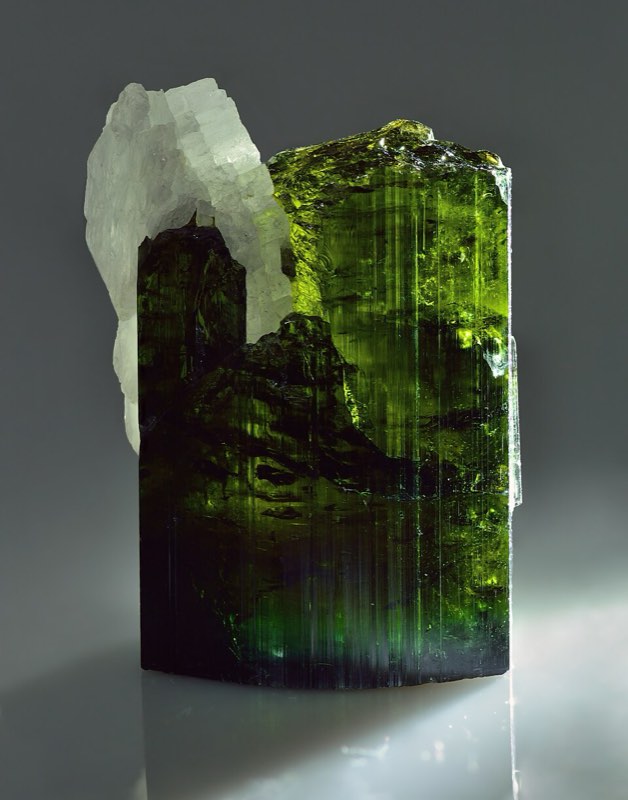
How to identify elbaite
- Long prisms, often green, pink or both, with lengthwise striations.
- Rounded-triangle cross-section.
- Hardness 7–7.5.
Often confused with
Where it's found
- Minas Gerais, Brazil
- San Diego County, California
- Madagascar
- Afghanistan
- Pakistan
- Maine
Uses
Gemstones.
Rock tumbling
Great for tumbling.
Did you know?
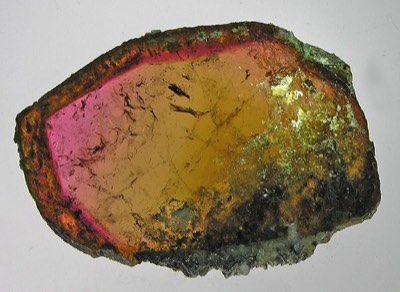
Watermelon tourmaline is elbaite with a pink core and a green rim, or the reverse.
Elbaite FAQ
What is elbaite?
Elbaite is a mineral with a Mohs hardness of 7–7.5 and a vitreous luster, usually green, pink, red, blue or yellow. The lithium tourmaline behind most green, pink and multicolored gem tourmaline, including watermelon crystals.
How do you identify elbaite?
Long prisms, often green, pink or both, with lengthwise striations. Rounded-triangle cross-section. Hardness 7–7.5.
How hard is elbaite?
Elbaite has a Mohs hardness of 7–7.5. Elbaite scratches glass, and a steel knife can't scratch it.
Where is elbaite found?
Notable localities include Minas Gerais, Brazil; San Diego County, California; Madagascar; Afghanistan; Pakistan; and Maine.
What is elbaite used for?
Gemstones.
Can you tumble elbaite?
Yes — it tumbles well.
What is elbaite often confused with?
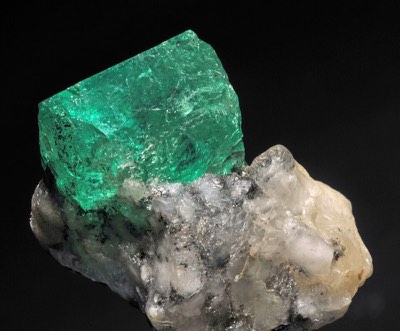
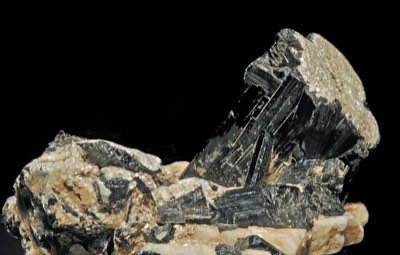
Elbaite is most often confused with Emerald, Black Tourmaline and Tourmaline. Emerald is hexagonal, with flat ends, and is slightly harder. Schorl is opaque black and is the iron species. Elbaite is the lithium species of the tourmaline group.
Think you could spot it from a blurry close-up?
Play today's Rocksday