 Rocksday
Babingtonite
Babingtonite is a mineral with a Mohs hardness of 5.5–6 and a vitreous luster, usually black or green.
A black calcium-iron silicate of short, shiny prisms. It is the official mineral of Massachusetts.
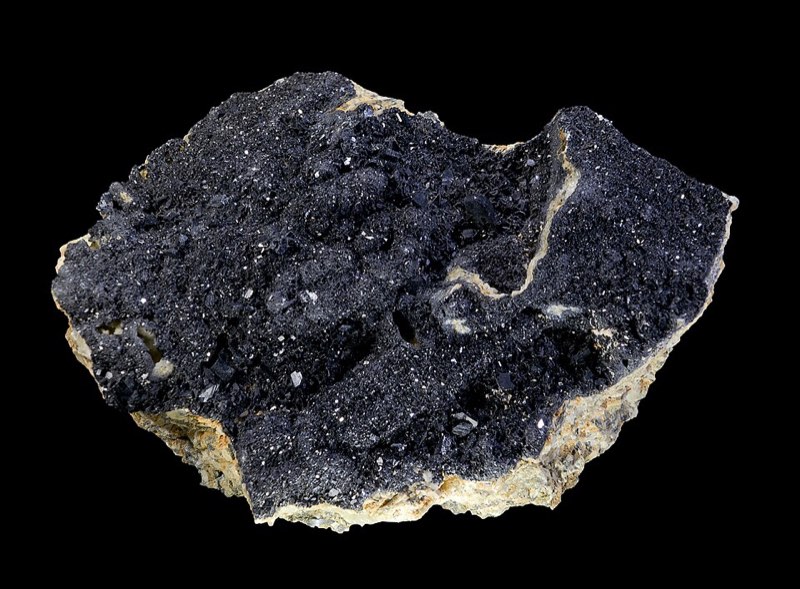
How to identify babingtonite
- Small black or very dark green prisms, often on prehnite or zeolites.
- Brown streak.
- Hardness 5.5–6. A strong magnet may tug weakly.
Often confused with
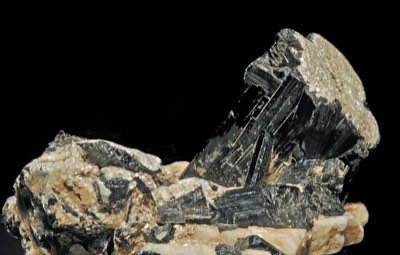 Black Tourmaline
Schorl is harder, has a white streak and does not grow in basalt cavities this way.
Compare side by side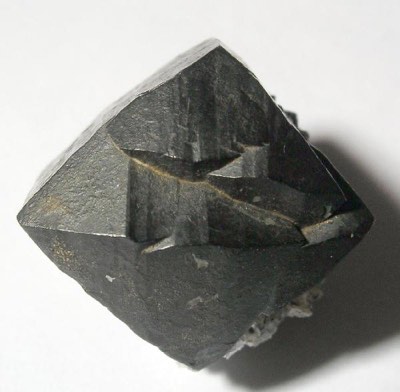
Where it's found
- Arendal, Norway
- Somerville, Massachusetts
- New Jersey
- India
Uses
Collector specimens.
Rock tumbling
Not suitable for tumbling.
Did you know?
Massachusetts made it the state mineral in 1971. The type locality is Arendal, Norway, described in 1824.
Babingtonite FAQ
What is babingtonite?
Babingtonite is a mineral with a Mohs hardness of 5.5–6 and a vitreous luster, usually black or green. A black calcium-iron silicate of short, shiny prisms. It is the official mineral of Massachusetts.
How do you identify babingtonite?
Small black or very dark green prisms, often on prehnite or zeolites. Brown streak. Hardness 5.5–6. A strong magnet may tug weakly.
How hard is babingtonite?
Babingtonite has a Mohs hardness of 5.5–6. Babingtonite scratches glass, and a steel knife can't scratch it.
Where is babingtonite found?
Notable localities include Arendal, Norway; Somerville, Massachusetts; New Jersey; and India.
What is babingtonite used for?
Collector specimens.
Can you tumble babingtonite?
It isn't a good choice for a rock tumbler.
What is babingtonite often confused with?
Babingtonite is most often confused with Black Tourmaline and Ilvaite. Schorl is harder, has a white streak and does not grow in basalt cavities this way. Ilvaite has a black streak and a more metallic luster.
Think you could spot it from a blurry close-up?
Play today's Rocksday