 Rocksday
Babingtonite vs Ilvaite
The quickest way to tell Babingtonite from Ilvaite: Babingtonite leaves a brown streak; Ilvaite leaves black.
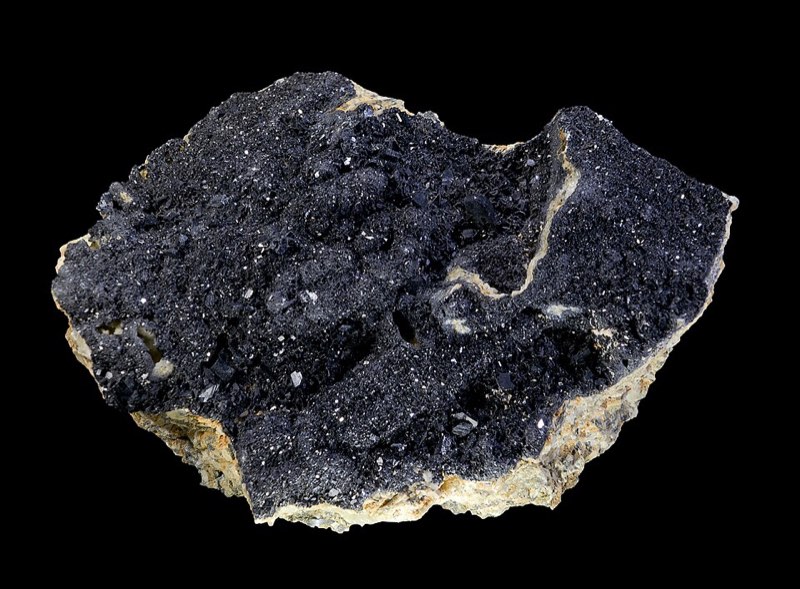
A black calcium-iron silicate of short, shiny prisms. It is the official mineral of Massachusetts.
Photo: Didier Descouens, CC BY-SA 3.0
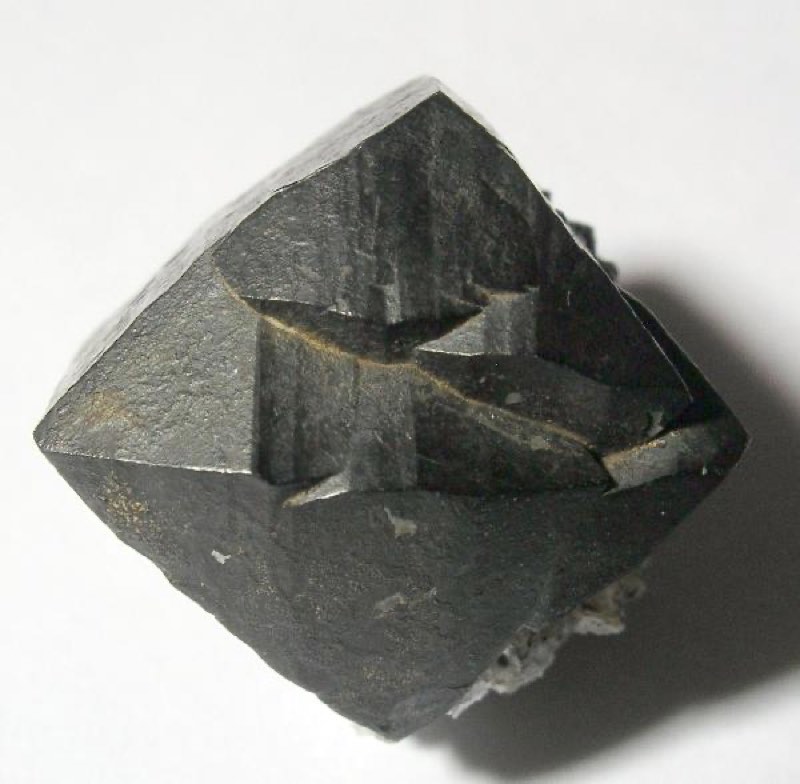
A black calcium-iron silicate with a dull metallic shine, first found on the island of Elba.
Photo: Robert M. Lavinsky, CC BY-SA 3.0
Quick tests
- Streak (rub on unglazed porcelain): Babingtonite leaves a brown streak; Ilvaite leaves black.
Key differences
- Ilvaite has a black streak and a more metallic luster.
Side by side
| Property | Babingtonite | Ilvaite |
|---|---|---|
| Type | Mineral | Mineral |
| Mohs hardness | 5.5–6 | 5.5–6 |
| Luster | Vitreous | Submetallic |
| Streak | Brown | Black |
| Colors | Black, Green | Black |
| Crystal system | Triclinic | Orthorhombic |
| Specific gravity | 3.3–3.4 | 3.8–4.1 |
| Formula | Ca₂(Fe,Mn)FeSi₅O₁₄(OH) | CaFe₂FeSi₂O₇O(OH) |
| Found in | Arendal, Norway; Somerville, Massachusetts | Elba, Italy; Dalnegorsk, Russia |
Properties that are the same for both are grayed out.
How to identify babingtonite
- Small black or very dark green prisms, often on prehnite or zeolites.
- Brown streak.
- Hardness 5.5–6. A strong magnet may tug weakly.
Crystal system: Triclinic
Full Babingtonite guide →How to identify ilvaite
- Black stubby prisms, often striated.
- Black streak.
- Hardness about 5.5–6. Heavier than hornblende.
Crystal system: Orthorhombic
Full Ilvaite guide →More comparisons
Frequently asked questions
What is the difference between babingtonite and ilvaite?
Babingtonite is a mineral with a Mohs hardness of 5.5–6 and a vitreous luster, usually black or green. Ilvaite is a mineral with a Mohs hardness of 5.5–6 and a submetallic luster, usually black.
How can you tell babingtonite from ilvaite?
Babingtonite leaves a brown streak; Ilvaite leaves black. Ilvaite has a black streak and a more metallic luster.
Could you tell them apart from a blurry close-up?
Play today's Rocksday