 Rocksday
Aegirine
Aegirine is a mineral (NaFeSi₂O₆) with a Mohs hardness of 6 and a vitreous luster, usually black, green or brown.
A sodium-iron pyroxene that forms black to greenish-black prisms in rocks that are poor in silica.
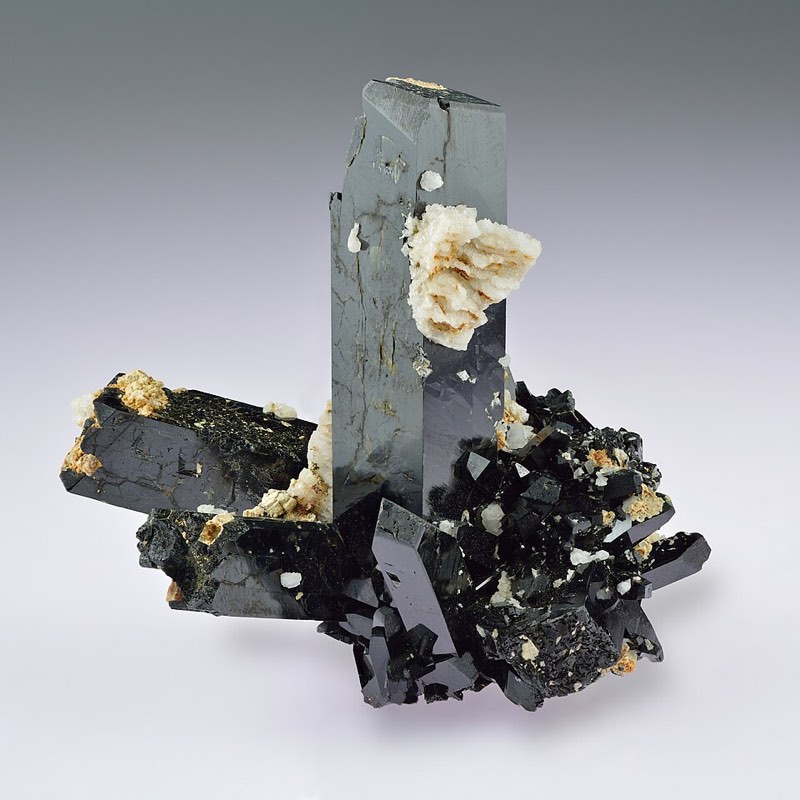
How to identify aegirine
- Black or dark green slender prisms.
- Two cleavages crossing at nearly 90°.
- Hardness about 6. Pale yellowish streak.
Often confused with
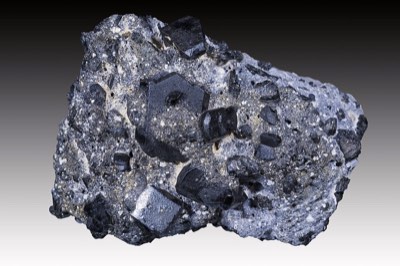 Augite
 is the common dark pyroxene of basalt and gabbro, not of nepheline syenites.
Compare side by side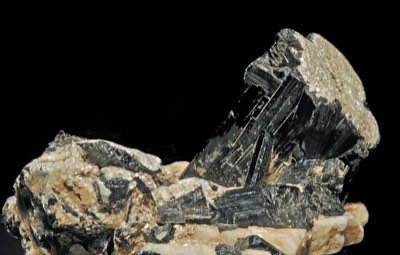
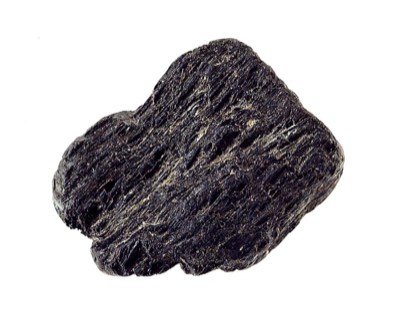
Where it's found
- Mount Malosa, Malawi
- Mont Saint-Hilaire, Quebec
- Kola Peninsula, Russia
- Magnet Cove, Arkansas
Uses
Collector specimens.
Rock tumbling
Can be tumbled with care.
Did you know?
It is named for Ægir, the Norse sea giant, because it was first described from Norway.
Aegirine FAQ
What is aegirine?
Aegirine is a mineral (NaFeSi₂O₆) with a Mohs hardness of 6 and a vitreous luster, usually black, green or brown. A sodium-iron pyroxene that forms black to greenish-black prisms in rocks that are poor in silica.
How do you identify aegirine?
Black or dark green slender prisms. Two cleavages crossing at nearly 90°. Hardness about 6. Pale yellowish streak.
How hard is aegirine?
Aegirine has a Mohs hardness of 6. Aegirine scratches glass, and a steel knife can't scratch it.
Where is aegirine found?
Notable localities include Mount Malosa, Malawi; Mont Saint-Hilaire, Quebec; Kola Peninsula, Russia; and Magnet Cove, Arkansas.
What is aegirine used for?
Collector specimens.
Can you tumble aegirine?
Yes, with care.
What is aegirine often confused with?
Aegirine is most often confused with Augite, Black Tourmaline and Hornblende. Augite is the common dark pyroxene of basalt and gabbro, not of nepheline syenites. Schorl has no cleavage and a triangular cross-section. Hornblende's cleavages meet near 56° and 124°, not 90°.
Think you could spot it from a blurry close-up?
Play today's Rocksday