 Rocksday
Turquoise vs Variscite
How to tell them apart
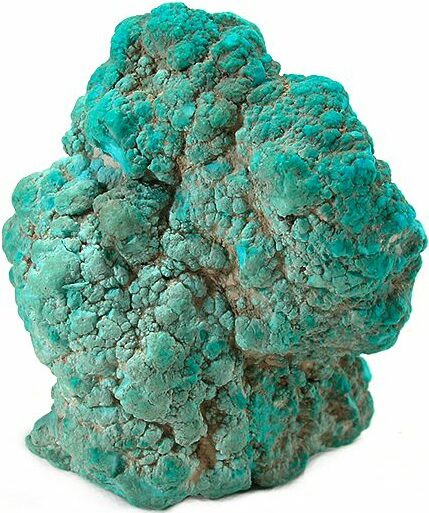
A copper aluminum phosphate prized for its sky-blue to green color, often webbed with brown or black host rock ('matrix').
Photo: Robert M. Lavinsky, CC BY-SA 3.0
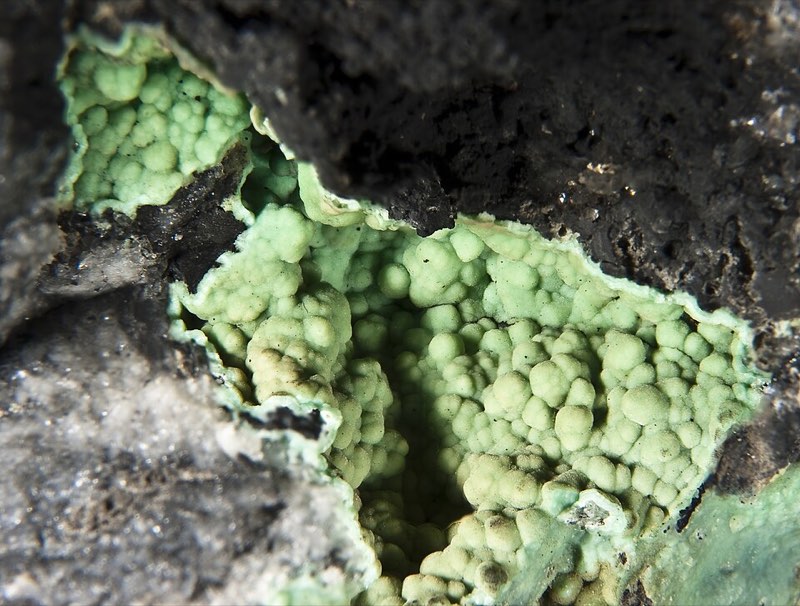
An apple-green aluminum phosphate found as nodules and veins, cut like turquoise.
Photo: Didier Descouens, CC BY 3.0
Quick tests
- Hardness: Turquoise is clearly harder: Mohs 5–6 versus 3.5–4.5.
- Streak (rub on unglazed porcelain): Turquoise leaves a white to greenish streak; Variscite leaves white.
Key differences
- Turquoise is bluer and harder.
Side by side
| Property | Turquoise | Variscite |
|---|---|---|
| Type | Mineral | Mineral |
| Mohs hardness | 5–6 | 3.5–4.5 |
| Luster | Waxy to dull | Waxy to vitreous |
| Streak | White to greenish | White |
| Colors | Blue, Green | Green |
| Crystal system | Triclinic | Orthorhombic |
| Specific gravity | 2.6–2.9 | 2.57–2.61 |
| Formula | CuAl₆(PO₄)₄(OH)₈·4H₂O | AlPO₄·2H₂O |
| Found in | Arizona; Nevada | Fairfield, Utah; Nevada |
Properties that are the same for both are grayed out.
How to identify turquoise
- Opaque sky blue to green with a waxy look.
- Often veined with brown or black matrix.
- Never forms visible crystals — always massive nuggets or veins.
- Porous: it can darken when oiled.
Crystal system: Triclinic
Full Turquoise guide →How to identify variscite
- Apple to mint green, waxy and opaque.
- Nodules with yellow and brown rims in Utah material.
- Softer than jade.
Crystal system: Orthorhombic
Full Variscite guide →More comparisons
Could you tell them apart from a blurry close-up?
Play today's Rocksday