 Rocksday
Quartzite vs Sandstone
How to tell them apart
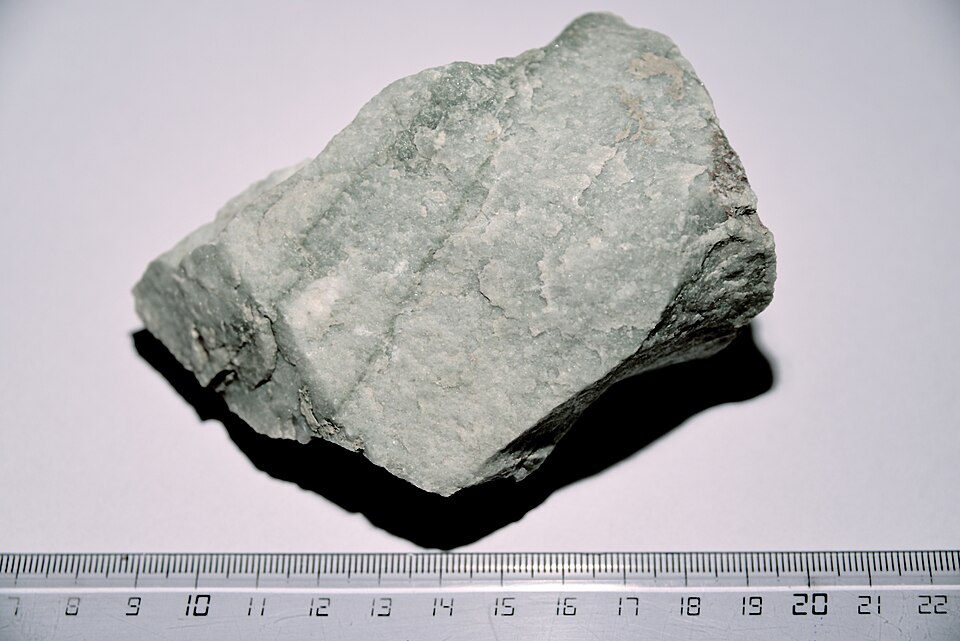
Sandstone fused by metamorphism into an extremely hard rock of interlocked quartz grains.
Photo: Gabriel Haute Maurienne, CC BY-SA 4.0
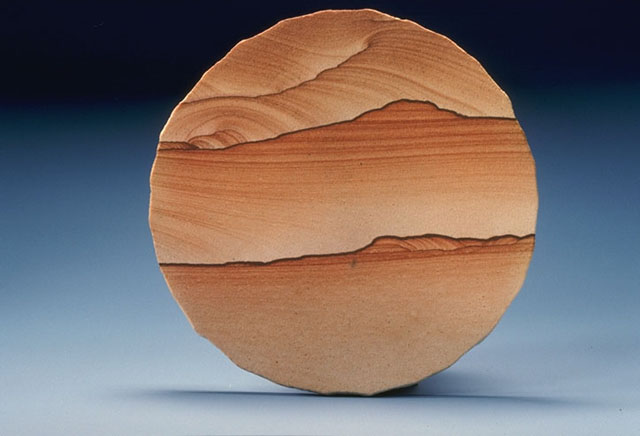
Sand grains — mostly quartz — cemented together. Many sandstones preserve ancient beaches, rivers or desert dunes.
Photo: Unknown, Public domain
Key differences
- Sandstone is gritty and grains rub off.
- Quartzite breaks through its grains and feels smooth, not gritty.
Side by side
| Property | Quartzite | Sandstone |
|---|---|---|
| Type | Metamorphic rock | Sedimentary rock |
| Mohs hardness | 7 | 6–7 |
| Luster | Sugary to glassy | Dull, gritty |
| Colors | White, Pink, Gray | Brown, Red, Yellow, White, Orange |
| Crystal system / structure | Interlocking quartz grains (non-foliated) | Clastic, sand-sized grains |
| Specific gravity | 2.6–2.7 | 2.2–2.8 |
| Found in | Baraboo, Wisconsin; Sioux Falls, South Dakota | Zion and Arches, Utah; Petra, Jordan |
Properties that are the same for both are grayed out.
How to identify quartzite
- Breaks through the grains, not around them.
- Scratches glass.
- Smooth, sugary surface — not gritty.
- Doesn't fizz in acid.
Structure: Interlocking quartz grains (non-foliated)
Full Quartzite guide →How to identify sandstone
- Gritty, like sandpaper.
- Individual sand grains visible with a lens.
- Grains rub off when scraped.
- Often layered or cross-bedded.
Structure: Clastic, sand-sized grains
Full Sandstone guide →More comparisons
Could you tell them apart from a blurry close-up?
Play today's Rocksday