 Rocksday
Anorthosite vs Quartzite
How to tell them apart
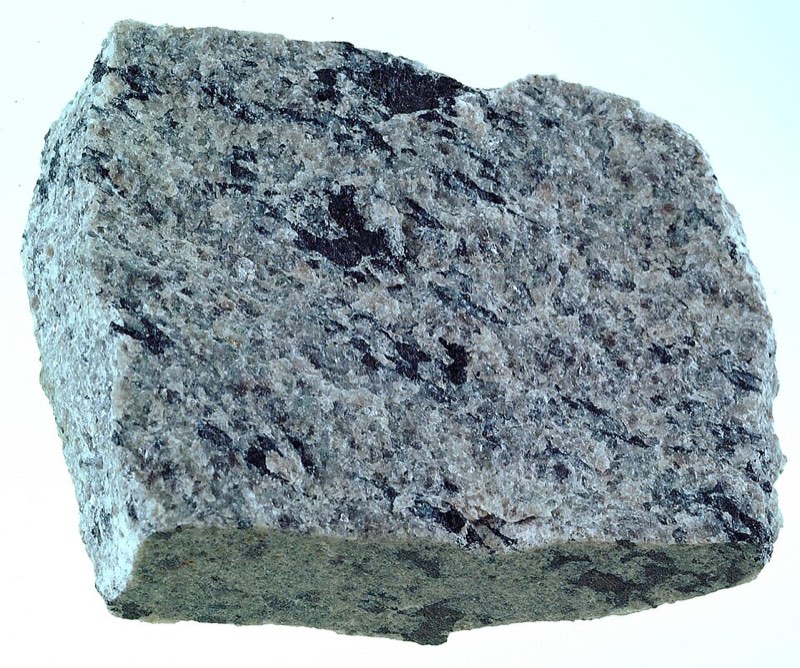
A pale rock made almost entirely of plagioclase feldspar — it makes up the Moon's bright highlands.
Photo: Mike Davis, CC0
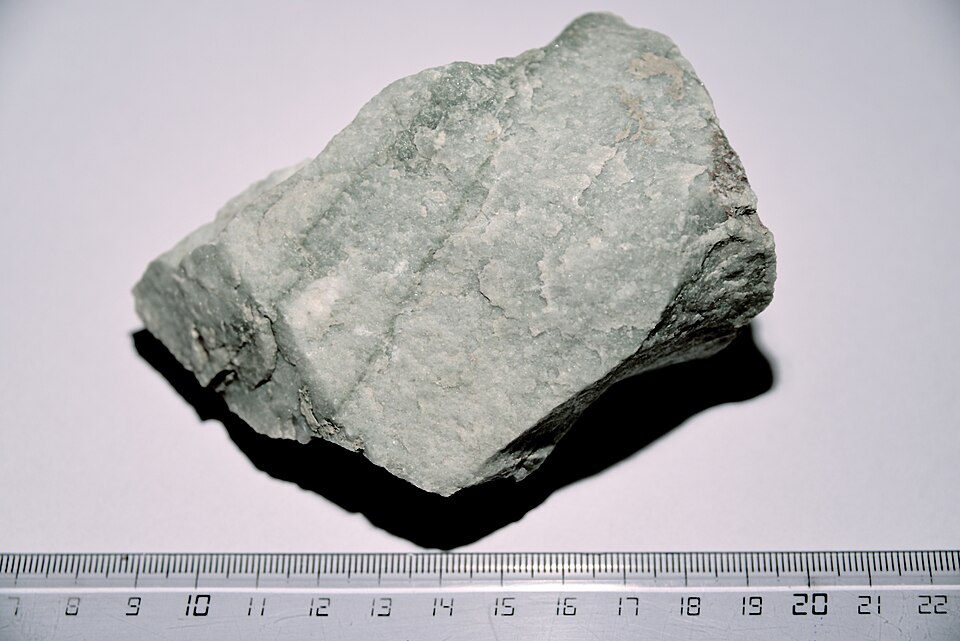
Sandstone fused by metamorphism into an extremely hard rock of interlocked quartz grains.
Photo: Gabriel Haute Maurienne, CC BY-SA 4.0
Key differences
- Quartzite has no flat feldspar cleavage faces.
Side by side
| Property | Anorthosite | Quartzite |
|---|---|---|
| Type | Igneous rock | Metamorphic rock |
| Mohs hardness | 6–6.5 | 7 |
| Luster | Granular, glassy | Sugary to glassy |
| Colors | White, Gray | White, Pink, Gray |
| Crystal system / structure | Coarse-grained | Interlocking quartz grains (non-foliated) |
| Specific gravity | 2.7–2.8 | 2.6–2.7 |
| Found in | Adirondack Mountains, New York; Nain, Labrador | Baraboo, Wisconsin; Sioux Falls, South Dakota |
Properties that are the same for both are grayed out.
How to identify anorthosite
- Light gray to white, coarse feldspar.
- Few dark minerals.
- May flash blue like labradorite.
Structure: Coarse-grained
Full Anorthosite guide →How to identify quartzite
- Breaks through the grains, not around them.
- Scratches glass.
- Smooth, sugary surface — not gritty.
- Doesn't fizz in acid.
Structure: Interlocking quartz grains (non-foliated)
Full Quartzite guide →More comparisons
Could you tell them apart from a blurry close-up?
Play today's Rocksday