 Rocksday
Pectolite vs Wollastonite
To tell Pectolite from Wollastonite: Wollastonite is also splintery and white but lacks sodium and is usually in skarns.
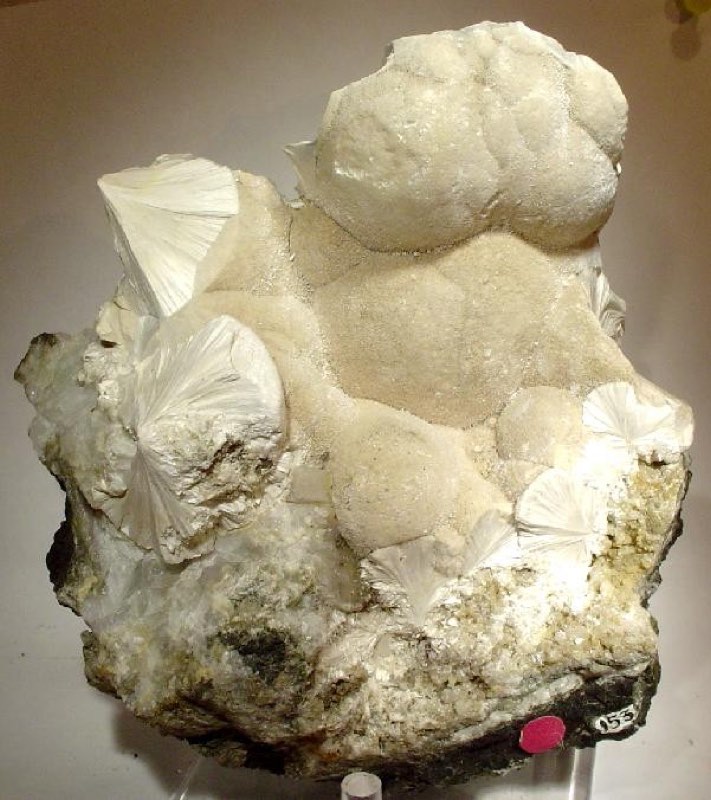
A sodium-calcium silicate of tough white needles. The compact blue variety from the Dominican Republic is larimar.
Photo: Robert M. Lavinsky, CC BY-SA 3.0
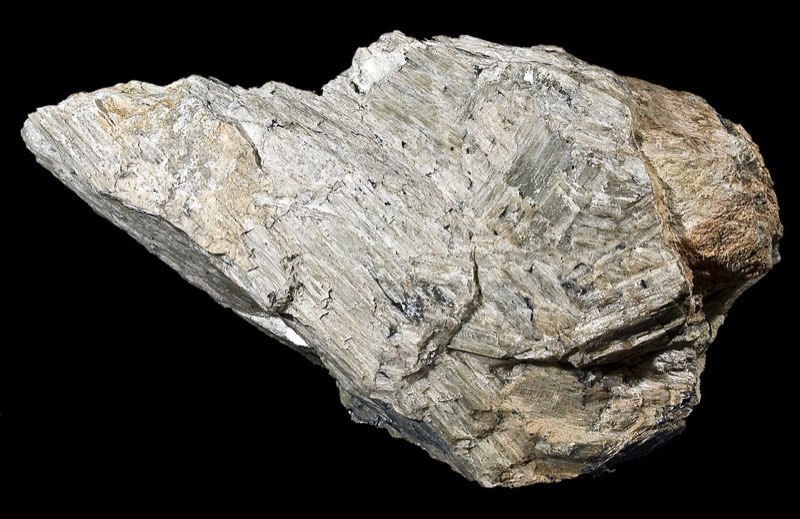
A white calcium silicate formed where hot magma bakes limestone.
Photo: Didier Descouens, CC BY-SA 3.0
Key differences
- Wollastonite is also splintery and white but lacks sodium and is usually in skarns.
Side by side
| Property | Pectolite | Wollastonite |
|---|---|---|
| Type | Mineral | Mineral |
| Mohs hardness | 4.5–5 | 4.5–5 |
| Luster | Silky to vitreous | Vitreous to silky |
| Streak | White | White |
| Colors | White, Gray, Blue | White, Gray |
| Crystal system | Triclinic | Triclinic |
| Specific gravity | 2.7–2.9 | 2.86–3.09 |
| Formula | NaCa₂Si₃O₈(OH) | CaSiO₃ |
| Found in | New Jersey; Dominican Republic | Willsboro, New York; Finland |
Properties that are the same for both are grayed out.
How to identify pectolite
- Splintery white masses or radiating needles.
- Splinters easily — handle with care.
- Hardness about 5. Blue compact pieces are larimar.
Crystal system: Triclinic
Full Pectolite guide →How to identify wollastonite
- White fibrous or bladed masses.
- Splintery, silky texture.
- Some glows under UV light.
Crystal system: Triclinic
Full Wollastonite guide →More comparisons
Frequently asked questions
What is the difference between pectolite and wollastonite?
Pectolite is a mineral with a Mohs hardness of 4.5–5 and a silky to vitreous luster, usually white, gray or blue. Wollastonite is a mineral (CaSiO₃) with a Mohs hardness of 4.5–5 and a vitreous to silky luster, usually white or gray.
How can you tell pectolite from wollastonite?
Wollastonite is also splintery and white but lacks sodium and is usually in skarns.
Could you tell them apart from a blurry close-up?
Play today's Rocksday