 Rocksday
Tremolite vs Wollastonite
How to tell them apart
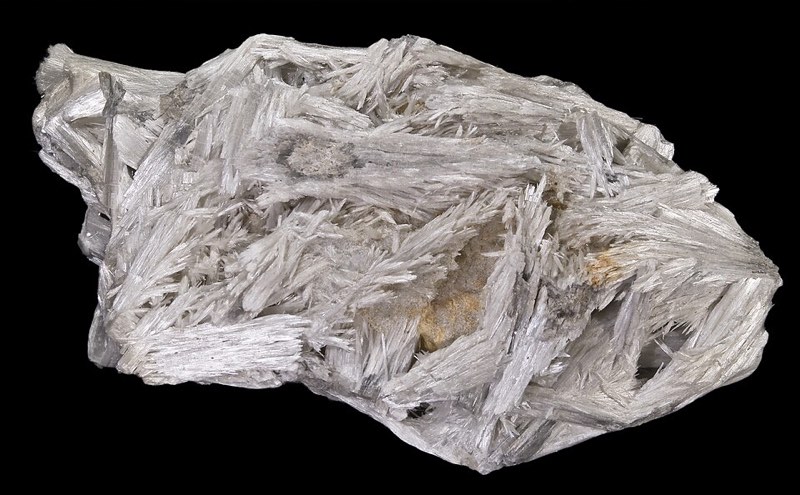
A white to gray amphibole formed when dolomitic marble is metamorphosed.
Photo: Didier Descouens, CC BY-SA 4.0
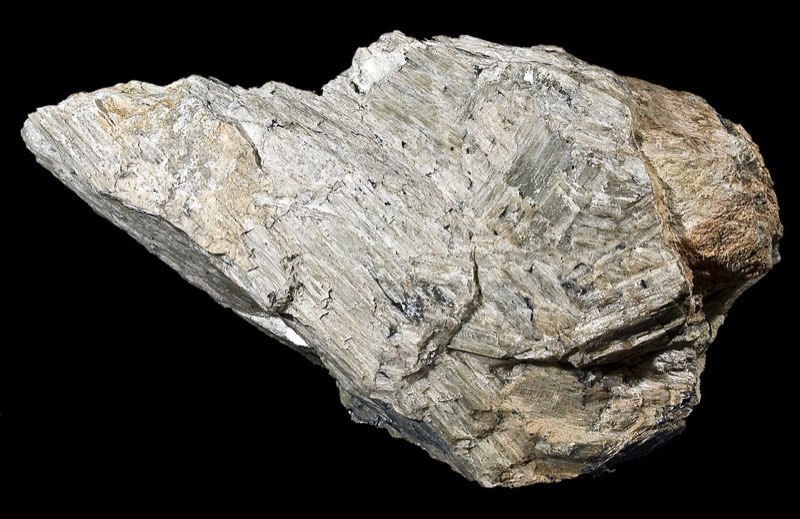
A white calcium silicate formed where hot magma bakes limestone.
Photo: Didier Descouens, CC BY-SA 3.0
Key differences
- Wollastonite is softer and usually fibrous-blocky.
- Tremolite is harder with amphibole cleavage angles.
Side by side
| Property | Tremolite | Wollastonite |
|---|---|---|
| Type | Mineral | Mineral |
| Mohs hardness | 5–6 | 4.5–5 |
| Luster | Vitreous to silky | Vitreous to silky |
| Streak | White | White |
| Colors | White, Gray, Purple | White, Gray |
| Crystal system | Monoclinic | Triclinic |
| Specific gravity | 2.9–3.1 | 2.86–3.09 |
| Formula | Ca₂Mg₅Si₈O₂₂(OH)₂ | CaSiO₃ |
| Found in | Gouverneur, New York; Switzerland | Willsboro, New York; Finland |
Properties that are the same for both are grayed out.
How to identify tremolite
- White to gray blades or fibers in marble.
- Amphibole cleavage angles of about 56° and 124°.
- Lavender variety (hexagonite) fluoresces.
Crystal system: Monoclinic
Full Tremolite guide →How to identify wollastonite
- White fibrous or bladed masses.
- Splintery, silky texture.
- Some glows under UV light.
Crystal system: Triclinic
Full Wollastonite guide →More comparisons
Could you tell them apart from a blurry close-up?
Play today's Rocksday