 Rocksday
Calcite vs Wollastonite
How to tell them apart
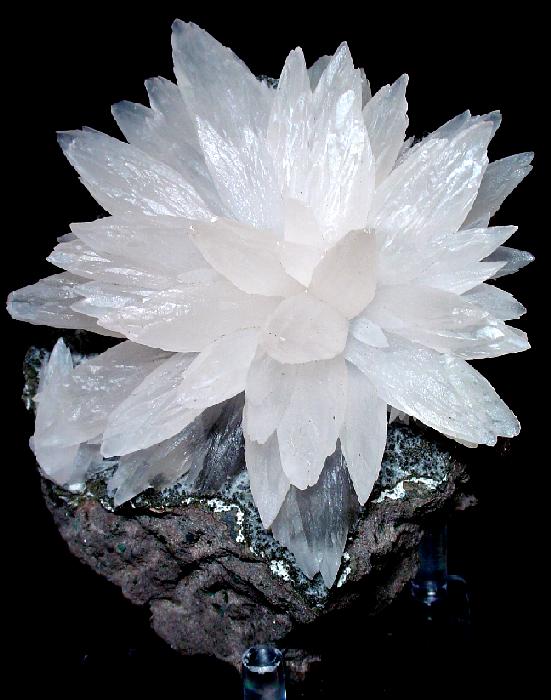
One of the most common minerals on Earth and the main ingredient of limestone and marble. It breaks into perfect slanted boxes (rhombs) and fizzes in acid.
Photo: Robert M. Lavinsky, CC BY-SA 3.0
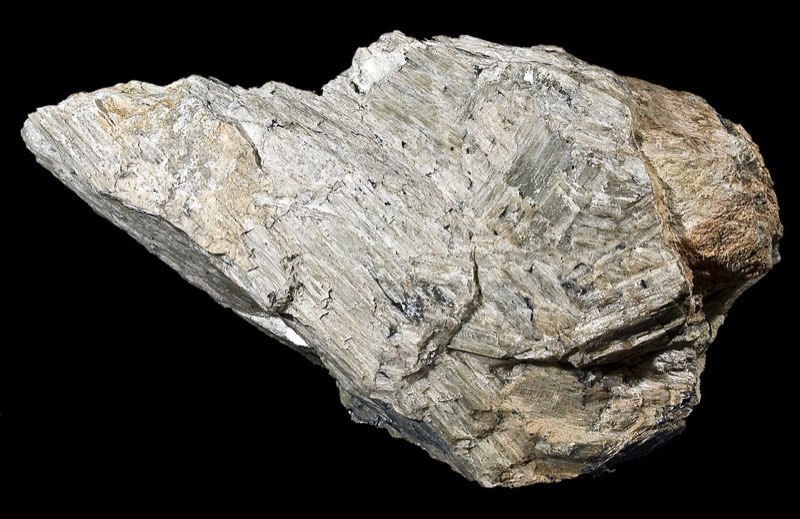
A white calcium silicate formed where hot magma bakes limestone.
Photo: Didier Descouens, CC BY-SA 3.0
Quick tests
- Hardness: Wollastonite is clearly harder: Mohs 4.5–5 versus 3.
- Acid (vinegar or dilute HCl): Calcite fizzes; Wollastonite doesn't.
Key differences
- Calcite fizzes in acid.
Side by side
| Property | Calcite | Wollastonite |
|---|---|---|
| Type | Mineral | Mineral |
| Mohs hardness | 3 | 4.5–5 |
| Luster | Vitreous | Vitreous to silky |
| Streak | White | White |
| Colors | Clear, White, Orange, Yellow, Blue, Green | White, Gray |
| Crystal system | Trigonal | Triclinic |
| Specific gravity | 2.71 | 2.86–3.09 |
| Formula | CaCO₃ | CaSiO₃ |
| Found in | Iceland; Chihuahua, Mexico | Willsboro, New York; Finland |
Properties that are the same for both are grayed out.
How to identify calcite
- Fizzes in cold dilute hydrochloric acid (or slowly in vinegar).
- Breaks into rhomb-shaped pieces along three cleavage planes.
- Hardness 3 — a copper coin barely scratches it, a knife easily does.
- Clear pieces show double images of text underneath.
Crystal system: Trigonal
Full Calcite guide →How to identify wollastonite
- White fibrous or bladed masses.
- Splintery, silky texture.
- Some glows under UV light.
Crystal system: Triclinic
Full Wollastonite guide →More comparisons
Could you tell them apart from a blurry close-up?
Play today's Rocksday