 Rocksday
Anhydrite vs Calcite
How to tell them apart
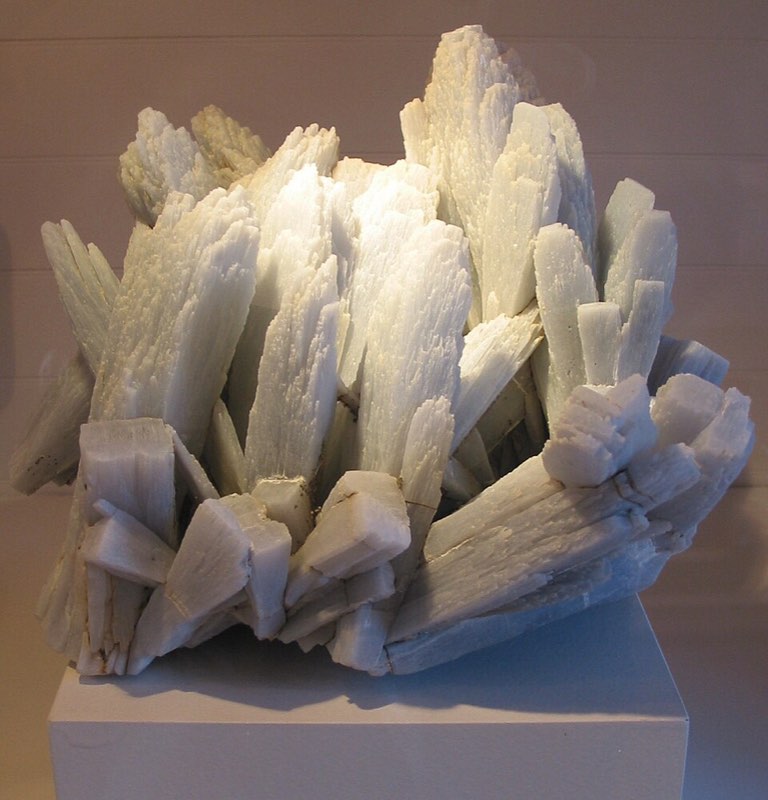
Calcium sulfate without water — gypsum's dry cousin, forming in salt deposits.
Photo: Alcinoe, Public domain
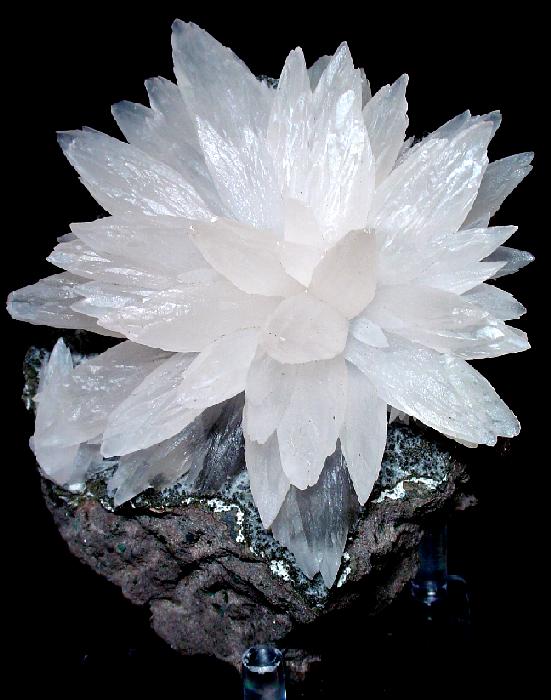
One of the most common minerals on Earth and the main ingredient of limestone and marble. It breaks into perfect slanted boxes (rhombs) and fizzes in acid.
Photo: Robert M. Lavinsky, CC BY-SA 3.0
Quick tests
- Acid (vinegar or dilute HCl): Calcite fizzes; Anhydrite doesn't.
Key differences
- Calcite fizzes and cleaves into slanted rhombs.
Side by side
| Property | Anhydrite | Calcite |
|---|---|---|
| Type | Mineral | Mineral |
| Mohs hardness | 3–3.5 | 3 |
| Luster | Vitreous to pearly | Vitreous |
| Streak | White | White |
| Colors | White, Blue, Purple, Gray | Clear, White, Orange, Yellow, Blue, Green |
| Crystal system | Orthorhombic | Trigonal |
| Specific gravity | 2.9–3 | 2.71 |
| Formula | CaSO₄ | CaCO₃ |
| Found in | Naica, Mexico; Peru | Iceland; Chihuahua, Mexico |
Properties that are the same for both are grayed out.
How to identify anhydrite
- Breaks into blocks along three cleavages at right angles.
- Harder than gypsum.
- Doesn't fizz in acid.
Crystal system: Orthorhombic
Full Anhydrite guide →How to identify calcite
- Fizzes in cold dilute hydrochloric acid (or slowly in vinegar).
- Breaks into rhomb-shaped pieces along three cleavage planes.
- Hardness 3 — a copper coin barely scratches it, a knife easily does.
- Clear pieces show double images of text underneath.
Crystal system: Trigonal
Full Calcite guide →More comparisons
Could you tell them apart from a blurry close-up?
Play today's Rocksday