 Rocksday
Molybdenite vs Stibnite
How to tell them apart
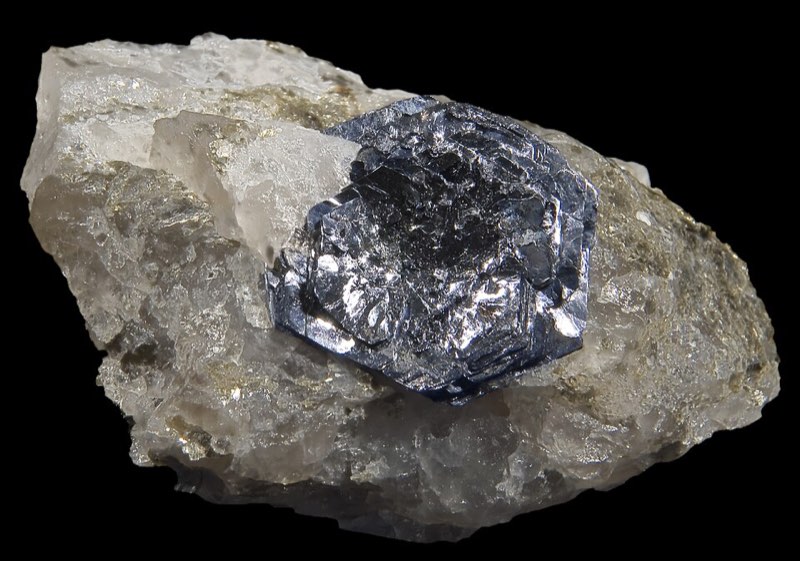
A soft, silvery molybdenum sulfide that forms flexible, greasy hexagonal flakes.
Photo: Didier Descouens, CC BY 3.0
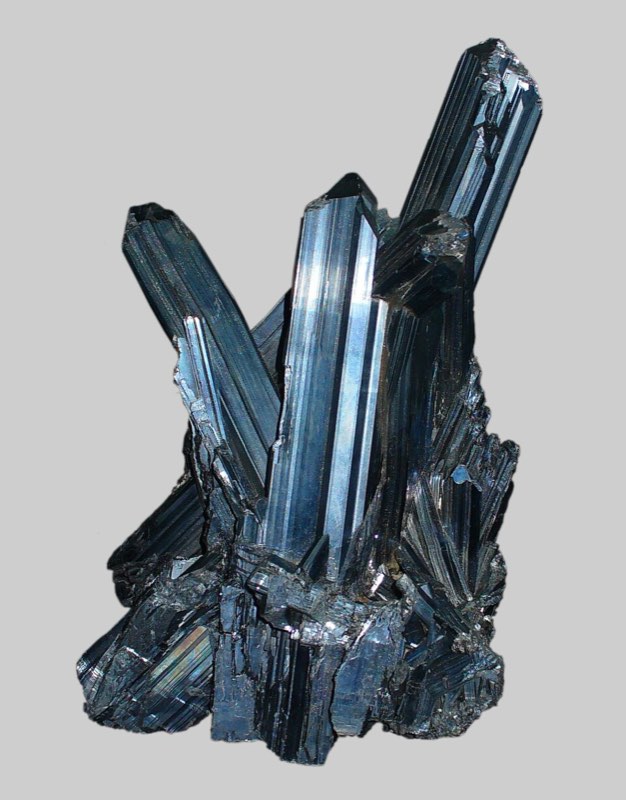
Antimony sulfide forming dramatic sword-like, striated metallic crystals.
Photo: H. Zell, CC BY-SA 3.0
Quick tests
- Streak (rub on unglazed porcelain): Molybdenite leaves a greenish gray streak; Stibnite leaves lead gray.
Key differences
- Molybdenite forms flat flakes, not blades.
Side by side
| Property | Molybdenite | Stibnite |
|---|---|---|
| Type | Mineral | Mineral |
| Mohs hardness | 1–1.5 | 2 |
| Luster | Metallic | Metallic |
| Streak | Greenish gray | Lead gray |
| Colors | Silver, Gray | Gray, Silver |
| Crystal system | Hexagonal | Orthorhombic |
| Specific gravity | 4.6–4.8 | 4.6 |
| Formula | MoS₂ | Sb₂S₃ |
| Found in | Climax, Colorado; Quebec, Canada | Xikuangshan, Hunan, China; Ichinokawa mine, Japan |
Properties that are the same for both are grayed out.
How to identify molybdenite
- Bluish lead-gray flakes that feel greasy.
- Soft enough to mark paper.
- Greenish streak on a porcelain plate.
Crystal system: Hexagonal
Full Molybdenite guide →How to identify stibnite
- Long, bladed, lead-gray crystals with lengthwise striations.
- Crystals may bend or twist.
- Very soft — a fingernail almost scratches it.
Crystal system: Orthorhombic
Full Stibnite guide →More comparisons
Could you tell them apart from a blurry close-up?
Play today's Rocksday