 Rocksday
Graphite vs Molybdenite
How to tell them apart
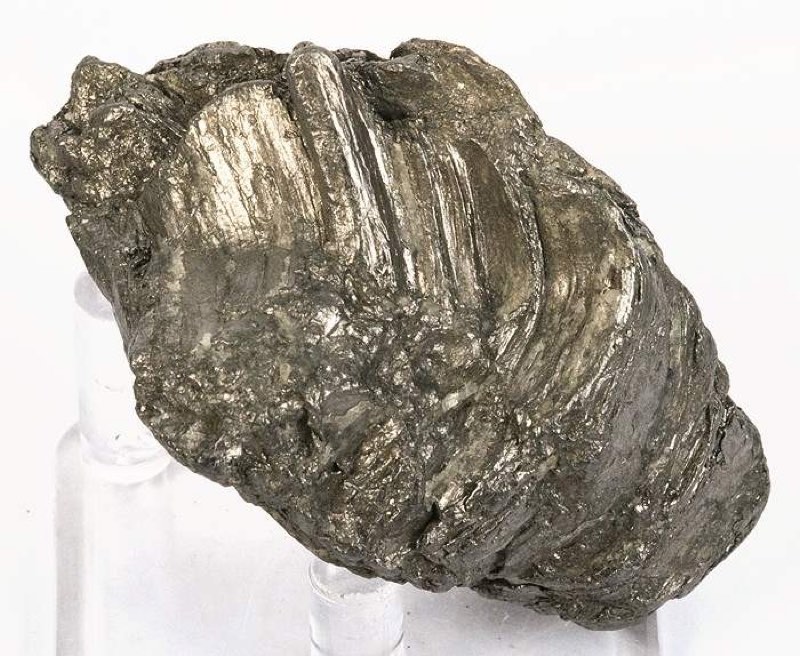
Soft, black carbon in stacked sheets — the 'lead' in pencils.
Photo: Robert M. Lavinsky, CC BY-SA 3.0
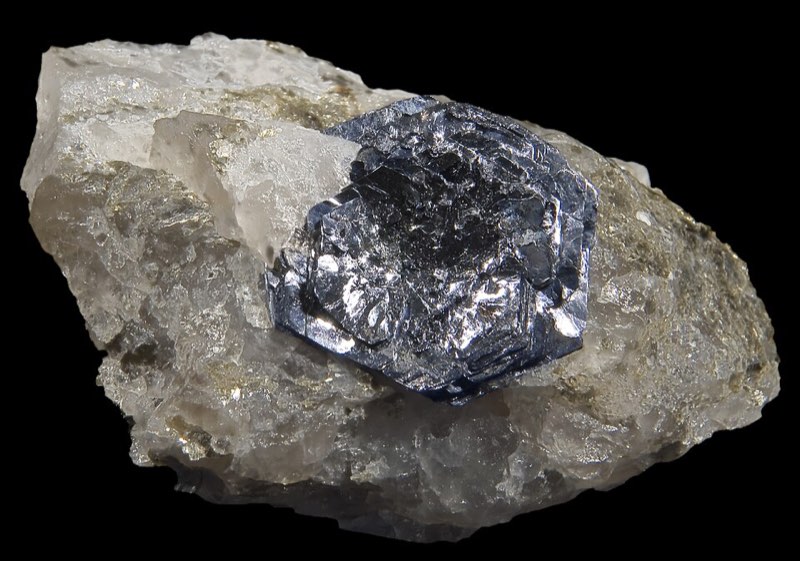
A soft, silvery molybdenum sulfide that forms flexible, greasy hexagonal flakes.
Photo: Didier Descouens, CC BY 3.0
Quick tests
- Streak (rub on unglazed porcelain): Graphite leaves a black streak; Molybdenite leaves greenish gray.
- Heft: Molybdenite feels noticeably heavier for its size (specific gravity 4.6–4.8 vs 2.09–2.23).
Key differences
- Molybdenite is heavier, bluer and has a greenish streak.
- Graphite is blacker, lighter, and leaves a black streak.
Side by side
| Property | Graphite | Molybdenite |
|---|---|---|
| Type | Mineral | Mineral |
| Mohs hardness | 1–2 | 1–1.5 |
| Luster | Metallic to dull | Metallic |
| Streak | Black | Greenish gray |
| Colors | Black, Gray | Silver, Gray |
| Crystal system | Hexagonal | Hexagonal |
| Specific gravity | 2.09–2.23 | 4.6–4.8 |
| Formula | C | MoS₂ |
| Found in | Borrowdale, England; Sri Lanka | Climax, Colorado; Quebec, Canada |
Properties that are the same for both are grayed out.
How to identify graphite
- Leaves black marks on paper and fingers.
- Greasy, slippery feel.
- Light for a metallic-looking mineral.
Crystal system: Hexagonal
Full Graphite guide →How to identify molybdenite
- Bluish lead-gray flakes that feel greasy.
- Soft enough to mark paper.
- Greenish streak on a porcelain plate.
Crystal system: Hexagonal
Full Molybdenite guide →More comparisons
Could you tell them apart from a blurry close-up?
Play today's Rocksday