 Rocksday
Knightia vs Shale
To tell Knightia from Shale: Plain shale has no skeleton.
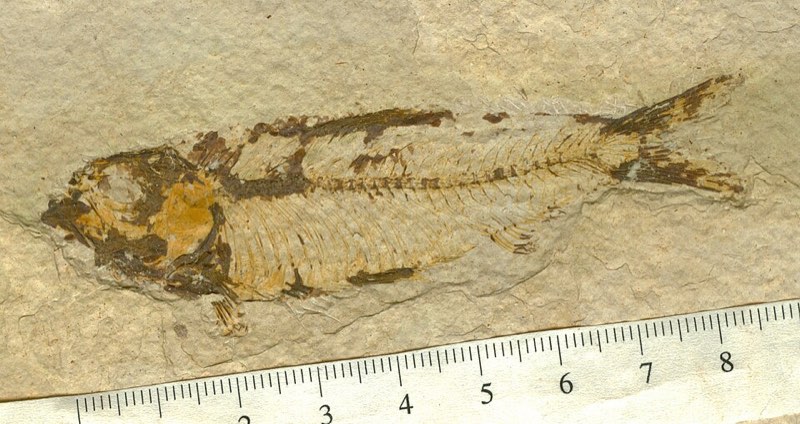
A small extinct herring. The slabs from Wyoming's Green River Formation are the fossil fish people see most often.
Photo: James St. John, CC BY 2.0
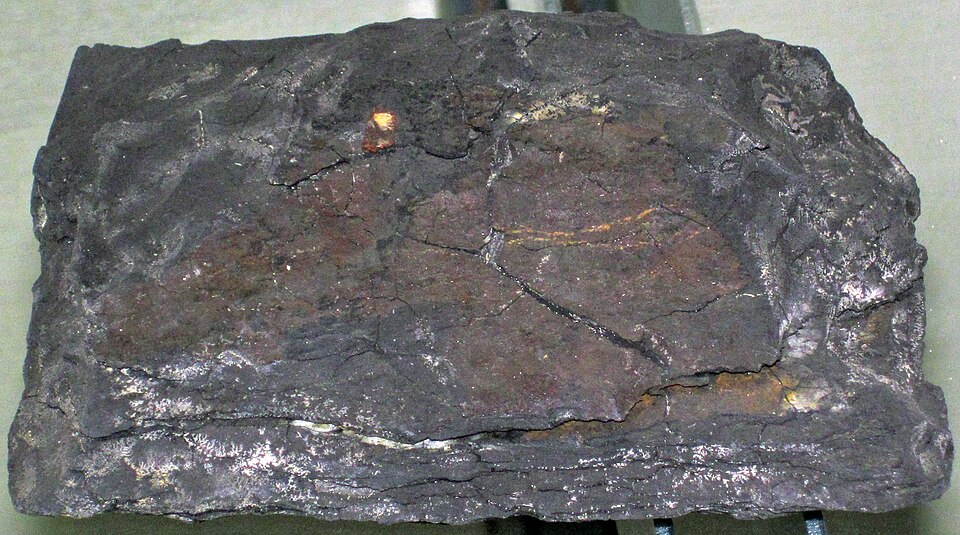
Compacted mud and clay that splits into thin layers. The most common sedimentary rock.
Photo: James St. John, CC BY 2.0
Key differences
- Plain shale has no skeleton.
Side by side
| Property | Knightia | Shale |
|---|---|---|
| Type | Fossil | Sedimentary rock |
| Mohs hardness | 2–3 | 3 |
| Luster | Dull | Dull |
| Colors | Brown, Gray, Yellow | Gray, Black, Red, Green |
| Crystal system / structure | Fish skeleton in shale | Clastic, very fine, splits in layers |
| Specific gravity | 2.2–2.6 | 2.4–2.8 |
| Found in | Green River Formation, Wyoming | Burgess Shale, British Columbia; Marcellus, Pennsylvania |
Properties that are the same for both are grayed out.
How to identify knightia
- A complete little fish, often 5–15 cm, in tan or brown shale.
- Scales, ribs and a forked tail still in place.
- The rock is a soft lake shale, not a limestone shell bed.
Structure: Fish skeleton in shale
Full Knightia guide →How to identify shale
- Splits into thin, flat flakes along its layers.
- Grains too small to see.
- Smells earthy when wet.
- Soft and crumbly at edges.
Structure: Clastic, very fine, splits in layers
Full Shale guide →More comparisons
Frequently asked questions
What is the difference between knightia and shale?
Knightia is a fossil with a Mohs hardness of about 2–3 and a dull luster, usually brown, gray or yellow. Shale is a sedimentary rock with a Mohs hardness of about 3 and a dull luster, usually gray, black, red or green.
How can you tell knightia from shale?
Plain shale has no skeleton.
Could you tell them apart from a blurry close-up?
Play today's Rocksday