 Rocksday
Oil Shale vs Shale
How to tell them apart
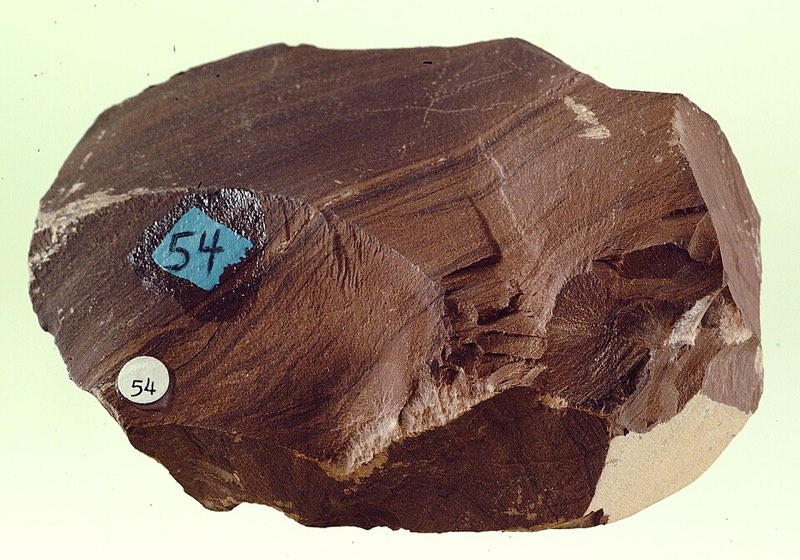
Fine-grained rock rich in kerogen, an organic material that yields oil when heated.
Photo: Mike Davis, CC0
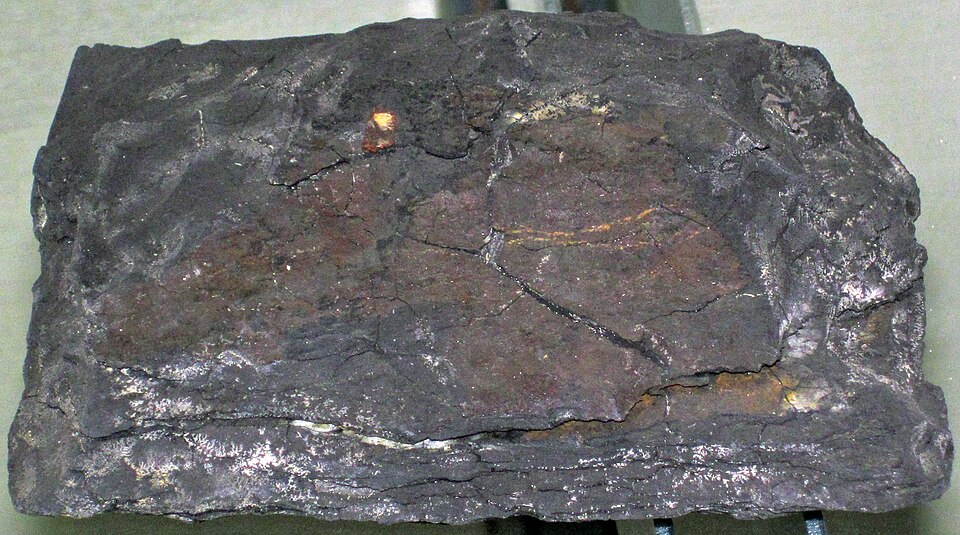
Compacted mud and clay that splits into thin layers. The most common sedimentary rock.
Photo: James St. John, CC BY 2.0
Key differences
- Ordinary shale doesn't burn.
Side by side
| Property | Oil Shale | Shale |
|---|---|---|
| Type | Sedimentary rock | Sedimentary rock |
| Mohs hardness | 2–3 | 3 |
| Luster | Dull to waxy | Dull |
| Colors | Brown, Black, Gray | Gray, Black, Red, Green |
| Crystal system / structure | Fine layered, organic-rich | Clastic, very fine, splits in layers |
| Specific gravity | 1.6–2.4 | 2.4–2.8 |
| Found in | Green River Formation, Colorado–Utah–Wyoming; Estonia | Burgess Shale, British Columbia; Marcellus, Pennsylvania |
Properties that are the same for both are grayed out.
How to identify oil shale
- Brown to black, fine layers.
- Light for a rock.
- Burns or smells of oil when heated.
Structure: Fine layered, organic-rich
Full Oil Shale guide →How to identify shale
- Splits into thin, flat flakes along its layers.
- Grains too small to see.
- Smells earthy when wet.
- Soft and crumbly at edges.
Structure: Clastic, very fine, splits in layers
Full Shale guide →More comparisons
Could you tell them apart from a blurry close-up?
Play today's Rocksday