 Rocksday
Herkimer Diamond vs Quartz
How to tell them apart
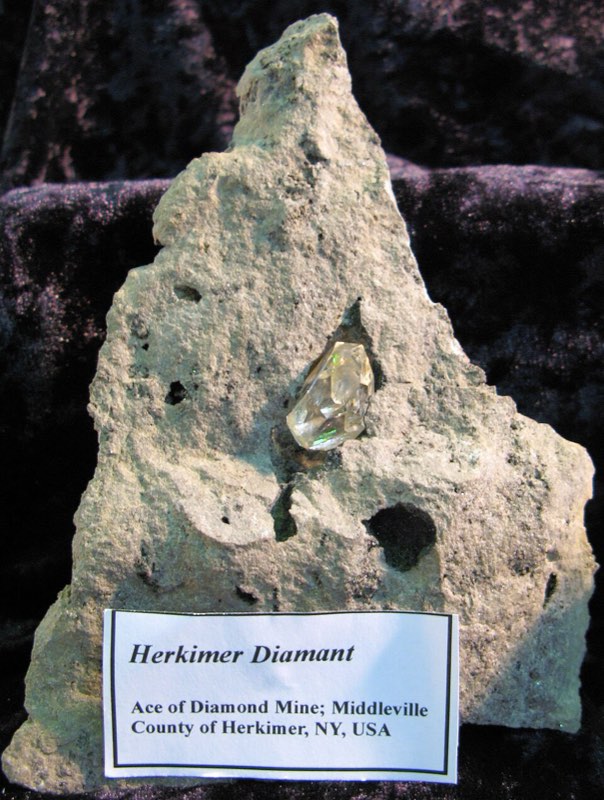
Exceptionally clear, double-terminated quartz crystals that grew in cavities in dolostone.
Photo: Ra'ike (see also: de:Benutzer:Ra'ike), CC BY-SA 3.0
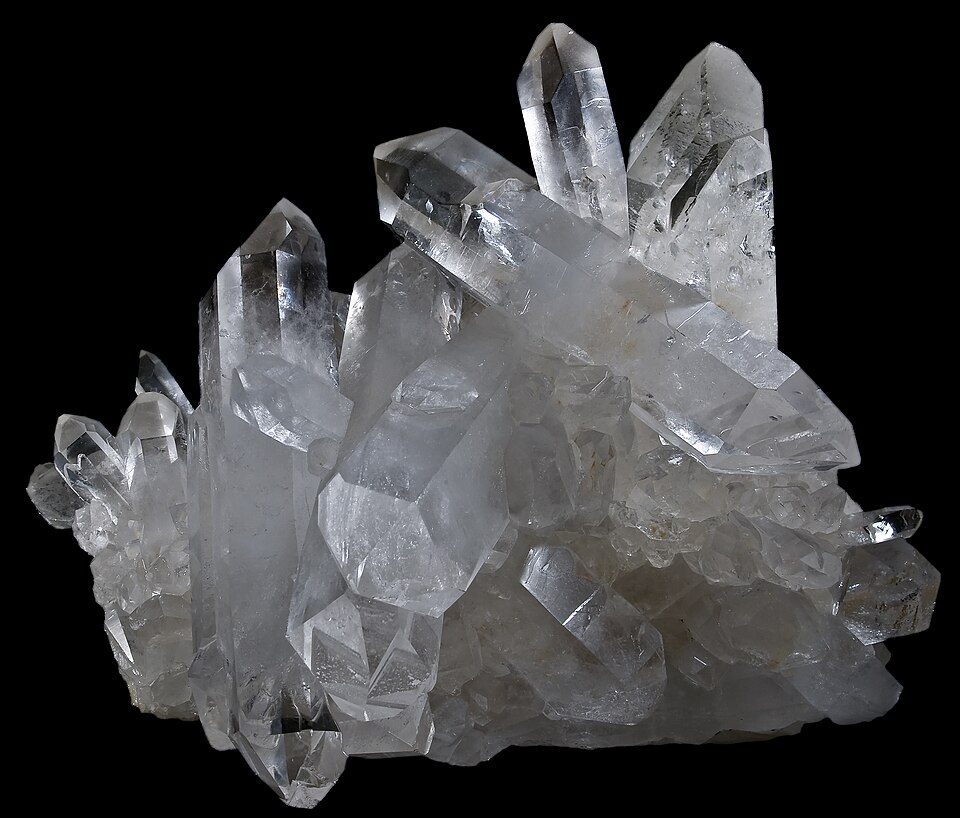
The second most abundant mineral in Earth's crust. Clear crystals grow as six-sided prisms capped by a pointed termination, and quartz shows up as grains in sand, granite and countless other rocks.
Photo: Didier Descouens, CC BY-SA 4.0
Key differences
- Ordinary quartz is usually attached at one end and longer.
Side by side
| Property | Herkimer Diamond | Quartz |
|---|---|---|
| Type | Mineral | Mineral |
| Mohs hardness | 7 | 7 |
| Luster | Vitreous to brilliant | Vitreous |
| Streak | White | White |
| Colors | Clear | Clear, White, Gray |
| Crystal system | Trigonal | Trigonal |
| Specific gravity | 2.65 | 2.65 |
| Formula | SiO₂ | SiO₂ |
| Found in | Herkimer County, New York | Hot Springs, Arkansas; Minas Gerais, Brazil |
Properties that are the same for both are grayed out.
How to identify herkimer diamond
- Water-clear crystals pointed at both ends.
- Short, stubby shape with bright faces.
- Hardness 7 — not a real diamond.
Crystal system: Trigonal
Full Herkimer Diamond guide →How to identify quartz
- Scratches glass easily and can't be scratched by a steel knife.
- Six-sided prisms with pointed ends when it forms crystals.
- Breaks with curved, shell-like (conchoidal) fractures — no flat cleavage planes.
- Does not fizz in vinegar or dilute acid.
Crystal system: Trigonal
Full Quartz guide →More comparisons
Could you tell them apart from a blurry close-up?
Play today's Rocksday