 Rocksday
Quartz
The second most abundant mineral in Earth's crust. Clear crystals grow as six-sided prisms capped by a pointed termination, and quartz shows up as grains in sand, granite and countless other rocks.
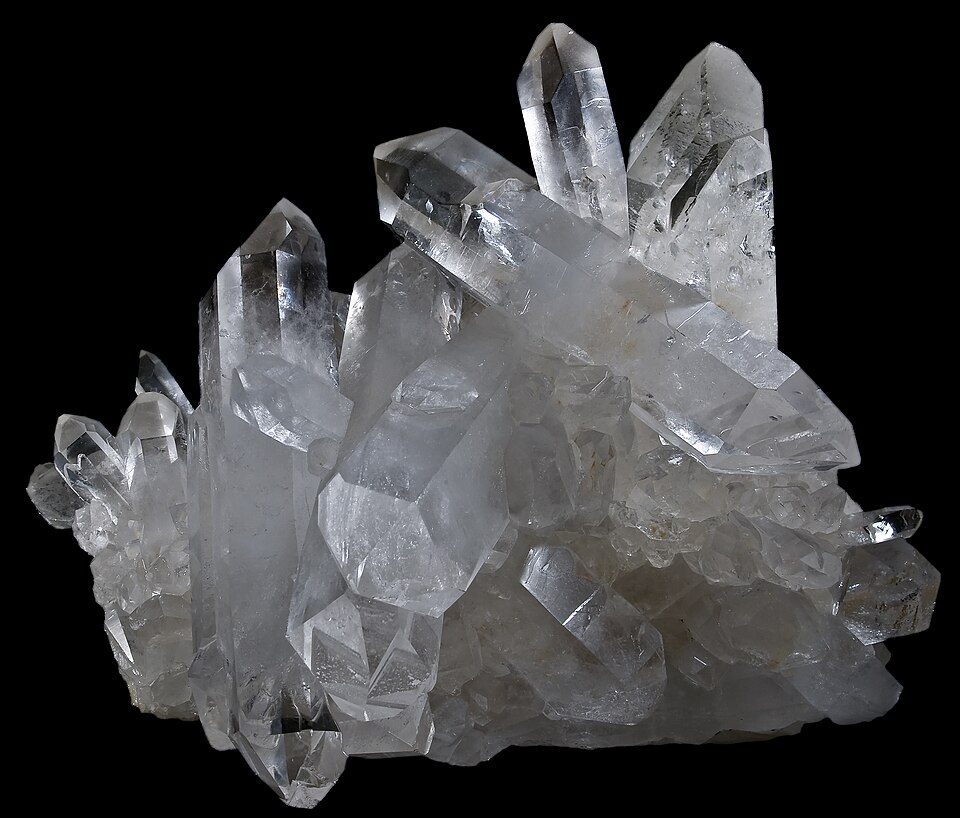
How to identify quartz
- Scratches glass easily and can't be scratched by a steel knife.
- Six-sided prisms with pointed ends when it forms crystals.
- Breaks with curved, shell-like (conchoidal) fractures — no flat cleavage planes.
- Does not fizz in vinegar or dilute acid.
Often confused with
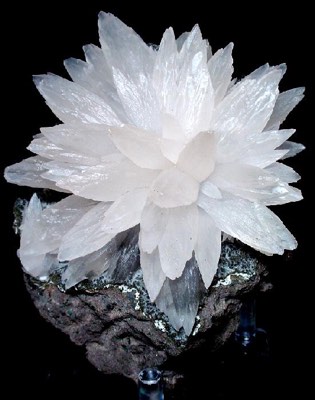 Calcite
 is soft enough to scratch with a knife, fizzes in acid and breaks into rhombs.
Compare side by side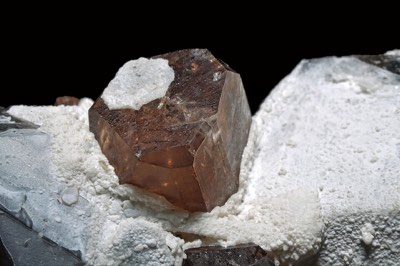 Topaz
Topaz is harder, noticeably heavier in the hand and has one perfect cleavage.
Compare side by side
Where it's found
- Hot Springs, Arkansas
- Minas Gerais, Brazil
- The Alps
Uses
Glass, sand and concrete, and the oscillators that keep time in watches and electronics.
Rock tumbling
Great for tumbling.
Did you know?
The quartz crystal in a watch vibrates exactly 32,768 times per second when electrified.
Think you could spot it from a blurry close-up?
Play today's Rocksday