 Rocksday
Gabbro vs Norite
To tell Gabbro from Norite: Gabbro's pyroxene is mostly augite, so the rock looks blacker and less bronzy.
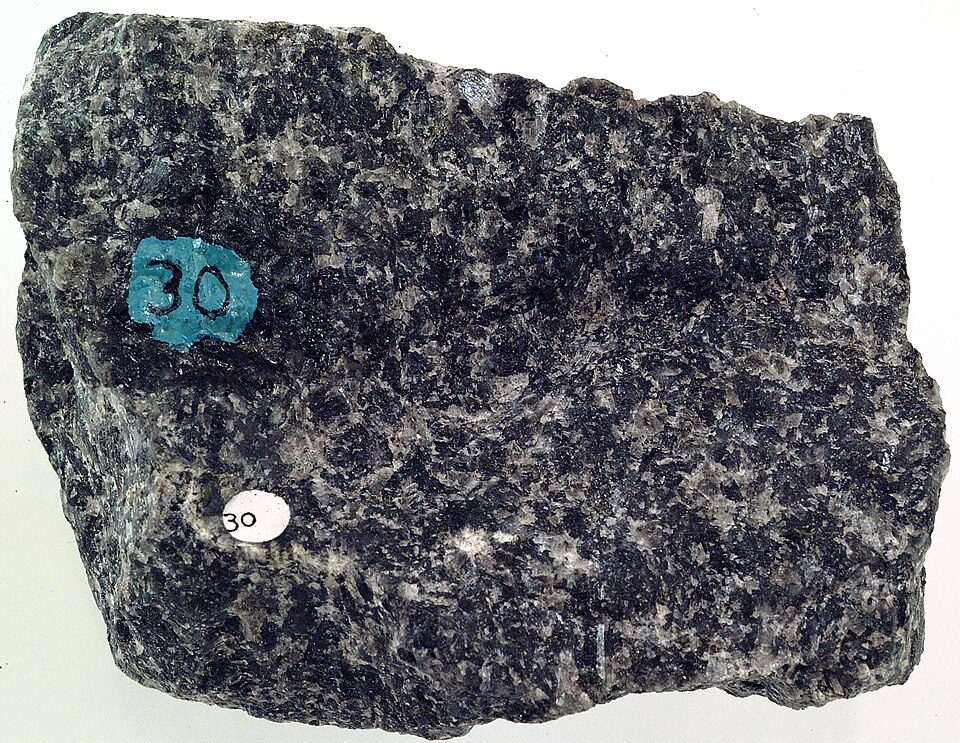
A dark, coarse-grained rock made of pyroxene and plagioclase — basalt that cooled slowly underground.
Photo: Darla Sondrol, CC0
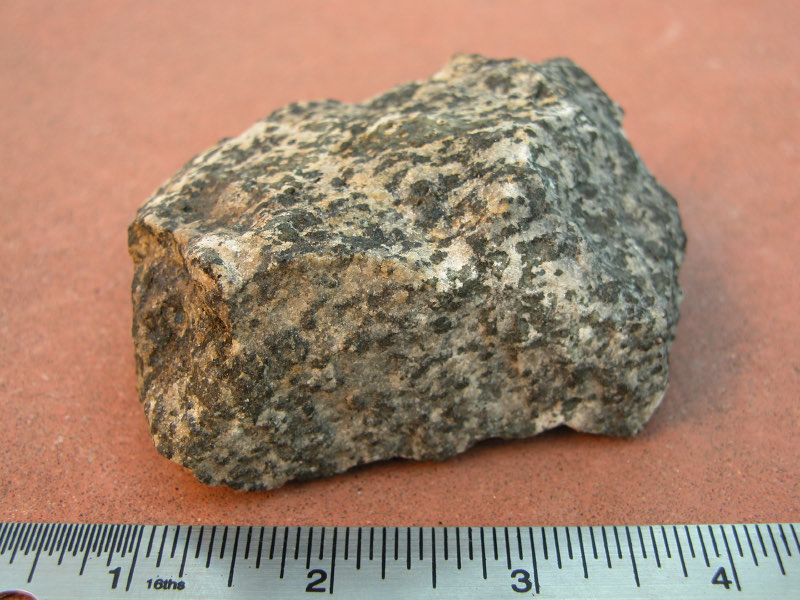
A gabbro in which the pyroxene is mostly orthopyroxene rather than augite. It is usually gray-brown and coarse.
Photo: Courtesy NASA/JPL-Caltech, Public domain
Key differences
- Gabbro's pyroxene is mostly augite, so the rock looks blacker and less bronzy.
Side by side
| Property | Gabbro | Norite |
|---|---|---|
| Type | Igneous rock | Igneous rock |
| Mohs hardness | 6–6.5 | 6–7 |
| Luster | Granular | Granular |
| Colors | Black, Gray, Green | Gray, Black, Brown |
| Crystal system / structure | Coarse-grained (phaneritic) | Coarse-grained, orthopyroxene plus plagioclase |
| Specific gravity | 2.9–3.1 | 2.8–3.1 |
| Found in | Duluth Complex, Minnesota; Cuillin, Isle of Skye | Sudbury, Ontario; Bushveld Complex, South Africa |
Properties that are the same for both are grayed out.
How to identify gabbro
- Dark gray to black with visible crystals.
- Heavy.
- Little or no quartz.
- Gray plagioclase may show faint parallel lines.
Structure: Coarse-grained (phaneritic)
Full Gabbro guide →How to identify norite
- Coarse dark gray to brownish rock.
- Blocky pale feldspar plus bronzy pyroxene.
- No quartz. Heavy.
Structure: Coarse-grained, orthopyroxene plus plagioclase
Full Norite guide →More comparisons
Frequently asked questions
What is the difference between gabbro and norite?
Gabbro is an igneous rock with a Mohs hardness of about 6–6.5 and a granular luster, usually black, gray or green. Norite is an igneous rock with a Mohs hardness of about 6–7 and a granular luster, usually gray, black or brown.
How can you tell gabbro from norite?
Gabbro's pyroxene is mostly augite, so the rock looks blacker and less bronzy.
Could you tell them apart from a blurry close-up?
Play today's Rocksday