 Rocksday
Norite
Norite is an igneous rock with a Mohs hardness of about 6–7 and a granular luster, usually gray, black or brown.
A gabbro in which the pyroxene is mostly orthopyroxene rather than augite. It is usually gray-brown and coarse.
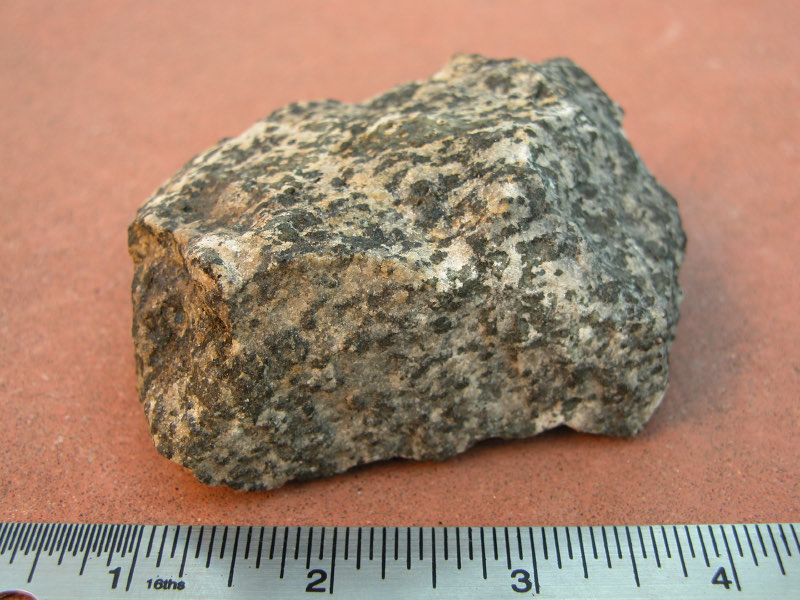
How to identify norite
- Coarse dark gray to brownish rock.
- Blocky pale feldspar plus bronzy pyroxene.
- No quartz. Heavy.
Often confused with
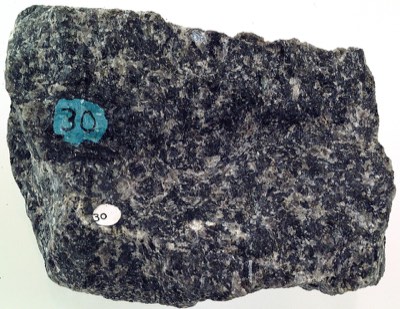 Gabbro
's pyroxene is mostly augite, so the rock looks blacker and less bronzy.
Compare side by side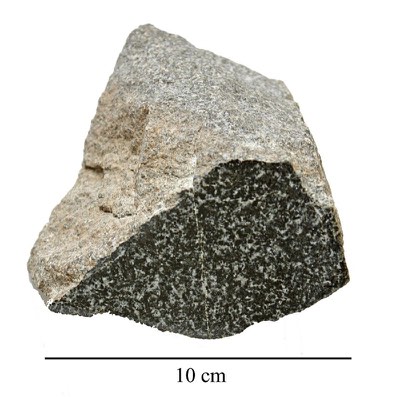
Where it's found
- Sudbury, Ontario
- Bushveld Complex, South Africa
- Norway
Uses
Dimension stone, and a host of nickel ore at Sudbury.
Rock tumbling
Great for tumbling.
Did you know?
The Sudbury Basin is one of the largest known impact structures, and its norite carries major nickel deposits.
Norite FAQ
What is norite?
Norite is an igneous rock with a Mohs hardness of about 6–7 and a granular luster, usually gray, black or brown. A gabbro in which the pyroxene is mostly orthopyroxene rather than augite. It is usually gray-brown and coarse.
How do you identify norite?
Coarse dark gray to brownish rock. Blocky pale feldspar plus bronzy pyroxene. No quartz. Heavy.
How hard is norite?
Norite has a Mohs hardness of about 6–7. Norite scratches glass, and a steel knife can't scratch it.
Where is norite found?
Notable localities include Sudbury, Ontario; Bushveld Complex, South Africa; and Norway.
What is norite used for?
Dimension stone, and a host of nickel ore at Sudbury.
Can you tumble norite?
Yes — it tumbles well.
What is norite often confused with?
Norite is most often confused with Gabbro and Diabase. Gabbro's pyroxene is mostly augite, so the rock looks blacker and less bronzy. Diabase is finer grained.
Think you could spot it from a blurry close-up?
Play today's Rocksday