 Rocksday
Concretion vs Coprolite
To tell Concretion from Coprolite: Concretions are mineral growths around a nucleus and lack a dung shape or bone fragments.
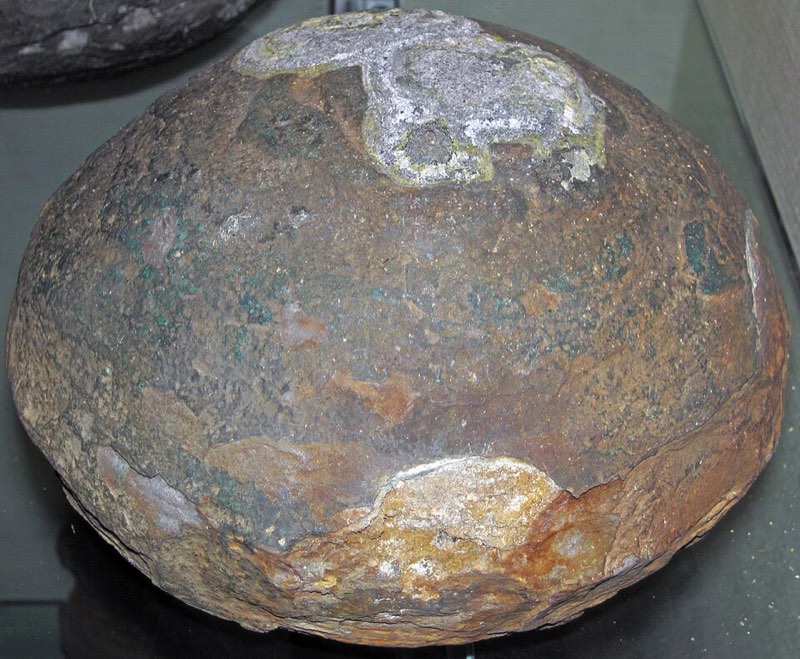
A hard, rounded lump formed when minerals cemented sediment around a center.
Photo: James St. John, CC BY-SA 4.0
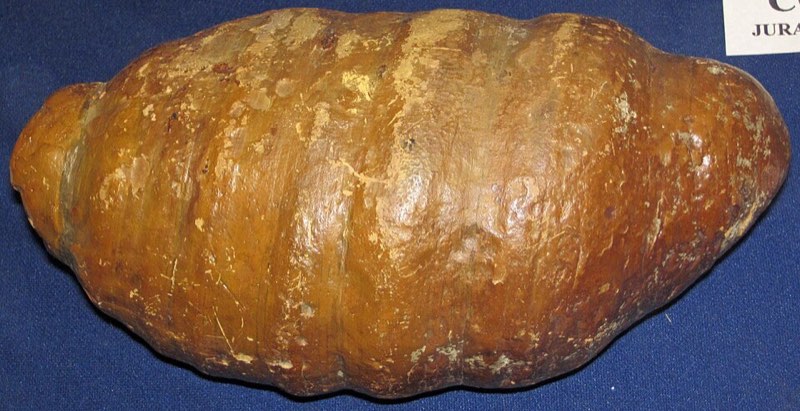
Fossil feces. Many are phosphatic, nodular and keep a spiral or lumpy shape.
Photo: James St. John, CC BY 2.0
Key differences
- Concretions are mineral growths around a nucleus and lack a dung shape or bone fragments.
Side by side
| Property | Concretion | Coprolite |
|---|---|---|
| Type | Sedimentary rock | Fossil |
| Mohs hardness | 3–6 | 3–4 |
| Luster | Dull | Dull |
| Colors | Brown, Gray, Red | Brown, Gray, Black, Green |
| Crystal system / structure | Mineral-cemented nodule | Phosphatic fossil dung |
| Specific gravity | 2.4–3.2 | 2.5–3.2 |
| Found in | Moeraki Boulders, New Zealand; Bowling Ball Beach, California | Lyme Regis, England; South Carolina |
Properties that are the same for both are grayed out.
How to identify concretion
- Round, oval or odd-shaped lumps that weather out of softer rock.
- Harder than the surrounding layer.
- Sometimes contain a fossil at the center.
Structure: Mineral-cemented nodule
Full Concretion guide →How to identify coprolite
- A lump, spiral or segmented nodule that isn't a shell.
- Often brown or black, sometimes with bone or scale fragments.
- Heavier than a similar piece of shale.
Structure: Phosphatic fossil dung
Full Coprolite guide →More comparisons
Frequently asked questions
What is the difference between concretion and coprolite?
Concretion is a sedimentary rock with a Mohs hardness of about 3–6 and a dull luster, usually brown, gray or red. Coprolite is a fossil with a Mohs hardness of about 3–4 and a dull luster, usually brown, gray, black or green.
How can you tell concretion from coprolite?
Concretions are mineral growths around a nucleus and lack a dung shape or bone fragments.
Could you tell them apart from a blurry close-up?
Play today's Rocksday