 Rocksday
Concretion vs Volcanic Bomb
To tell Concretion from Volcanic Bomb: Concretions grew in sediment and are not volcanic glass or lava.
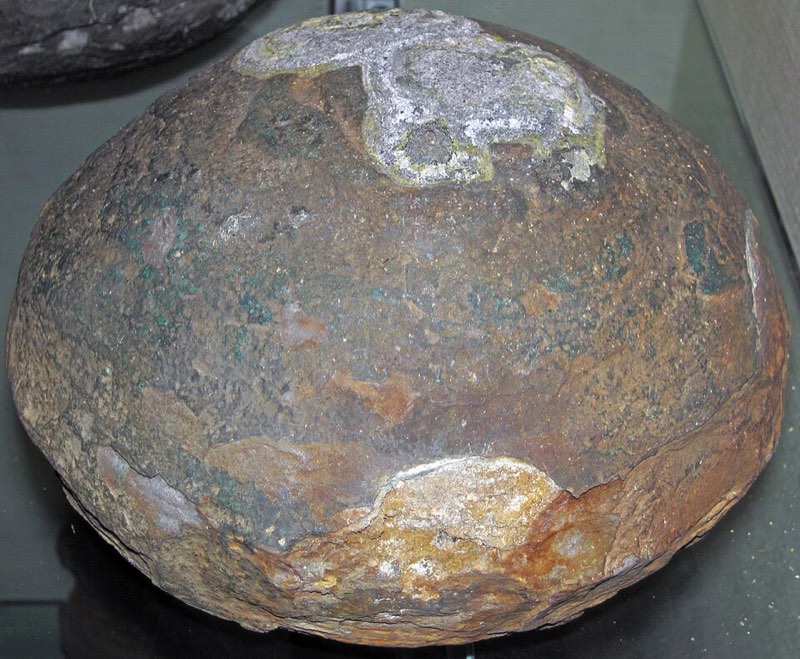
A hard, rounded lump formed when minerals cemented sediment around a center.
Photo: James St. John, CC BY-SA 4.0
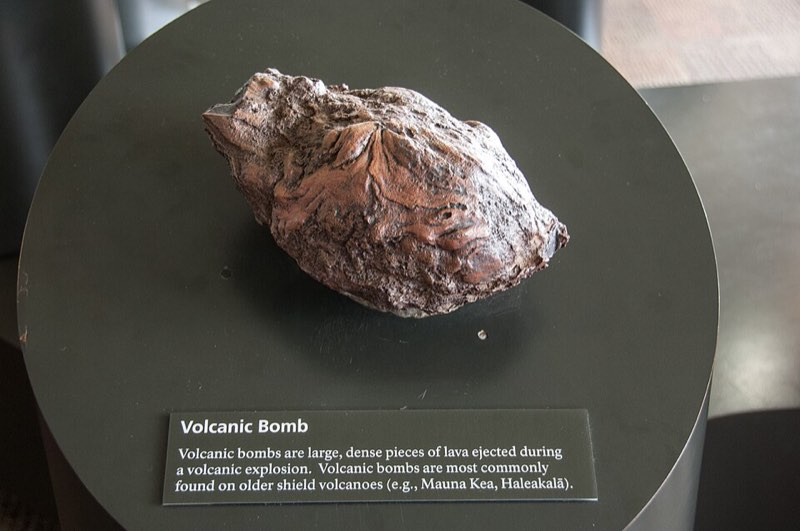
A lump of lava larger than 64 mm that was still molten when it was thrown out, so it froze in a streamlined or cracked shape.
Photo: National Park Service/Ed Shiinoki, Public domain
Key differences
- Concretions grew in sediment and are not volcanic glass or lava.
Side by side
| Property | Concretion | Volcanic Bomb |
|---|---|---|
| Type | Sedimentary rock | Igneous rock |
| Mohs hardness | 3–6 | 5–6 |
| Luster | Dull | Dull to glassy |
| Colors | Brown, Gray, Red | Black, Brown, Red, Gray |
| Crystal system / structure | Mineral-cemented nodule | Aerodynamic pyroclast |
| Specific gravity | 2.4–3.2 | 2.2–3 |
| Found in | Moeraki Boulders, New Zealand; Bowling Ball Beach, California | Hawaii; Iceland |
Properties that are the same for both are grayed out.
How to identify concretion
- Round, oval or odd-shaped lumps that weather out of softer rock.
- Harder than the surrounding layer.
- Sometimes contain a fossil at the center.
Structure: Mineral-cemented nodule
Full Concretion guide →How to identify volcanic bomb
- Almond, spindle or ribbon shape, or a round lump with a cracked crust.
- Often a dense core and a bubbly or breadcrust outside.
- Basaltic ones are black to reddish brown.
Structure: Aerodynamic pyroclast
Full Volcanic Bomb guide →More comparisons
Frequently asked questions
What is the difference between concretion and volcanic bomb?
Concretion is a sedimentary rock with a Mohs hardness of about 3–6 and a dull luster, usually brown, gray or red. Volcanic Bomb is an igneous rock with a Mohs hardness of about 5–6 and a dull to glassy luster, usually black, brown, red or gray.
How can you tell concretion from volcanic bomb?
Concretions grew in sediment and are not volcanic glass or lava.
Could you tell them apart from a blurry close-up?
Play today's Rocksday