 Rocksday
Amblygonite vs Orthoclase
How to tell them apart
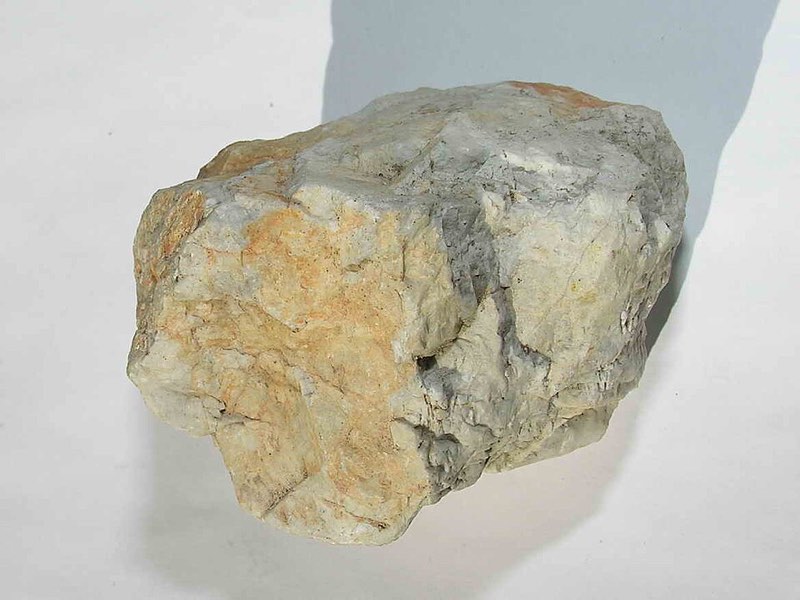
A lithium aluminum phosphate from pegmatites, usually white and blocky.
Photo: Luis Miguel Bugallo Sánchez (Lmbuga Commons)(Lmbuga Galipedia) Publicada por/Publish by: Luis Miguel Bugallo Sánchez, CC BY-SA 3.0
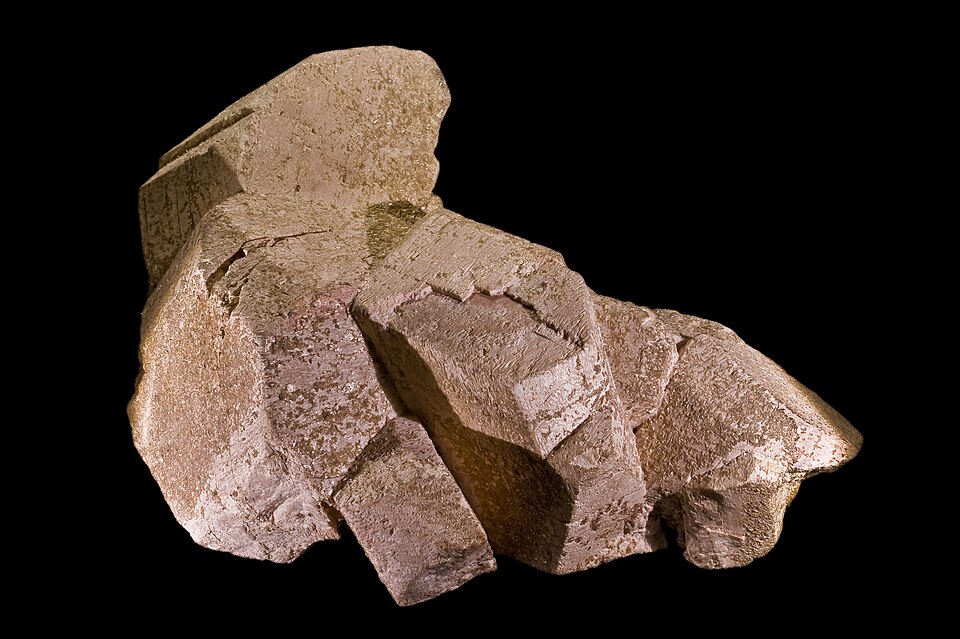
A potassium feldspar and one of the most common minerals in granite, where it forms the pink or cream-colored blocks.
Photo: Didier Descouens, CC BY-SA 4.0
Key differences
- Orthoclase is lighter.
Side by side
| Property | Amblygonite | Orthoclase |
|---|---|---|
| Type | Mineral | Mineral |
| Mohs hardness | 5.5–6 | 6 |
| Luster | Vitreous to greasy | Vitreous |
| Streak | White | White |
| Colors | White, Yellow, Green | Pink, White, Orange |
| Crystal system | Triclinic | Monoclinic |
| Specific gravity | 3–3.1 | 2.55–2.63 |
| Formula | (Li,Na)AlPO₄(F,OH) | KAlSi₃O₈ |
| Found in | Minas Gerais, Brazil; Maine | Granites worldwide; Karlovy Vary, Czech Republic |
Properties that are the same for both are grayed out.
How to identify amblygonite
- White to pale yellow blocky masses.
- Looks like feldspar but is heavier.
- Hardness about 6.
Crystal system: Triclinic
Full Amblygonite guide →How to identify orthoclase
- Blocky pink to cream crystals in granite.
- Two cleavages meeting at a right angle — flat, shiny faces.
- Hardness 6 — scratches glass with effort.
- No fine parallel striations (unlike plagioclase).
Crystal system: Monoclinic
Full Orthoclase guide →More comparisons
Could you tell them apart from a blurry close-up?
Play today's Rocksday