 Rocksday
Labradorite vs Orthoclase
How to tell them apart
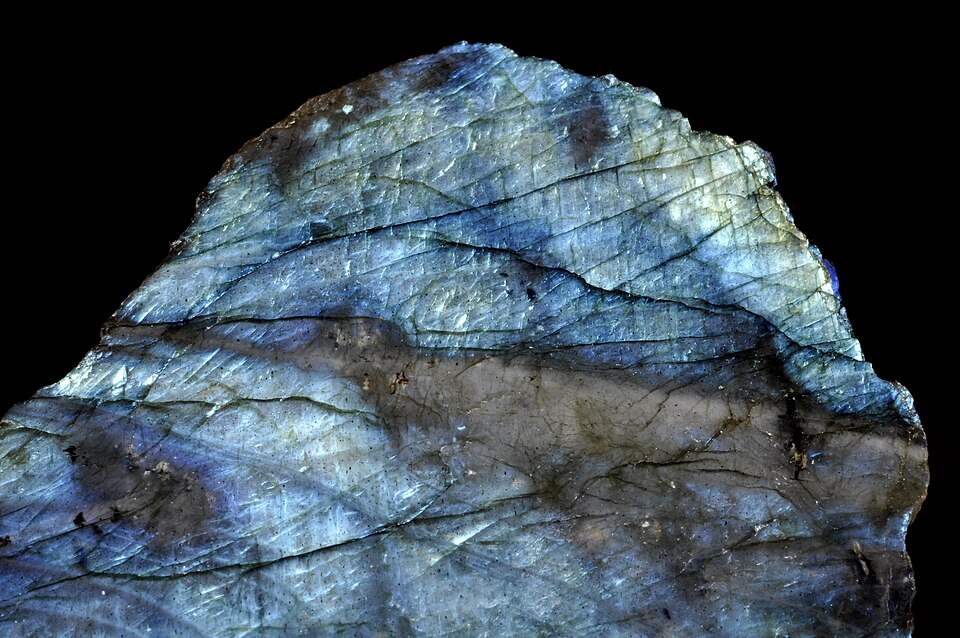
A gray plagioclase feldspar that flashes electric blue, green and gold when light hits it at the right angle.
Photo: Parent Géry, Public domain
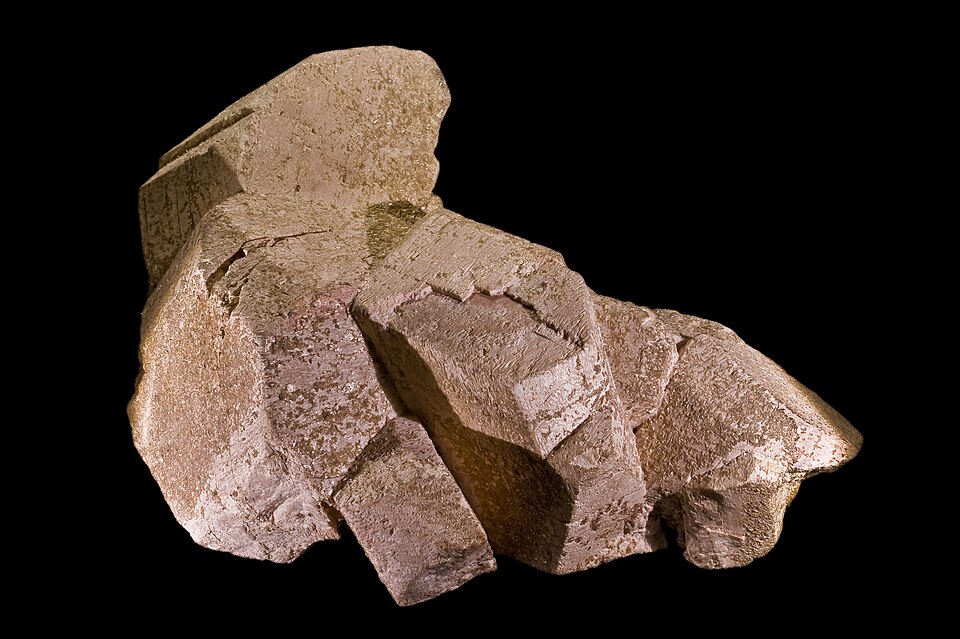
A potassium feldspar and one of the most common minerals in granite, where it forms the pink or cream-colored blocks.
Photo: Didier Descouens, CC BY-SA 4.0
Key differences
- Orthoclase is pink or cream and has no color flash.
- Labradorite shows fine parallel lines and flashes of blue or green.
Side by side
| Property | Labradorite | Orthoclase |
|---|---|---|
| Type | Mineral | Mineral |
| Mohs hardness | 6–6.5 | 6 |
| Luster | Vitreous | Vitreous |
| Streak | White | White |
| Colors | Gray, Black, Blue | Pink, White, Orange |
| Crystal system | Triclinic | Monoclinic |
| Specific gravity | 2.68–2.72 | 2.55–2.63 |
| Formula | (Ca,Na)(Al,Si)₄O₈ | KAlSi₃O₈ |
| Found in | Labrador, Canada; Finland | Granites worldwide; Karlovy Vary, Czech Republic |
Properties that are the same for both are grayed out.
How to identify labradorite
- Dull gray until tilted — then a vivid blue/green flash.
- Fine parallel lines on cleavage faces.
- Hardness about 6.
- Flash only appears from one direction.
Crystal system: Triclinic
Full Labradorite guide →How to identify orthoclase
- Blocky pink to cream crystals in granite.
- Two cleavages meeting at a right angle — flat, shiny faces.
- Hardness 6 — scratches glass with effort.
- No fine parallel striations (unlike plagioclase).
Crystal system: Monoclinic
Full Orthoclase guide →More comparisons
Could you tell them apart from a blurry close-up?
Play today's Rocksday